
Unbiased headlines. Facts, not spin.
Every story is an unbiased news briefing written from 110+ sources across the spectrum — sources linked so you can verify it yourself.
 economy
Notable (6/10)
July 23, 2026 at 06:47 AM
economy
Notable (6/10)
July 23, 2026 at 06:47 AM
Analysis: 86% of England's Sewage Spill Hours Happened in Normal Weather, Not Heavy Rain
A Law With No Public Definition
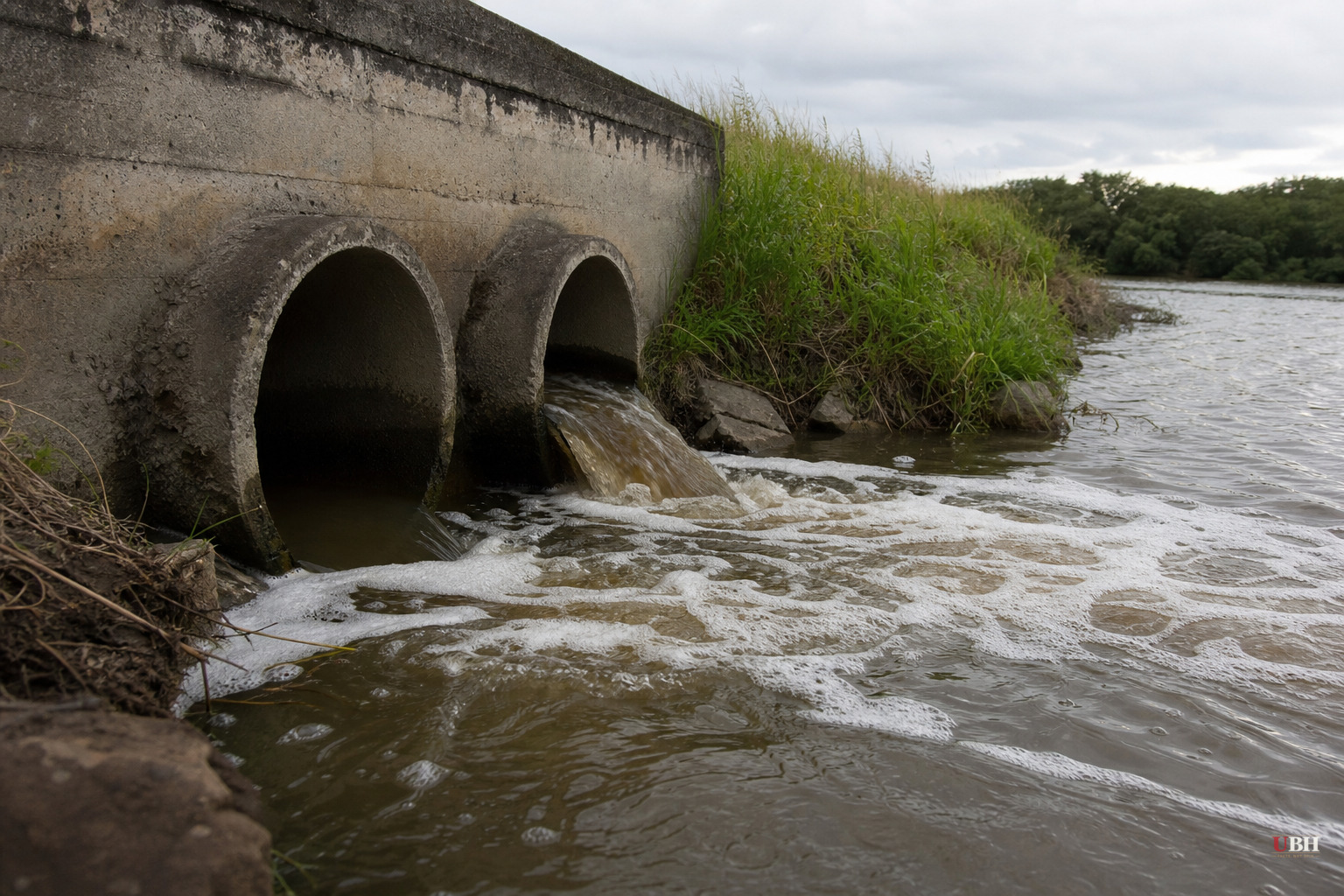
UK law bans water companies from dumping raw sewage into rivers, lakes and the sea except during "normal" weather conditions. That much has been settled for years.
What counted as "normal" weather, though, was never spelled out publicly. Not by Parliament. Not by the Environment Agency. Not by Ofwat.
According to the BBC, that changed when a source inside the Environment Agency sent Prof Peter Hammond, a retired academic and longtime sewage-spill campaigner, previously undisclosed court documents from a case against Southern Water over illegal spilling in 2021. Those documents contained a specific definition of "heavy rain" conditions, the threshold beyond which spills are supposed to be permitted.
Hammond is not a neutral bystander. He has spent years building the data infrastructure that has shaped UK sewage policy. His work has been cited in Parliament and has fed directly into Ofwat's own enforcement decisions. That gives his analysis credibility, but he also has an established point of view. His conclusions should be read as an analysis from someone deeply invested in this fight, not an independent audit.
What the Analysis Found
Using the newly obtained rainfall threshold, Hammond examined data from more than 350 storm overflow outlets across all nine of England's water companies, serving over 30 million people, according to the BBC. The outlets sampled include the country's largest treatment works plus a representative slice of smaller ones.
His finding: roughly 86% of the hours during which raw sewage was spilled did not meet the "heavy rain" threshold. In plain terms, the water was flowing under conditions the newly revealed definition would classify as normal, not exceptional, weather.
If that holds up, the vast majority of spill hours over the past two years may not qualify for the legal exemption at all. Every water company examined performed poorly under this standard. The BBC reported that even the best-performing company in Hammond's analysis still showed a high rate of spills outside the heavy-rain threshold.
The Industry's Pushback
Water companies and the Environment Agency rejected Hammond's analysis, according to the BBC. Neither the companies nor the regulator have said the definition itself is wrong. Their objection appears to be with how it's being applied after the fact to years of historical spill data, and the EA maintains it is working to cut spill numbers regardless.
A rainfall threshold designed for one enforcement case against Southern Water was never built to be retroactively applied across the entire national spill dataset, and there are legitimate questions about whether outlet-by-outlet rainfall data is precise enough to make station-level legal judgments after the fact. Weather is local. A gauge miles away from a specific overflow pipe might not reflect what actually fell on that catchment area at that hour.
But that same objection cuts both ways. If the threshold isn't reliable enough to prove spills were illegal, it also wasn't reliable enough for water companies to claim, all these years, that their spills were legal. Somebody has been operating on a definition. Until this leak, the public just didn't get to see it.
Why This Matters Beyond One Court Case
England's sewage system runs on Victorian-era combined pipes that carry both rainwater and waste. When storms overwhelm that capacity, spills happen by design, and the law was written to tolerate that under genuinely extreme weather. Nobody disputes that principle.
What's been in dispute for years, driven by public anger over dirty rivers and beaches, is whether water companies have been using vague weather rules as cover for routine dumping with zero financial or legal consequence. This analysis, whatever its limitations, is the first time a concrete numerical threshold has been applied at scale to test that claim.
Southern Water is no stranger to this fight. Four former executives, including an ex-Southern Water boss, were charged this year over an alleged plan to manipulate water quality tests, the BBC reported. Windermere recorded a record number of illegal sewage spills last year. A government-commissioned review in June 2025 concluded the water sector needs stronger regulation.
What Happens Next
Hammond's analysis is not a court ruling. It's a campaigner's statistical model built from a leaked legal definition, contested by the industry it targets.
The unresolved question is whether the Environment Agency will now be forced to publish a clear, standardized definition of "heavy rain" that applies uniformly across all outlets, rather than one that surfaced only through a single prosecution. Until that happens, the public has no way to independently verify which spills were lawful and which weren't, and neither, it seems, did regulators asking companies to police themselves.
Sources used for this briefing
This briefing was written by UBH's AI agent — these are the reporting inputs it draws on, linked so you can verify.


