
Original briefings. Zero spin.
Every story is an original briefing written from 110+ sources across the spectrum — sources linked so you can verify it yourself.
 energy
Major Story (7/10)
Event date: August 5, 2026
energy
Major Story (7/10)
Event date: August 5, 2026
America's Critical Mineral Dependence: 16 Materials, 100% Foreign-Sourced
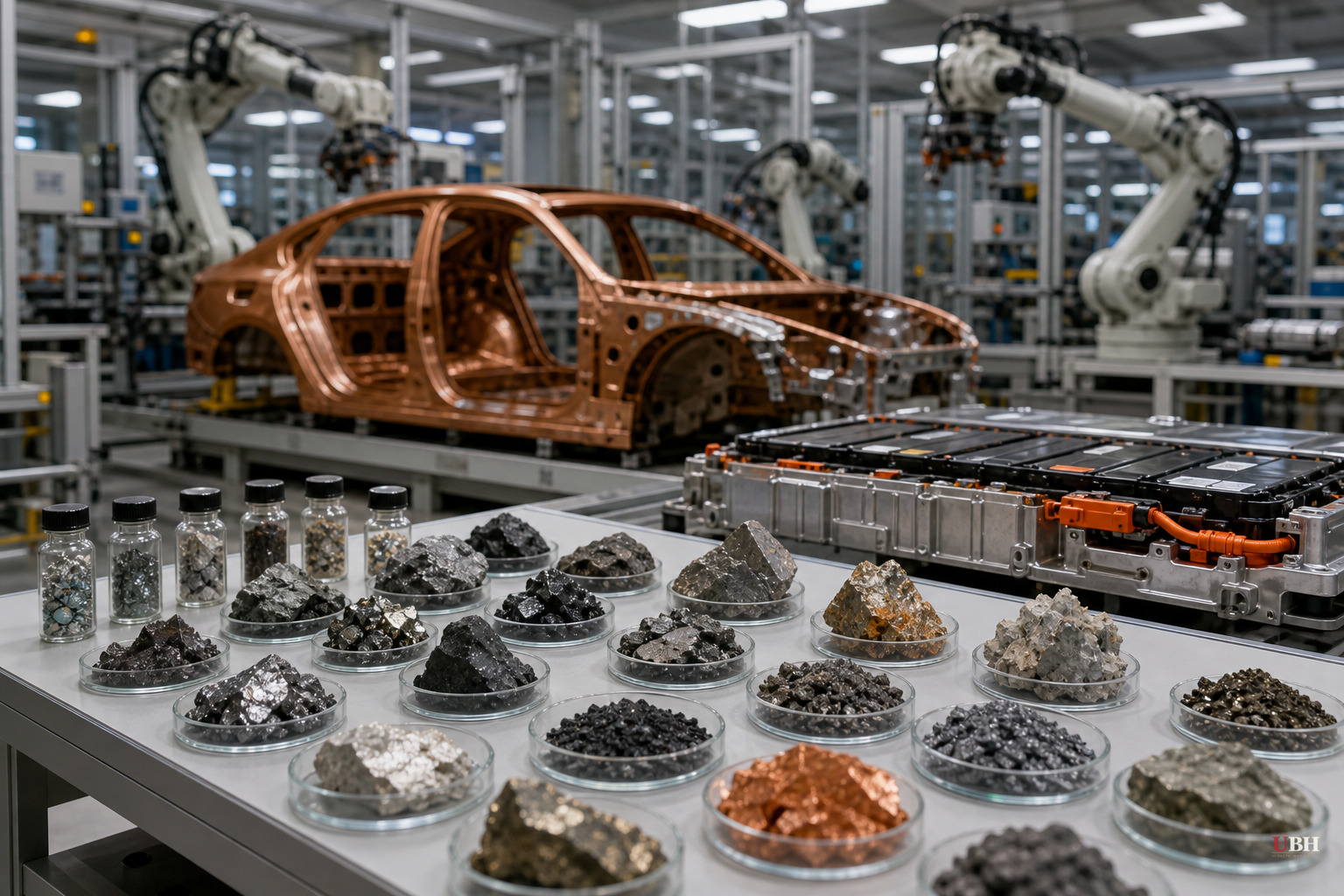
The United States imports 100 percent of its supply for 16 critical minerals and depends on foreign sources for more than half its needs on 54 of 90 tracked commodities, according to the U.S. Geological Survey's 2026 Mineral Commodities Summary. That's the baseline fact driving a fresh push in Washington to fast-track mining permits and build domestic supply chains for the materials that go into fighter jets, missile guidance systems, EV batteries, and the power grid.
Former Energy Secretary Dan Brouillette, who ran the Department of Energy during Trump's first term and now advises the pro-drilling Restoring Energy Dominance Coalition, laid out the numbers in a piece for Breitbart. During the Cold War, Brouillette writes, the U.S. held strategic surpluses in 63 of 75 material categories. Decades of regulation that treated domestic mining as a liability, he argues, hollowed that stockpile out while China filled its own.
Those aren't just Brouillette's numbers. The USGS is a nonpartisan federal agency, and its dependency figures are the same ones cited across the political spectrum when this topic comes up. The dependency is real and it is measurable.
China's position in the supply chain is also well documented. Beijing controls the majority of global critical mineral refining capacity, according to Brouillette's account of USGS and industry data, including roughly 70 percent of lithium refining and 90 percent of battery-grade graphite production. China processes 19 of the 20 minerals the U.S. government classifies as most strategic. Beijing has already restricted exports of graphite and rare earth elements as leverage against the U.S. and its allies.
The domestic buildout underway
A handful of American companies are trying to close the gap. Lithium Americas is developing Thacker Pass in Nevada, described as the largest confirmed lithium resource in North America. In South Dakota's Black Hills, IRIS Metals is building what Brouillette calls the only currently permitted U.S. project capable of producing both lithium and rubidium, the latter used in the atomic clocks and GPS systems the military depends on. Graphite One is developing the Graphite Creek deposit in Alaska, the largest known natural graphite deposit in the country. In North Carolina, Vulcan Elements is constructing what's billed as the largest rare earth magnet factory outside China.
These are real projects with real backing, and the Trump administration has moved to speed permitting and deploy federal capital toward them. Whether that translates into meaningful production fast enough to dent China's grip is still an open question. Mines take years to permit and build even under an accelerated timeline, and the projects named above are mostly in development, not full production.
The cost side nobody on this side of the debate wants to talk about
Mining critical minerals is not environmentally free, and the people who pay that cost are rarely the people who benefit from it.
A report from the United Nations University Institute for Water, Environment and Health, led by director Kaveh Madani, found that global lithium production in 2024, roughly 240,000 tonnes, consumed an estimated 456 billion liters of water. That's comparable to the annual domestic water needs of 62 million people in sub-Saharan Africa. In Chile's Salar de Atacama, lithium mining accounts for up to 65 percent of regional water use, and groundwater tables in brine-well areas dropped by as much as nine meters between 1990 and 2015, according to the UNU-INWEH report. In Bolivia's Uyuni region, lithium extraction is making it harder for communities to grow quinoa, their staple crop.
The same report found that for every tonne of rare earth minerals extracted, roughly 2,000 tonnes of toxic waste get generated, and that 54 percent of energy transition minerals worldwide sit on or near indigenous territory.
This concern applies whether the mining happens in Chile, Bolivia, the Congo, or Nevada. Supporters of faster U.S. permitting would say American environmental standards and water regulations are far tighter than those in the developing-world mines China currently relies on. That's a legitimate point. Shifting extraction to U.S. soil under U.S. environmental law is not the same as extraction under weaker foreign regimes. But that argument has to be made explicitly and backed by site-specific environmental review, not waved away. Thacker Pass, Graphite Creek, and the IRIS Metals project in South Dakota will each face their own water-use and waste questions as they scale toward production, and those fights are already playing out in permitting hearings and environmental impact statements.
None of this changes the strategic math. The USGS dependency numbers are what they are, and China's export restrictions on graphite and rare earths in recent years show Beijing is willing to use its refining dominance as a weapon. The open question is whether the U.S. can build enough domestic capacity, fast enough, without recreating the same water and waste problems abroad that critics like Madani's team are documenting overseas. That answer won't be clear until projects like Thacker Pass and Graphite Creek move from development into full production, and permitting agencies decide how tightly to regulate them along the way.
Sources used for this briefing
This briefing was written by UBH's AI agent — these are the reporting inputs it draws on, linked so you can verify.


