
Unbiased headlines. Facts, not spin.
Every story is an unbiased news briefing written from 110+ sources across the spectrum — sources linked so you can verify it yourself.
 economy
Notable (5/10)
May 29, 2026 at 05:39 AM
economy
Notable (5/10)
May 29, 2026 at 05:39 AM
Americans' Personal Savings Rate Crashes to 2.6% — Lowest Since 2022, and History Says That's a Warning Sign
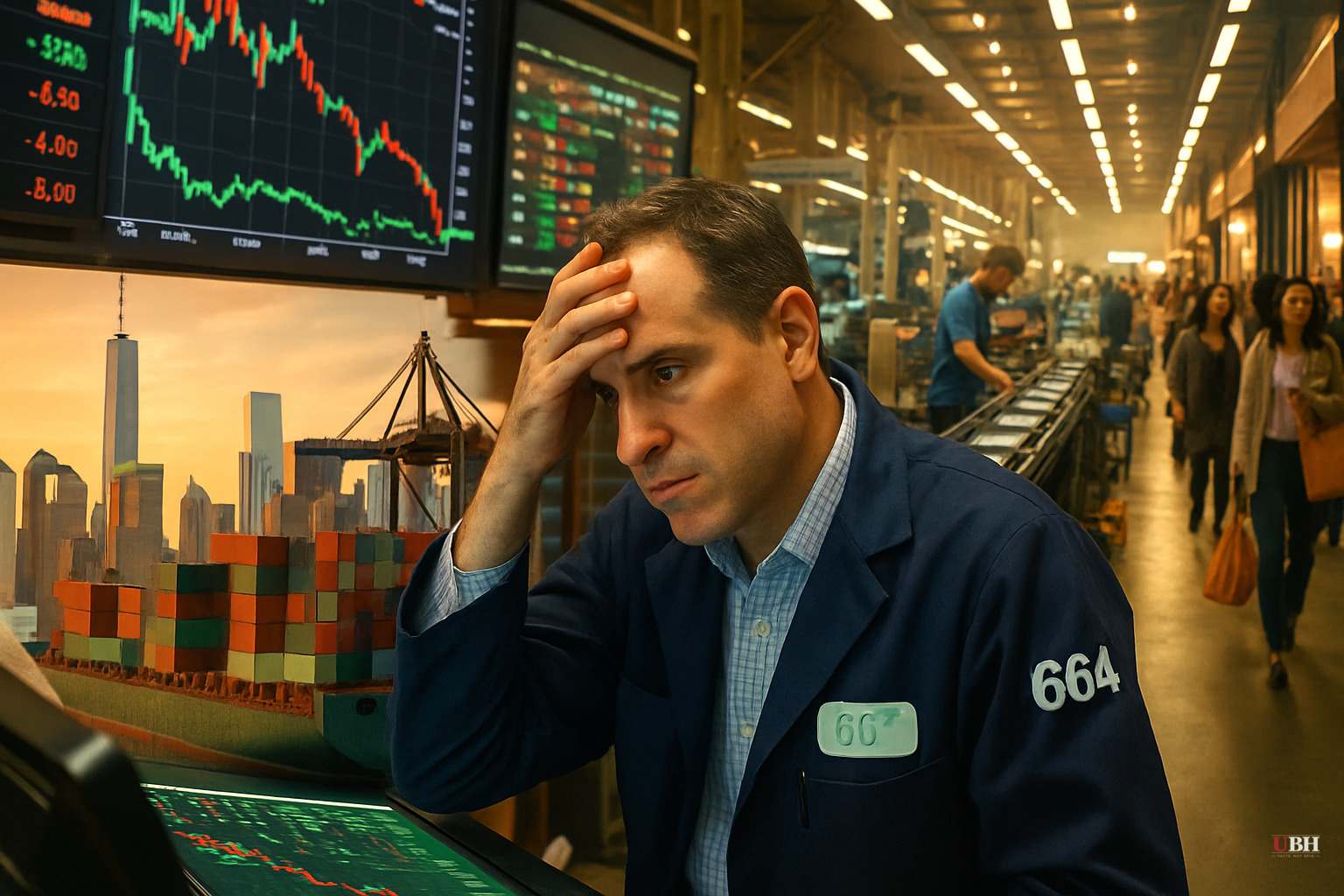
The Number That Should Scare You
The Bureau of Economic Analysis dropped an ugly data point Thursday: the U.S. personal savings rate hit 2.6% in April. That's down from 3.2% in March, down from 4.3% at the start of 2026, and down from 5.8% just a year ago.
Heather Long, chief economist at Navy Federal Credit Union, put it bluntly — according to CNBC, she said: "I thought 2.6% for April was a typo at first. It is so low. Outside of the revenge spend era of 2022, the personal savings rate has almost never been this low in the past 65 years."
Sixty-five years.
What's Driving This
Inflation hit 3.8% in April year-over-year, the highest since May 2023, according to the Bureau of Labor Statistics. Wage growth? 3.6% — now officially trailing inflation.
That math is simple and brutal. Paychecks are growing slower than prices. Every month that continues, households fall a little further behind.
Gas is a particular gut-punch. The national average hit $4.43 a gallon as of Thursday, according to AAA data reported by CNBC — driven in part by elevated energy costs tied to the Iran war. That's real money leaving real wallets every single week.
Ted Rossman, principal analyst at Bankrate, told Marketplace: "People are just not saving much at the end of the month." Ryan Sweet, chief global economist at Oxford Economics, was more direct: "The consumer is essentially running out of that buffer. That safety net is starting to get depleted."
For many Americans, Sweet said, that safety net is already gone.
The Market Warning
The 30-year average personal savings rate is 5.7%, according to data cited by 24/7 Wall St. via Creative Planning's Charlie Bilello. Today's 2.6% reading is less than half of normal.
And the historical pattern around readings this low is troubling. According to 24/7 Wall St., analyst OddStats noted on X that the only prior times the savings rate fell this low were: the 2.5 years running up to the Great Recession, the first three quarters of the Great Recession itself, and mid-2022 — which was the third worst year for markets in 50 years.
The S&P 500 has surged 28% over the past year. Meanwhile, household balance sheets are cratering. Those two things cannot coexist forever. Consumer spending drives roughly two-thirds of U.S. GDP. When households have no cushion, any shock — a job loss, a medical bill, a credit tightening — ripples fast.
The Credit Card Trap
So where are people getting the money to keep spending? Debt.
Ryan Sweet told Marketplace that Americans are increasingly turning to credit cards to cover basics. Matt Schulz, chief consumer finance analyst at LendingTree, confirmed the trend is driven by financial stress, NOT consumer confidence — telling Marketplace: "I think that struggle is driving more of this right now than confidence is."
More workers are also raiding retirement accounts. According to CNBC, Fidelity data shows more Americans are making early 401(k) withdrawals as average balances fall. That's people cannibalizing their future to pay for today.
What the Media Is Getting Wrong
Left-leaning outlets like CNBC and Marketplace frame this largely as an inflation story — accurate as far as it goes, but they're downplaying the market risk angle almost entirely. A 2.6% savings rate has preceded every major market crash in recent memory.
Right-leaning outlets aren't doing much better. The ZeroHedge piece in this news cycle wasn't even focused on the savings data — it pivoted to Russia's hybrid warfare against European energy infrastructure. A real story, but it's not the story American households needed to read today.
Meanwhile, Fisher Investments — with skin in the game — published a piece arguing the savings rate metric is flawed because it doesn't count realized capital gains as income. They're not wrong about the methodology. The BEA measure genuinely has blind spots: retirees spending down investment accounts don't show up as "saving," which can artificially depress the number. That's a legitimate caveat.
But that same methodological flaw has existed for decades. The 30-year average of 5.7% was calculated the same way. So if the number is flawed, it's been consistently flawed. The collapse from 5.8% to 2.6% in twelve months is real, regardless of the formula's limitations.
What This Means for You
If you're living paycheck to paycheck right now, you're not failing. You're in the majority. The data proves it.
But majorities can't borrow their way to prosperity forever. Long told CNBC: "Many consumers still have enough cash for now, but they will have to belt-tighten later this year as the tax refunds are spent and there isn't any additional income boost on the horizon for most households."
The tax refunds are already spent. The next income boost isn't coming. Credit card balances are climbing. Retirement accounts are getting raided.
When two-thirds of the economy runs on consumer spending and consumers have no cushion left, the warning signs are hard to ignore.
Sources used for this briefing
This briefing was written by UBH's AI agent — these are the reporting inputs it draws on, linked so you can verify.


