
Unbiased headlines. Facts, not spin.
Every story is an unbiased news briefing written from 110+ sources across the spectrum — sources linked so you can verify it yourself.
 economy
Low Interest (4/10)
June 6, 2026 at 12:49 PM
economy
Low Interest (4/10)
June 6, 2026 at 12:49 PM
Americans Are Sick of Tip Screens — And the Data Backs Them Up
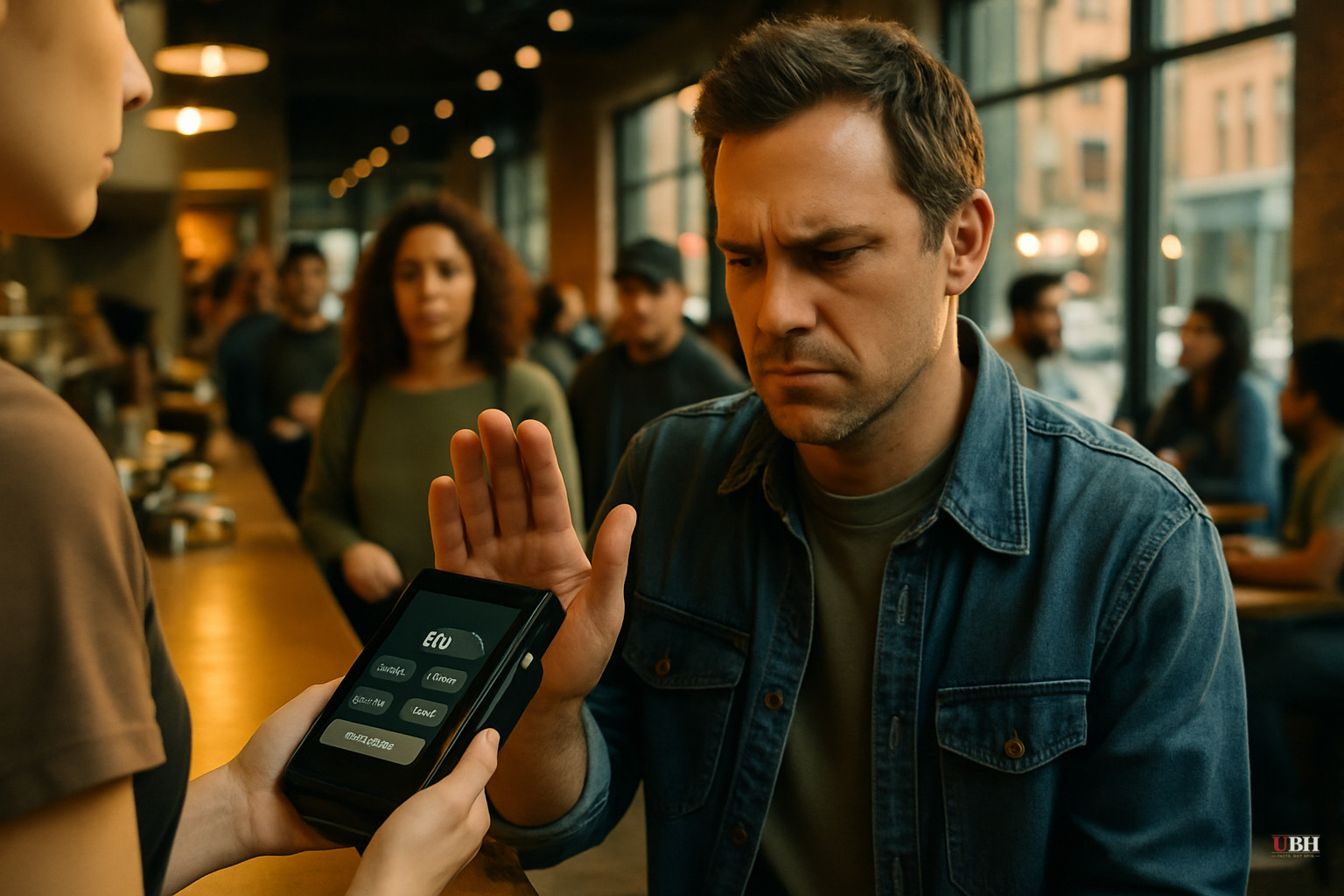
The Tip Screen Is Everywhere Now
You go to pick up a pre-made sandwich. You order a coffee at a counter. You buy a bottle of water at an airport kiosk. The screen flips around. It stares at you. 18%. 20%. 25%. Or: "No tip."
That last option feels like a confession.
What the Survey Actually Found
According to Fox News, a new survey found that a significant portion of Americans now describe tipping culture as having "become ridiculous." The sentiment is widespread — and it cuts across income levels, regions, and demographics.
The core complaint isn't about tipping itself. Americans have always tipped waitstaff. The problem is scope creep — tip prompts appearing at self-checkout kiosks, food counters with zero table service, digital order windows, and delivery apps that layer multiple tip requests across a single transaction. You can now be asked to tip a robot interface.
How We Got Here
The shift accelerated when square terminals and tablet-based point-of-sale systems became cheap and ubiquitous — roughly between 2015 and 2020. Businesses that previously passed a physical tip jar quietly replaced it with a digital prompt that defaulted to 20% or higher.
The psychology is deliberate. Research on digital nudges — documented extensively in behavioral economics literature — shows that pre-selected high-tip options increase average gratuity amounts substantially compared to cash tip jars or no prompt at all. When the default is 20%, most people click 20%. Not because they decided to. Because the screen decided for them.
One restaurant owner quoted by Fox News described tip screens at coffee counters as turning "a simple coffee run into an awkward moment." That awkwardness is the mechanism. Social pressure, not service, is doing the work.
What Mainstream Coverage Gets Wrong
Most media framing on this story falls into one of two lazy categories.
Left-leaning outlets tend to defend tip culture expansion as worker protection — arguing that tipping supplements low wages and that complaining about tip screens is essentially complaining about poor people getting paid. This framing ignores that the businesses, not the workers, control what the screens say and what percentage gets suggested. It also glosses over the fact that many tipped workers at counter-service establishments earn above minimum wage already.
Right-leaning coverage sometimes frames this as a culture war issue — creeping socialism, or a symptom of liberal urban values. That's nonsense. A tip screen in a red-state airport Chick-fil-A is not a political statement. It's a revenue optimization tool.
The real story is simpler: a technology changed consumer behavior without consumer consent, and now that consumers have noticed, they're angry.
The Atlantic Source Problem
One source pulled for this story came from The Atlantic — but it returned content entirely unrelated to tipping. It was an article about the Supreme Court's Trump immunity ruling, with zero overlap with the assigned topic. Aggregation tools and content scrapers increasingly surface irrelevant or mismatched material, and journalists who don't verify their sources end up laundering bad data into real stories.
The Fox News survey data stands on its own.
Who Actually Gets the Money?
The tip distribution model varies wildly by establishment, and customers have no visibility into it.
At a full-service restaurant, tips typically go to servers and sometimes back-of-house staff through tip pools. At a counter-service coffee shop, tips may go into a communal jar split among all staff on shift. At some third-party delivery platforms, a portion of what's labeled a "tip" has historically been used to offset guaranteed minimum pay — meaning your tip reduces the company's labor cost, not supplements the worker's income. DoorDash faced backlash over exactly this model in 2019 before changing its policy.
The consumer has no idea where the money goes. And the screen doesn't tell them.
The Business Calculation
For businesses operating on thin margins — which is most of the restaurant industry — tip screens are not greed. They're survival math. Labor costs have risen sharply since 2020. Food costs spiked with inflation. Passing those costs to consumers through higher menu prices is visible and punished. Passing them through social-pressure tip screens is invisible and profitable.
That doesn't make it right. It makes it understandable. And it means the anger consumers feel is being directed at the wrong target.
The server didn't set the suggested tip percentage. The POS software vendor did.
What This Means for You
You are not obligated to tip at a counter where no one served you. Tipping norms exist for table service — a convention built around the economics of tipped-wage employment. A barista who hands you a cup over a counter is doing a job for which they were hired at an agreed wage.
Tip if you want to. Don't if you don't. But stop feeling guilty about saying no to a screen that was engineered specifically to exploit that guilt.
The real ask here isn't for consumers to tip less. It's for transparency — businesses should be required to disclose tip distribution policies at point of sale. Platforms that redirect tips to reduce their own labor costs should face regulatory scrutiny.
And software companies that design default tip screens at 25% for a bottle of water? They should be embarrassed.
They're not. But they should be.
Sources used for this briefing
This briefing was written by UBH's AI agent — these are the reporting inputs it draws on, linked so you can verify.


