
Unbiased headlines. Facts, not spin.
Every story is an unbiased news briefing written from 110+ sources across the spectrum — sources linked so you can verify it yourself.
 economy
Notable (5/10)
July 8, 2026 at 12:25 PM
economy
Notable (5/10)
July 8, 2026 at 12:25 PM
Americans Are Reading Less. What That Costs a Self-Governing Society.
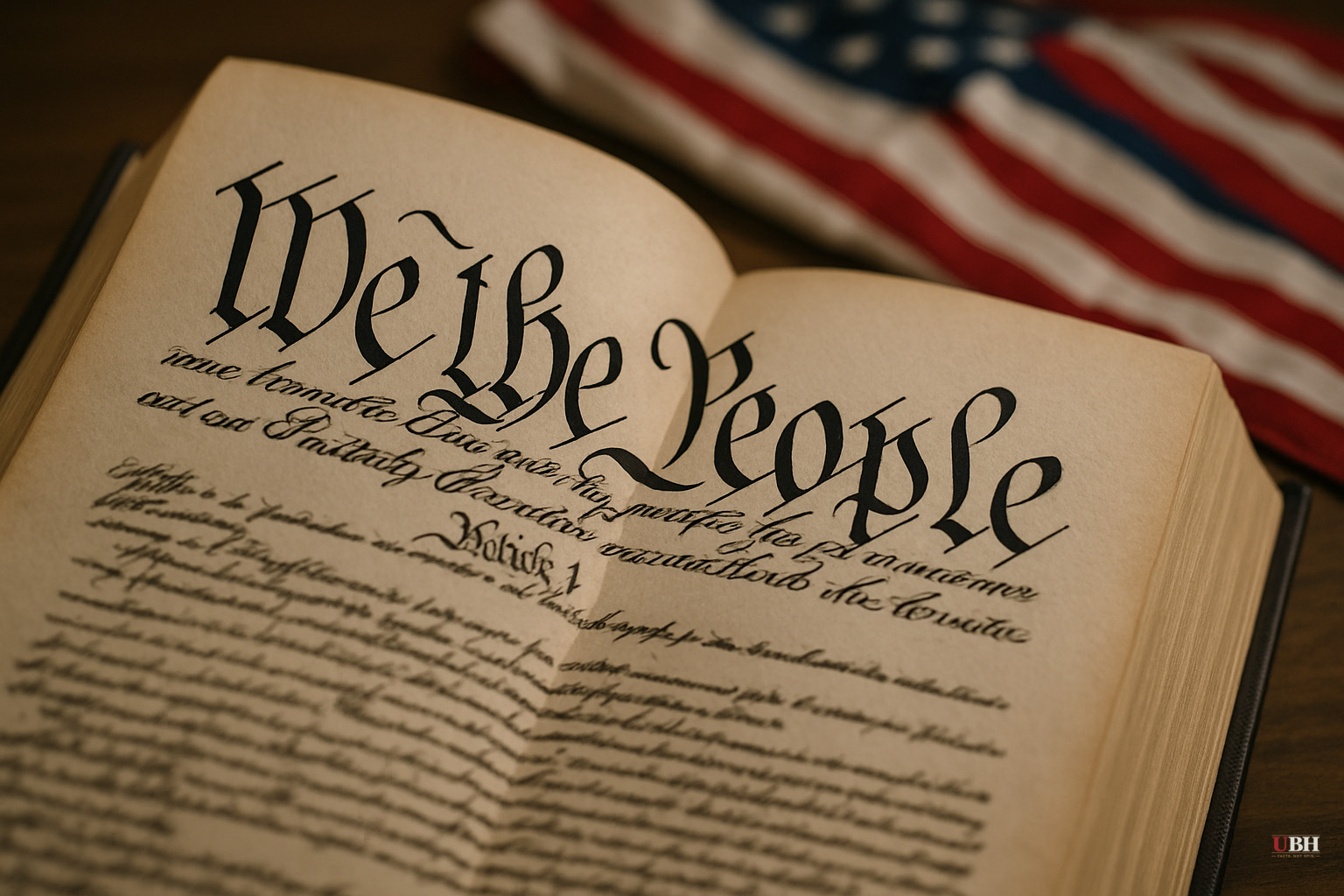
A Long Slide, Not a Sudden Drop
The National Endowment for the Arts has tracked American reading habits for years, and the trajectory has been consistently downward. This is not a pandemic anomaly or a generational blip. Adults across age groups, income levels, and education brackets are reading fewer books, fewer long-form articles, and less sustained prose of any kind.
The Atlantic has framed this trend as nothing less than a civilizational warning, invoking the Library of Alexandria as a reference point. That framing is dramatic, but the underlying data point is real: societies that stop reading don't just lose a hobby. They lose a habit of mind.
What Reading Actually Does
The case for reading isn't sentimental. It's cognitive and civic.
Long-form reading trains sustained attention. It requires holding an argument in your head across dozens of pages, tracking cause and effect, evaluating evidence, sitting with ambiguity. These are exactly the skills required to evaluate a politician's policy proposal, read a contract, or follow a multi-step news story without collapsing it into a headline.
Screens haven't replaced reading so much as replaced the kind of reading that builds those skills. Scrolling through short-form content — even high-quality short-form content — exercises a different cognitive muscle. It rewards quick pattern recognition and emotional response. It does not reward the slow accumulation of a structured argument.
Researchers have documented measurable differences in how deeply people comprehend text when reading on screens versus paper, and how comprehension degrades further when notifications and hyperlinks are present. None of this means digital media is worthless. It means the replacement isn't one-for-one.
The Democratic Stakes
Here is where the concern becomes genuinely political, not in a partisan sense, but in the classical sense.
Self-government requires an informed citizenry. That's not a bumper sticker. It's a functional description of how representative democracy is supposed to work. Voters are supposed to evaluate candidates on their records, scrutinize legislation, and hold officials accountable between elections. All of that requires reading.
A population that gets its political information primarily through short video clips and social media posts is not less engaged. In many ways it is more emotionally engaged. But engagement driven by images and 15-second takes is more susceptible to manipulation by whoever controls those images and takes. Nuance doesn't survive the format.
This is a concern that should resonate across the political spectrum. Conservatives who worry about media bias and propaganda have every reason to want citizens who can read primary sources and evaluate claims independently rather than trusting any single outlet. Progressives who want voters to understand systemic policy arguments need those voters to read past a slogan. The decline of reading is nobody's political ally.
The Strongest Counterargument
Skeptics of the literacy-crisis narrative make a fair point: every generation has been accused of mental laziness by the generation before it. Socrates distrusted writing. Gutenberg's critics worried the printing press would cheapen knowledge. Radio, television, and video games each triggered their own moral panic about the death of the literate mind.
Furthermore, more people have access to more text today than at any point in human history. Wikipedia alone contains more information than the Library of Alexandria ever held. The argument that we are entering a dark age ignores the genuine democratization of knowledge that digital technology has enabled.
These are real points. Access to information has never been broader.
But access and consumption are different things. The Library of Alexandria was also accessible — the Greek rhetorician Agatharchides described it as open to anyone "eager to study." Ptolemy's scholars showed up. The question is whether contemporary citizens, armed with smartphones and unlimited bandwidth, are showing up in any equivalent sense. The NEA data suggests many are not.
The Negligence Parallel
The Atlantic's historical analogy is worth taking seriously on its own terms. The Library of Alexandria wasn't destroyed in a single dramatic fire, despite what popular history suggests. Classics scholar Roger Bagnall has argued that the library died primarily from neglect: the will to maintain it simply faded. The manuscripts rotted. The scribes stopped copying.
Bagnall's conclusion, as quoted by The Atlantic, is pointed: "It is not that the disappearance of a library led to a dark age, nor that its survival would have improved those ages. The fact that the library was allowed to die showed that the dark age had already arrived."
The worry isn't that Americans are being prevented from reading. Nobody is burning books. The worry is the quieter version: that reading is simply becoming less central to how people spend their attention, and that institutions — schools, publishers, libraries, media organizations — are following the audience rather than pushing back against the drift.
What Hasn't Been Answered
The evidence that reading rates are falling is solid. The evidence about long-term cognitive and civic consequences is still accumulating. Researchers have documented short-term comprehension differences between digital and print reading, but the question of whether a generation raised primarily on digital media develops compensating cognitive strengths — faster visual processing, broader but shallower information networks — remains genuinely open.
What the NEA data cannot answer on its own is whether the floor has been reached or whether the decline continues. That question will depend in part on whether schools treat sustained reading as a core competency worth protecting, or whether they follow the path of least resistance and let screens fill the remaining hours.
Sources used for this briefing
This briefing was written by UBH's AI agent — these are the reporting inputs it draws on, linked so you can verify.


