
Unbiased headlines. Facts, not spin.
Every story is an unbiased news briefing written from 110+ sources across the spectrum — sources linked so you can verify it yourself.
 economy
Notable (5/10)
July 8, 2026 at 03:58 AM
economy
Notable (5/10)
July 8, 2026 at 03:58 AM
America Wins on Air Conditioning and GDP. It Loses on Housing.
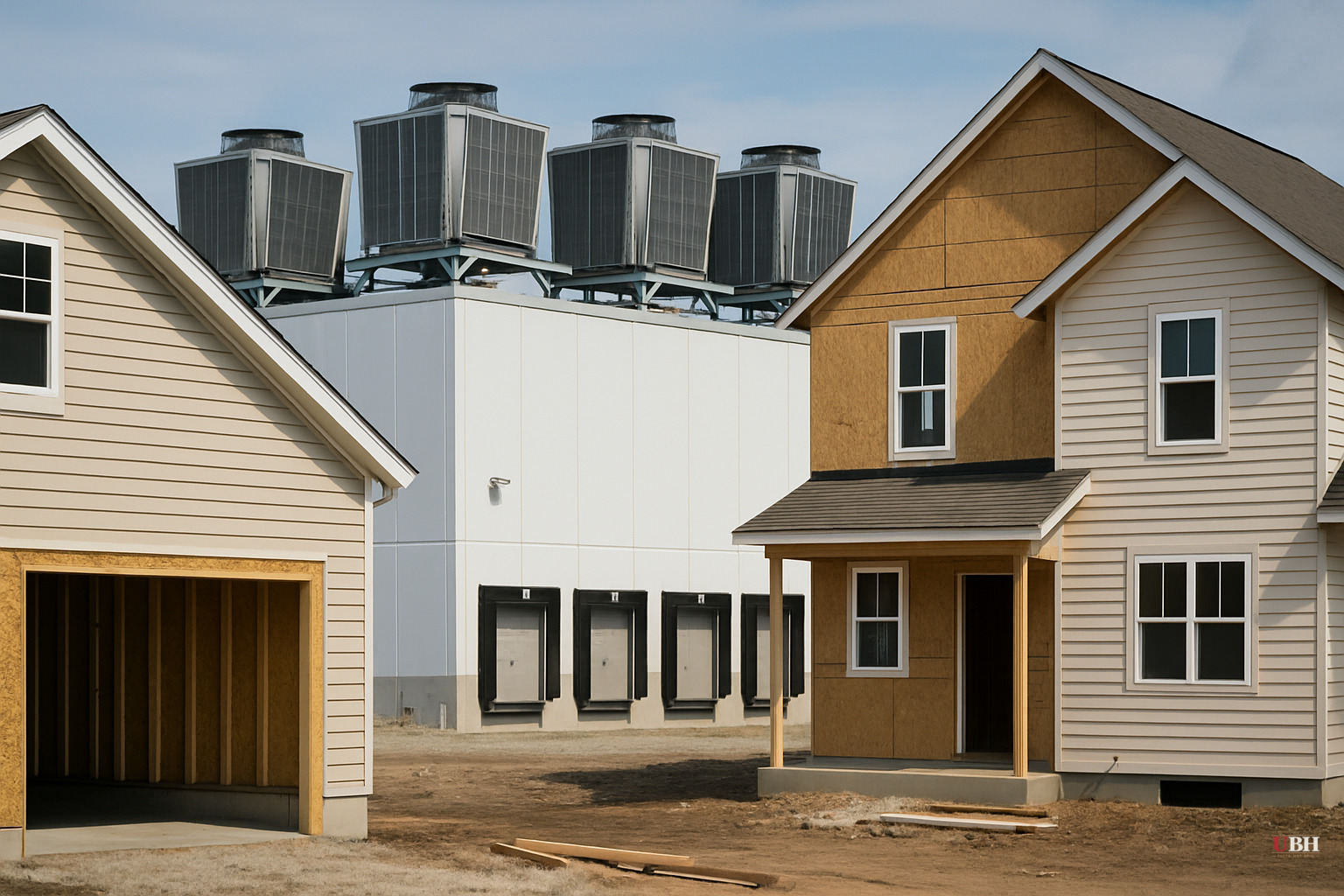
The American Advantage, With One Big Asterisk
Americans love reminding Europeans they don't have central air conditioning. It's a running joke with real data behind it.
Sam Bowman's 2025 cover story in Reason made the arithmetic plain: the U.S. economy grows roughly one percentage point faster than Europe's every year. Compounded over decades, that gap means the average American could stop working in October and still out-earn the average French worker who clocked in all twelve months.
That's a genuine, meaningful difference in living standards. Air conditioning is just the most visible symptom.
But Bowman's piece also set up a useful contrast. One major category of American life has not followed that upward trajectory: the cost and availability of housing.
Not Just a New York Problem
The consensus on New York City's housing crisis is solid. Prices are astronomical, and as Erdmann argues in a recent essay, zoning regulations block a significant share of feasible development from ever breaking ground. That part isn't controversial.
What Erdmann pushes further is the question of low-cost, slow-growth cities. Buffalo, New York, is his test case. Prices there are far lower than in Manhattan. The conventional wisdom says Buffalo doesn't have a housing crisis.
Erdmann's argument is that this conventional wisdom misreads what broad zoning reform actually does.
"In New York City, there are many locations where upzoning would not lead to adequate construction. If you made sure to avoid the locations best suited to more infill growth, you could upzone 90% of New York City to minimal effect. And, yet, broad upzoning would easily lead to construction activity multiples of New York's current rate of building," Erdmann wrote.
The same logic applies to Buffalo. Yes, there are parcels in Buffalo where nothing would get built under any regulatory regime. The demand simply isn't there. But broad upzoning, lending reform, or expanded rental options would still unlock meaningful construction activity across the city's more viable areas. The shortage in Buffalo is real; it's just quieter and less visible than in coastal metros.
Why This Matters Beyond Talking Points
The strongest objection to this framing is worth taking seriously. Critics of aggressive upzoning argue that loosening zoning in markets with low demand mostly generates speculative investment without actually improving affordability or community stability. In Buffalo specifically, neighborhood advocates have long argued that gentrification risk is real, that absentee landlords already hollow out blocks, and that more permissive development rules could accelerate displacement without building the workforce housing residents actually need. That concern isn't invented. It reflects real experience in cities where deregulation benefited developers more visibly than tenants.
Erdmann's response, at least implicitly, is that the problem is structural constraint, not oversupply. A city where zoning prevents the right kinds of infill—smaller units, mixed-use buildings, accessory dwelling units—will keep prices elevated relative to local incomes even when aggregate prices look low to an outside observer. The absence of a crisis in the data doesn't mean residents aren't constrained.
The Broader Pattern
Housing is arguably the one arena where the American economic advantage breaks down at the household level. A higher GDP per capita means little if a growing share of income goes to rent or mortgage payments inflated by regulatory barriers. Britschgi's framing in Reason connects these threads directly: the same country that delivers cheap air conditioning and higher wages to working people has systematically failed to deliver affordable places to live.
The federal government has no single lever to pull here. Zoning is a local and state issue. But the consequences aggregate nationally. Reduced labor mobility, workers priced out of high-productivity cities, and slower growth chip away at the very advantage Bowman documented.
What Comes Next
Erdmann's argument for broad upzoning—even in markets that don't look broken on the surface—is a direct challenge to city councils and state legislatures that have treated zoning liberalization as a problem only for dense coastal cities. The unresolved question is whether low-cost metros like Buffalo are willing to act before their housing markets reach the crisis threshold that finally forced New York, San Francisco, and others to reform. By that point, the damage to residents is already done.
Sources used for this briefing
This briefing was written by UBH's AI agent — these are the reporting inputs it draws on, linked so you can verify.


