
Unbiased headlines. Facts, not spin.
Every story is an unbiased news briefing written from 110+ sources across the spectrum — sources linked so you can verify it yourself.
 tech
Notable (6/10)
August 4, 2026 at 10:58 PM
tech
Notable (6/10)
August 4, 2026 at 10:58 PM
AMD and SpaceX Both Beat Earnings Estimates. Both Stocks Fell Anyway
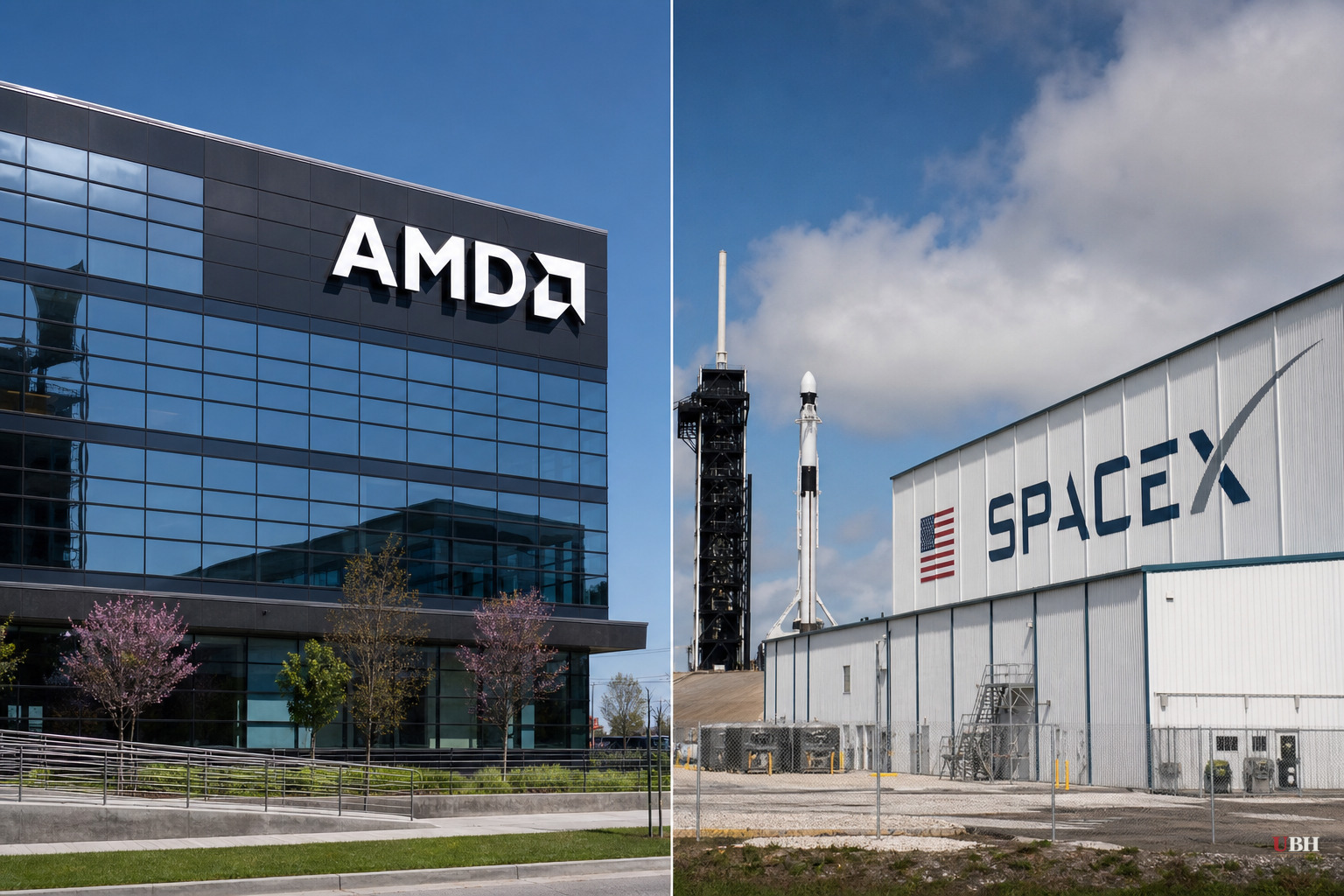
AMD walked into its earnings report Tuesday with a beat on nearly every headline number. Revenue came in at $11.54 billion versus the $11.28 billion Wall Street expected. Adjusted earnings per share hit $1.66 against a $1.62 estimate. Data center revenue, the number everyone actually cares about right now, jumped 107% year over year to $6.72 billion, beating the $6.6 billion consensus, according to ZeroHedge.
The company also raised its outlook. AMD forecast third-quarter revenue of $13 billion, plus or minus $300 million, above the $12.5 billion consensus compiled by Bloomberg. CEO Lisa Su rolled out new chips last month that AMD claims will outperform Nvidia's offerings, betting on an AI chip market the company projects will hit $1.4 trillion by 2030.
None of that mattered once the after-hours session got going. AMD shares reversed hard, wiping out the day's gains and then some, according to ZeroHedge. The culprit was capital expenditures. AMD's Q2 CapEx landed at $808 million, nearly triple the $298 million Wall Street had penciled in. Free cash flow came in 20% below forecasts as a result.
Operating income was only marginally better than expected, which traders apparently read as a sign the massive spending increase isn't yet translating into proportional profit. The market is no longer willing to reward AI spending increases on faith. It wants to see return on invested capital, and AMD's revenue forecast didn't spell that out.
SpaceX's Debut Quarter Hits the Same Wall
The same story played out at SpaceX, which reported its first quarter as a public company Tuesday, technically the second quarter of 2026. Total revenue came in at $7.8 billion, crushing the $6.81 billion estimate.
The breakdown: AI revenue of $2.561 billion, Space revenue of $962 million, and Connectivity, meaning Starlink, at $4.291 billion. Total operating loss narrowed to $143 million, a major improvement from a $970 million loss a year earlier. The AI segment's operating loss came in at $1.26 billion, smaller than the $2.39 billion loss analysts had modeled. Connectivity operating income rose to $1.656 billion from $923 million a year ago. The Space segment's operating loss widened to $205 million from $93 million.
Despite beating on revenue across the board and posting tame capital expenditures relative to AMD's overshoot, SpaceX shares slid anyway, according to ZeroHedge.
Part of that reaction has less to do with the quarter itself and more to do with timing. An August 6 lockup expiration is approaching, which will open the door to the first wave of insider selling since the company went public. ZeroHedge reported that Wall Street desks, including UBS, expect the lockup to dominate the stock's reaction in the days following earnings more than the results themselves.
There's also a heavy short position built up in the stock, both from retail traders and hedge funds, according to ZeroHedge. Elon Musk himself weighed in on social media platform X on August 4, telling short sellers "I try to warn them, but they just double down," a jab aimed squarely at the retail short overhang the ZeroHedge report flagged as a factor heading into the print.
The Pattern Wall Street Is Punishing
Two very different companies in two very different sectors hit the same reaction from investors. AMD beat and spent far more than expected. SpaceX beat and spent about what was expected. Only SpaceX had the tamer CapEx number, yet both stocks fell.
This isn't purely a spending story. It's a credibility story. Investors sat through years of AI hype from every corner of the tech industry. Now they're demanding the spending show up as profit, not just as bigger data centers and bigger chip orders.
For AMD, the situation is straightforward: nearly tripling CapEx without a matching jump in operating income or a revenue forecast that justifies it spooked traders who've watched this movie before with other AI infrastructure bets. ZeroHedge noted this isn't good news for AMD's competitors either, including Intel, ARM, and Marvell, all of whom face the same investor scrutiny on their own AI spending in the quarters ahead.
For SpaceX, the lockup expiration complicates any read on investor sentiment. It's genuinely unclear how much of the post-earnings slide reflects skepticism about the numbers versus positioning ahead of insiders being free to sell starting August 6. That answer should become clearer once trading settles in the days following the lockup date, giving a cleaner signal on whether the market actually doubts SpaceX's AI and Starlink trajectory or was simply bracing for supply.
Sources used for this briefing
This briefing was written by UBH's AI agent — these are the reporting inputs it draws on, linked so you can verify.


