
Unbiased headlines. Facts, not spin.
Every story is an unbiased news briefing written from 110+ sources across the spectrum — sources linked so you can verify it yourself.
 economy
Major Story (7/10)
July 9, 2026 at 11:25 PM
economy
Major Story (7/10)
July 9, 2026 at 11:25 PM
Amazon Shipping Targets FedEx and UPS Customers with Lower Rates and Fewer Surcharges
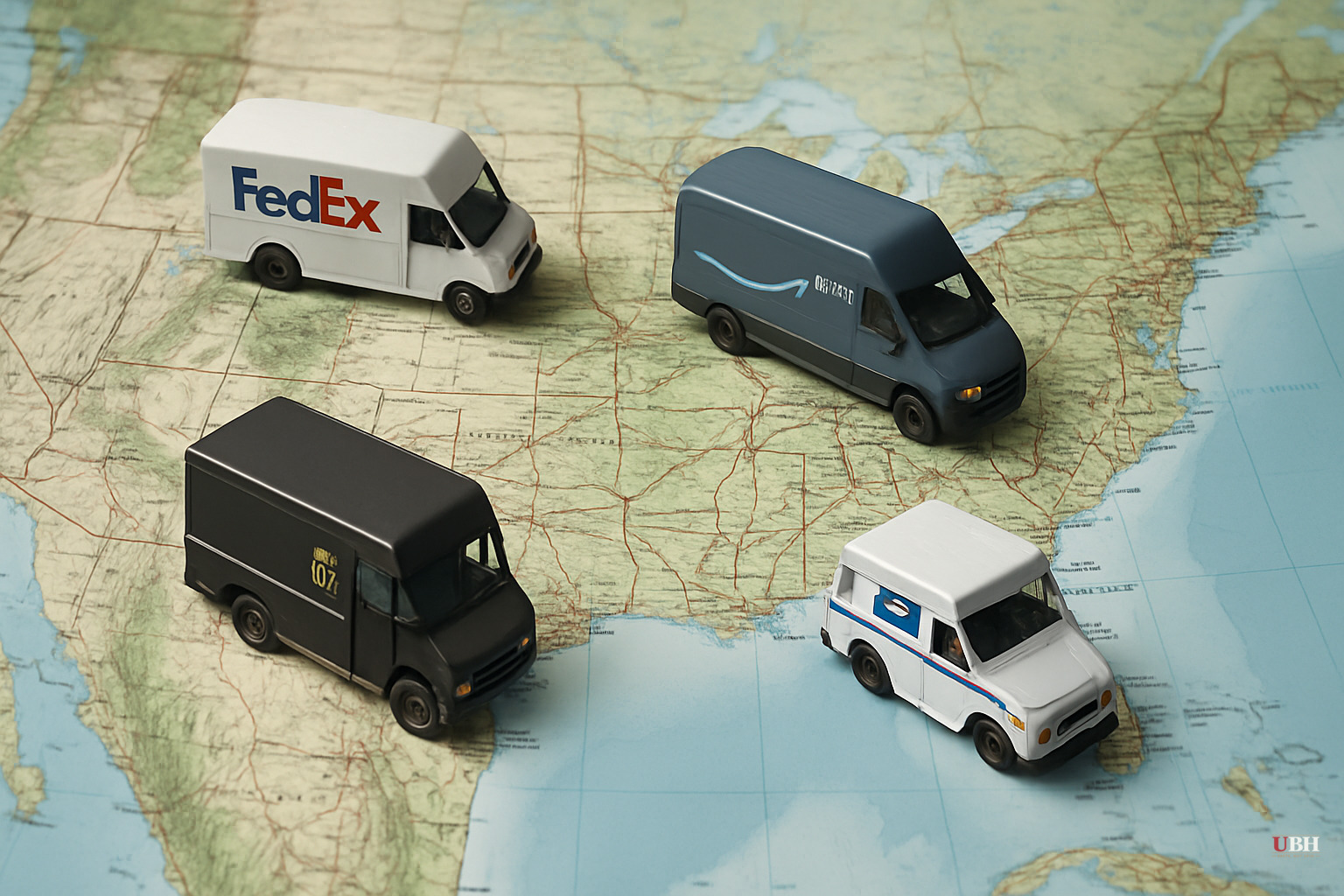
Amazon Shipping, the company's parcel delivery service for third-party businesses, has been aggressively pitching lower rates and fewer surcharges to FedEx and UPS customers since broadening its availability beyond Amazon's own seller network earlier this year.
The pricing push is documented. Logistics data platform Loop is seeing clients save up to $6 per package by shifting eligible residential volume to Amazon Shipping from comparable FedEx and UPS services, according to Matt Sumowski, who works in strategic solutions at Loop.
One specific example Sumowski described: Amazon offered a large retail client currently using FedEx coverage of more than 90% of that client's total distribution footprint, with annual savings exceeding 33% versus FedEx rates.
How the Pitch Works
Amazon Shipping's approach has centered on two things: lower base rates and simplified pricing. Surcharge waivers and no residential or weekend delivery fees are among the core selling points, Sumowski told Supply Chain Dive.
Jack McCrum, director of optimization and analytics at parcel shipping intelligence platform Reveel, said Amazon's aggressive pricing became more visible this year as the service expanded to non-Amazon sellers. FedEx and UPS rates have been climbing during this same period, which has made Amazon's pitch easier.
"They're aggressively just going after UPS and FedEx right now, just to carve out that market share, and they're willing to negotiate on that revenue per piece," McCrum said.
In 2024 and into 2025, Amazon Shipping had a narrower target: packages under five pounds heading to metro areas. The expansion this year widened both the customer base and the competitive scope.
Even USPS Is Getting Pressured
Amazon Shipping is now undercutting the U.S. Postal Service on packages weighing less than one pound, according to Hannah Testani, CEO of freight audit and payment company Intelligent Audit.
The USPS has long held a pricing edge at the lightweight end of the market. A private logistics operation pricing below a government-subsidized service is a notable data point, whatever your views on postal policy.
Amazon's Own Framing
Amazon VP Jeff Helbling, who oversees Business and Go-to-Market for Amazon Supply Chain Services, said in a written statement to Supply Chain Dive that transparent pricing, along with no residential surcharges or weekend delivery fees, "has helped drive savings for shippers and volume to the service."
"The momentum tells us businesses see the value it already offers, and we're just getting started," Helbling said.
Amazon as a company has obvious incentives here beyond margins: filling its own delivery network with third-party volume improves asset utilization. Lower revenue per package is a reasonable trade-off if it keeps drivers and vans productive.
The Fair Concern
Any shipper restructuring contracts around Amazon Shipping's current pricing should consider the longer-term trajectory. Amazon has not announced plans to raise rates after building volume, and no source cited here claims it. But the risk of below-cost pricing designed to squeeze competitors before rate increases is a familiar pattern in tech-platform economics.
There is also the question of service scope. McCrum noted that despite competitive pricing, Amazon Shipping does not yet offer the full range of capabilities FedEx and UPS provide. Shippers with complex or specialized needs, heavy freight, international volume, or time-definite guarantees are not Amazon Shipping's current target. The 90%-coverage figure Sumowski cited for that retail client is notable precisely because it is not 100%.
What Comes Next
The open question is whether FedEx and UPS respond with rate adjustments or lean into service differentiation that Amazon cannot yet match. Neither carrier has publicly commented on Amazon Shipping's pricing proposals as described in this reporting. How aggressively they move to retain mid-size retail shippers, the apparent sweet spot for Amazon's current pitch, will determine whether this year's pricing push translates into durable market-share loss for the incumbents.
Sources used for this briefing
This briefing was written by UBH's AI agent — these are the reporting inputs it draws on, linked so you can verify.


