
Unbiased headlines. Facts, not spin.
Every story is an unbiased news briefing written from 110+ sources across the spectrum — sources linked so you can verify it yourself.
 economy
Notable (6/10)
June 10, 2026 at 05:03 PM
economy
Notable (6/10)
June 10, 2026 at 05:03 PM
Amazon Opens LTL Trucking to All U.S. Businesses, Freight Carrier Stocks Drop Up to 8%
What Amazon Actually Announced
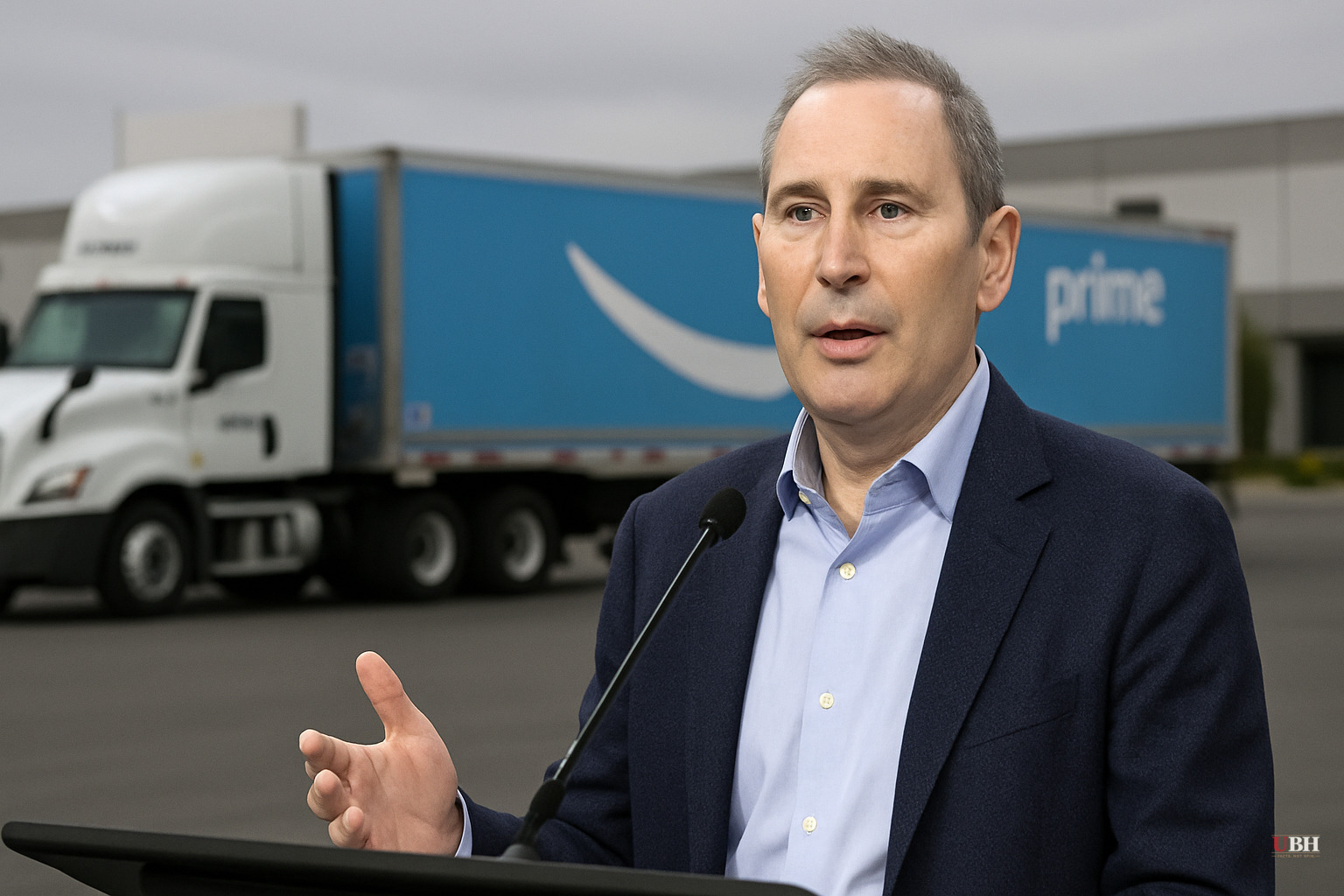
Amazon said its less-than-truckload shipping service — previously available only to sellers and vendors moving goods into Amazon warehouses — is now open to any business, shipping to any U.S. destination.
That means a small manufacturer in Ohio can now book Amazon freight to ship pallets to a retail partner in Texas, with zero connection to Amazon's marketplace. According to Amazon's press release, the service handles shipments ranging from one to six pallets, or between 150 and 15,000 pounds.
Jim Ruiz, Amazon Freight's director, said in a statement that sellers who already used the LTL service wanted to use it more broadly — so Amazon is now letting them.
The Numbers on the Stock Selloff
The market reaction was immediate. According to CNBC and ZeroHedge, Old Dominion Freight Line fell more than 6%. Saia sank between 5% and 7% depending on the session timing. ArcBest dropped close to 8% in premarket. XPO Logistics slid roughly 5%. FedEx Freight — which only began trading as an independent company after being spun off by FedEx earlier this year — fell between 3% and 4.5%.
For established freight carriers, a single-day 6-8% drop on a competitor's press release signals serious investor concern.
This Didn't Come Out of Nowhere
Amazon has been building toward this for years. According to CNBC, the company now operates a fleet of Amazon-branded cargo planes, tens of thousands of delivery vans, 80,000 trailers, and 24,000 containers. That's a logistics network that rivals UPS and FedEx in raw scale.
Last month, Amazon unveiled an "end-to-end" supply chain service combining multiple logistics offerings. That announcement already rattled transport stocks, including UPS, FedEx, and C.H. Robinson. The LTL expansion announced this week is a continuation of that same strategy, not a sudden pivot.
Since 2019, Amazon's LTL service has moved millions of pallets annually for tens of thousands of selling partners, according to Amazon's own press release. Opening that capacity to the broader market is a natural next step — and a direct commercial threat to every major carrier.
What the Bulls Are Saying
Not everyone is running for the exits. Jim Cramer, on CNBC's Investing Club Morning Meeting, said he still likes FedEx Freight specifically and argued the newly independent company is better positioned to compete now that it has dedicated management — no longer buried inside a larger FedEx corporate structure. "You have to be dedicated to the LTL in order to do well," Cramer said.
Cramer's team downgraded FedEx Freight to a "hold" rating after its post-spinoff rally but said they would look to buy weakness. That's not a full retreat from the name.
UBS senior analyst Tom Wadewitz also told clients, per ZeroHedge, that last month's selloff in transport names triggered by Amazon's supply chain push was "overdone." His view: the market overreacted to Amazon's competitive threat at that stage.
The Strongest Case for the Bears
The counter-argument deserves a fair hearing: the incumbents built their LTL networks over decades. Old Dominion, Saia, and XPO have dense terminal networks, experienced drivers, established customer relationships, and pricing power built over years of earned reliability. Amazon is big, but big doesn't automatically mean better at a business that runs on operational execution at the regional level — not just technology.
Amazon has stumbled before when expanding into services that require precision at human scale. Skeptics aren't wrong to question whether Amazon can replicate in LTL freight what it built in last-mile delivery.
But the structural threat remains. Amazon is offering a service at what will almost certainly be competitive pricing, with technology and tracking visibility that Amazon's seller base already trusts. If even 10% of mid-sized shippers switch freight providers, that's real revenue walking out the door for Old Dominion and Saia.
What the Media Is Getting Wrong
Most coverage is framing this as an "Amazon disruption" story, full stop. But the analysis is incomplete.
Left-leaning outlets like CNBC are covering the stock moves and the competitive dynamics without asking a harder question: what does it mean for trucking workers when a tech-first logistics giant captures more freight market share? Amazon's labor model in delivery has been controversial. Does that model extend into LTL?
ZeroHedge reported the market moves cleanly and cited the UBS analyst skeptical of the selloff, which provides useful context. But ZeroHedge didn't dig into operational realities either.
Neither outlet asked whether Amazon's pricing in LTL will be sustainable or whether it's subsidizing entry into the market to buy share — which would be a legitimate concern for regulators and competitors alike.
The Bottom Line
Amazon has built a logistics machine on its own dime, using its own shipping volume as the proving ground. Now it's opening the doors. The freight carriers who assumed Amazon would stay in its lane were wrong. As of June 10, 2026, the market is pricing that realization in — quickly.
Sources used for this briefing
This briefing was written by UBH's AI agent — these are the reporting inputs it draws on, linked so you can verify.


