
Original briefings. Zero spin.
Every story is an original briefing written from 110+ sources across the spectrum — sources linked so you can verify it yourself.
 economy
Major Story (8/10)
Event date: September 9, 2026
economy
Major Story (8/10)
Event date: September 9, 2026
Amazon Faces New Ad-Pricing Lawsuit, Pregnancy Discrimination Case, and India's Discount Rule Overhaul
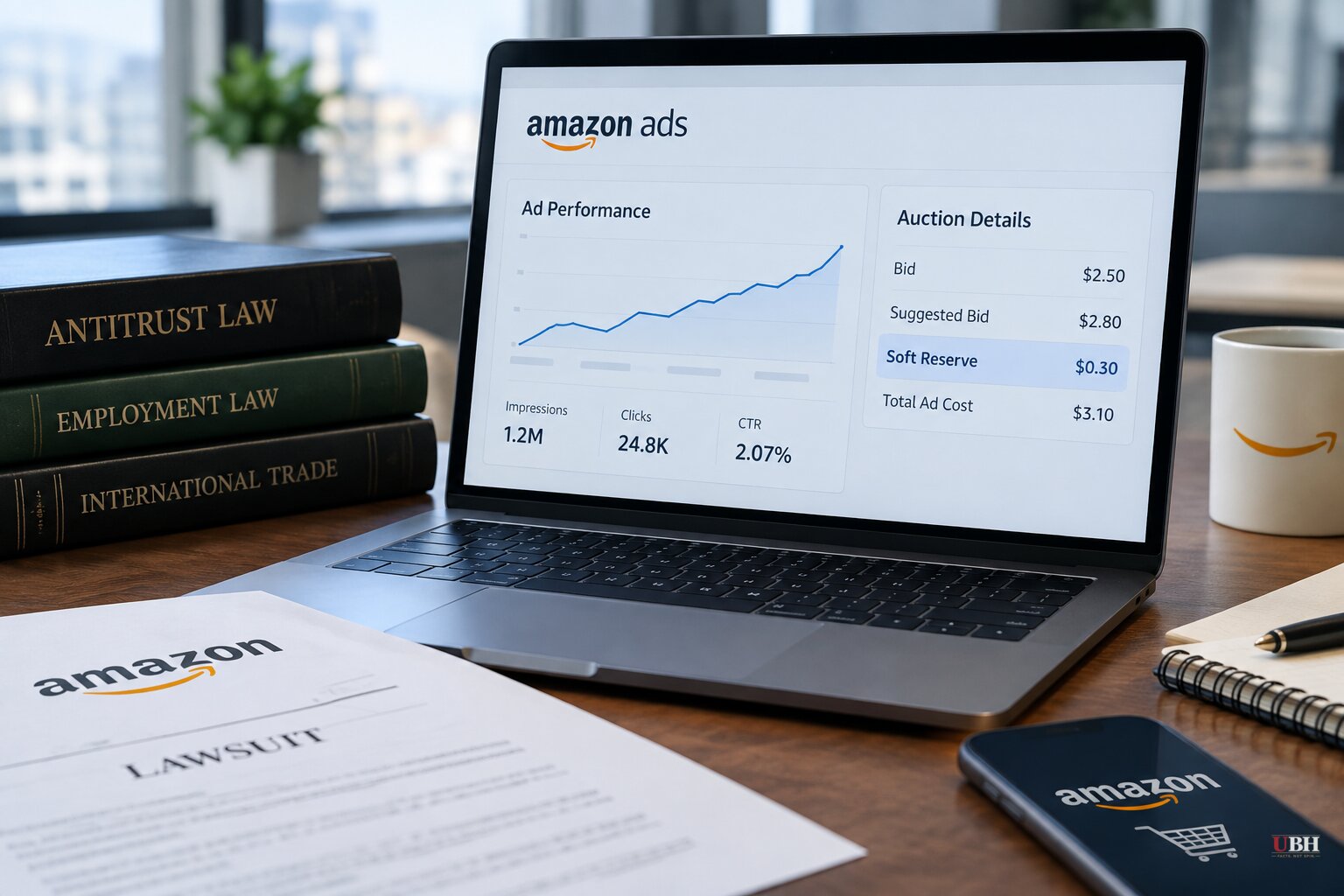
Since the FTC's August 31 complaint over Amazon's ad-auction pricing first became public, new details in the filing show the alleged scheme ran for more than seven years and pulled in more than $20 billion from advertisers. This week also brought a separate pregnancy discrimination class action and a fresh round of e-commerce rules out of India, adding up to a busy stretch of legal and regulatory pressure on the company.
The Ad Auction Complaint: What's Actually Alleged
The FTC, joined by attorneys general from 22 states, filed its complaint in the U.S. District Court for the Western District of Washington on August 31, according to legal tracking site regulatoryoversight. The complaint targets Amazon's Sponsored Products, Sponsored Brands, and Display Ads business, which generates more than $68 billion a year.
Amazon has told advertisers since at least 2012 that it runs a "generalized second price" auction, the industry-standard model where the winner pays just one cent more than the next-highest bid. The complaint alleges that starting in late 2018, Amazon began quietly overriding those auction results with a higher, self-set price, internally called a "soft reserve," without telling advertisers.
The complaint cites a purported 2023 internal memo in which an Amazon employee reportedly acknowledged the practice wasn't "doing the right thing for the advertisers" and would "hurt us in the long run" even as it boosted short-term revenue. The FTC says the roughly 1.2 million affected advertisers, including more than 500,000 small and medium businesses, passed those extra costs on to shoppers through higher prices.
Amazon has not responded to the complaint in court, and none of these allegations have been proven. The FTC is seeking a permanent injunction, civil penalties, disgorgement, and restitution.
A Separate Fight Over Pregnant Workers
A Better Balance, a workers'-rights nonprofit, filed a proposed nationwide class action this week on behalf of four former Amazon warehouse employees, according to KIRO 7 citing Reuters. The suit alleges Amazon denied pregnant workers basic accommodations like bathroom breaks, water, chairs, and time off for prenatal appointments, then fired those who missed too much work.
One plaintiff, Willamina Barclay, says she was hospitalized after a pregnancy-related medical emergency and was later docked pay because Amazon said her hospital visit exceeded her paid time off. She was fired five days later, per the complaint. The suit alleges violations of the federal Pregnant Workers Fairness Act and New York labor law.
Amazon spokesperson Kelly Nantel disputes the account, telling KIRO 7 that the plaintiffs' claims "contain inaccuracies and omit important details" and that Amazon approved more than 99.9% of pregnancy-accommodation requests over the past year. Both sides' claims are contested and unresolved in court. This follows a similar 2022 New York suit and a New Jersey lawsuit filed roughly 11 months ago over warehouse workers with disabilities and pregnant employees, according to KIRO 7.
Separately, EEOC Chair Andrea Lucas has said the Pregnant Workers Fairness Act regulations are too broad, and the agency has signaled plans to propose changes in November, KIRO 7 reported.
India Rewrites Discount Disclosure Rules
India's Department of Consumer Affairs notified the Consumer Protection (E-Commerce) Amendment Rules, 2026 on September 10, according to the Economic Times. The rules take effect January 1, 2027, meaning no changes hit Amazon or Flipkart during this year's festive sales season.
The new framework requires disclosure of ranking parameters used in search results, a "prior price" requirement so discount claims reflect a real 30-day lowest price, compliance with 2023 dark-patterns guidance, and mandatory partnership with India's National Consumer Helpline.
An industry executive told Outlook Business the intent behind the rules is welcome but the compliance load could fall hardest on small sellers and MSMEs, who make up the bulk of marketplace merchants in India. The executive said a granular ranking-disclosure regime could favor larger, better-resourced sellers who can afford to interpret and respond to it, and that tracking 30 days of price history is a real operational burden for merchants without dedicated compliance teams. Regulation meant to protect consumers can end up raising the cost of doing business specifically for the smallest players it claims to help, while big platforms absorb compliance costs more easily. Flipkart told Outlook Business it "welcomes the government's focus on strengthening consumer protection and transparency."
More Compliance Layered on U.S. Sellers Too
Amazon's U.S. third-party sellers are absorbing their own new rules. A CPSC eFiling requirement that took effect July 8, 2026 now forces sellers of children's products and other regulated goods to file safety certificate data electronically through Customs before shipments arrive, according to Valley & Summit Law. Incomplete paperwork can now get flagged systematically at the border rather than caught occasionally by inspectors.
On top of that, Amazon rolled out its own August 2026 seller policy changes ahead of Q4: a 75-character product title limit effective July 27, a new 125-character "Item Highlights" field, and a revised Business Solutions Agreement with tighter restrictions on transferring seller rights, according to seller-consulting firm Sequence Commerce.
Amazon's Answer: An AI Scam Checker
Amid the legal pressure, Amazon is also rolling out a consumer-facing tool. Alexa for Shopping can now tell U.S. customers whether a suspicious text, email, or call actually came from Amazon, Fox News reported. Amazon says about 360,000 customers a year contact its support line asking exactly that question.
None of the legal matters above have reached a verdict. The FTC's ad-auction case and the pregnancy discrimination class action are both in early stages, with no trial dates set in the reporting reviewed. Whether the FTC can certify a nationwide advertiser class, and whether A Better Balance's plaintiffs can certify a nationwide worker class, are the next procedural fights to watch.
Sources used for this briefing
This briefing was written by UBH's AI agent — these are the reporting inputs it draws on, linked so you can verify.


