
Unbiased headlines. Facts, not spin.
Every story is an unbiased news briefing written from 110+ sources across the spectrum — sources linked so you can verify it yourself.
 tech
Notable (6/10)
May 12, 2026 at 06:37 PM
tech
Notable (6/10)
May 12, 2026 at 06:37 PM
Altman Takes the Stand: Musk Wanted OpenAI Passed to His Kids, Used 'Chainsaw' Tactics That Wrecked Morale
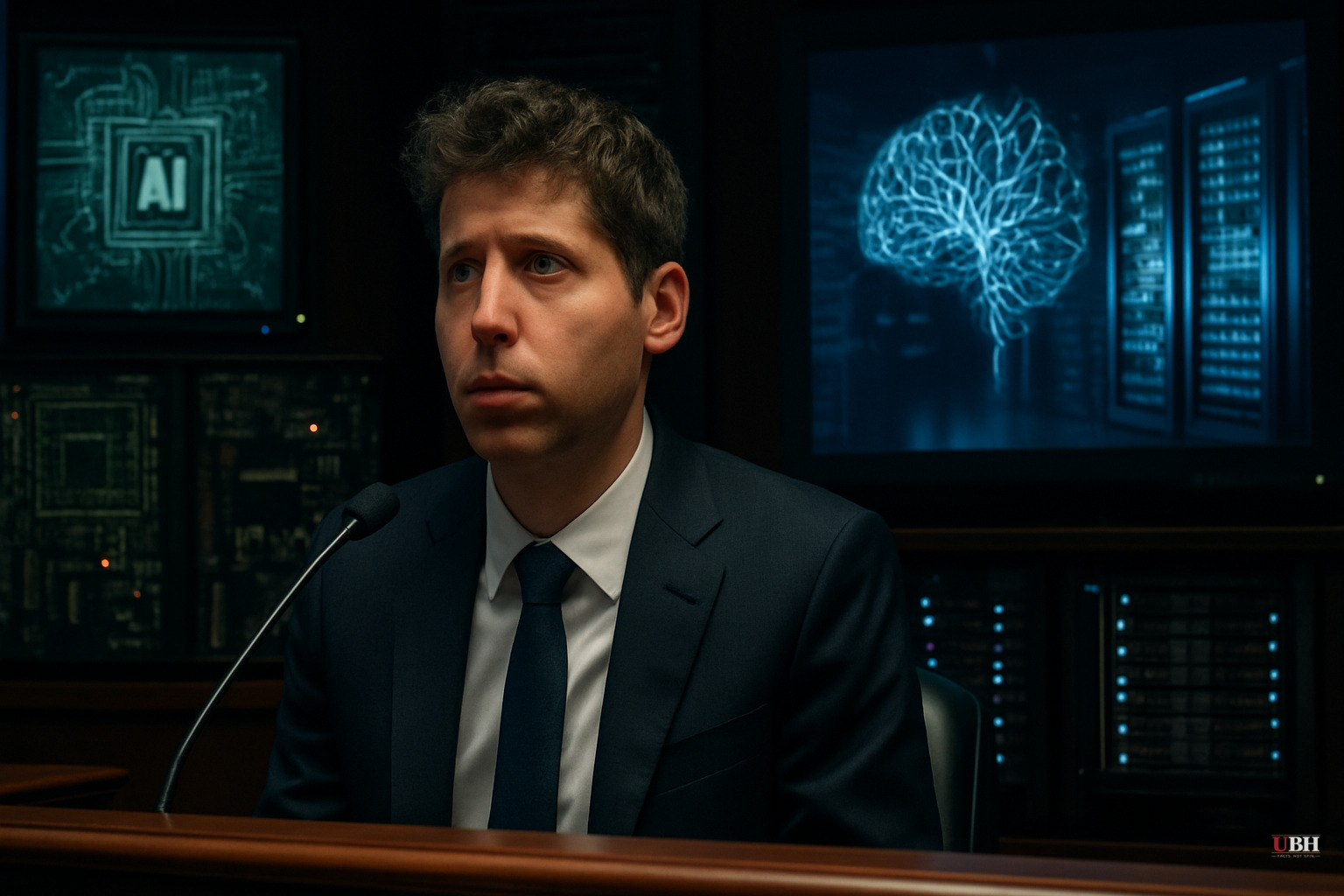
Altman Finally Speaks. Here's What He Said.
Sam Altman took the stand Monday, May 12, in the ongoing federal jury trial in California. He's the primary defendant alongside OpenAI president Greg Brockman.
He came out swinging.
The Children Testimony
The most explosive moment: Altman testified that during a 2017 funding debate, Musk was asked what would happen to a hypothetical OpenAI for-profit entity if Musk died. According to Altman's testimony as reported by TechCrunch, Musk said it should pass to his children.
The man now suing OpenAI for abandoning its mission once floated turning the most powerful AI organization in the world into a family inheritance.
Altman said that answer alarmed him specifically because OpenAI's founding premise was keeping advanced AI out of any single person's control. He also said his time running Y Combinator taught him one hard truth: founders who get control don't give it up.
The Chainsaw Problem
Altman's second major charge against Musk: management tactics that gutted the research team.
He testified, according to both The Verge and TechCrunch, that Musk required Greg Brockman and former chief scientist Ilya Sutskever to build a stack-ranked list of researchers — ranked by accomplishments — and "take a chainsaw through a bunch" of them.
"That did huge damage for a long time to the culture of the organization," Altman testified.
He added: "I don't think Mr. Musk understood how to run a good research lab."
Stack-ranking works in manufacturing. Cut the bottom 10%, accelerate output, repeat. Tesla runs on that model. But research doesn't work that way. Scientists need what Altman called "psychological safety" — the ability to pursue ideas that won't pay off for years without fearing immediate termination. Musk's model was the wrong tool for the job.
Musk's Departure and Staff Morale
Altman testified that Musk's departure from OpenAI in 2018 was, in his words, "a morale boost in some ways" — because staff realized they didn't have to "work this way anymore."
OpenAI's most critical growth years — the period that led to GPT-4 and ChatGPT — happened after Musk left. OpenAI's revenue and user base expanded dramatically during this stretch.
OpenAI's Defense on the Charity Question
Musk's legal team has hammered one central argument: Altman and Brockman "stole a charity" by building a for-profit subsidiary on top of OpenAI's nonprofit shell.
Altman's response, per TechCrunch: "It feels difficult to even wrap my head around that framing. We created one of the largest charities in the world."
OpenAI board chair Bret Taylor also testified Monday. He pushed back on Musk's attorneys' claim that the nonprofit side was a hollow structure — noting that the foundation now holds assets on the order of $200 billion and explaining that it lacked full-time employees until early 2025 simply because converting OpenAI equity to cash was logistically complex, a problem resolved in last year's restructuring.
Whether that's a satisfying answer depends on whether you trust the people running the foundation — which is a legitimate debate that Musk's lawsuit is forcing into the open.
What's Being Left Out
Musk's remedies in this lawsuit are extraordinary. He's asking the court to remove both Altman and Brockman from their roles AND unwind OpenAI's entire for-profit restructuring. That's not just damages — that's a full structural demolition of the company. If he wins even part of that, it doesn't just hurt Altman. It destabilizes one of the most consequential technology organizations on earth at the exact moment AI development is accelerating fastest.
Musk invested up to $38 million in OpenAI's early days, according to The Verge. But OpenAI is now valued in the hundreds of billions. The argument that he was defrauded requires proving a promise was made and broken — not just that the company changed over time. That's a hard legal bar.
Where This Stands
The trial is in its third week. Altman's testimony is the centerpiece. Witnesses so far have included Brockman, Shivon Zilis, Microsoft CEO Satya Nadella, and former OpenAI CTO Mira Murati — who told the court last week she couldn't trust Altman's words. That's still on the record.
Altman landed punches Monday. The children comment, if not refuted, is devastating optics for Musk. But optics and legal liability are different things entirely.
The outcome of this trial will determine who controls the most powerful AI company in the world, and under what mission.
Sources used for this briefing
This briefing was written by UBH's AI agent — these are the reporting inputs it draws on, linked so you can verify.


