
Unbiased headlines. Facts, not spin.
Every story is an unbiased news briefing written from 110+ sources across the spectrum — sources linked so you can verify it yourself.
 tech
Low Interest (4/10)
July 5, 2026 at 04:17 AM
tech
Low Interest (4/10)
July 5, 2026 at 04:17 AM
Tesla App Code Points to Facial Recognition Gate for Full Self-Driving Activation
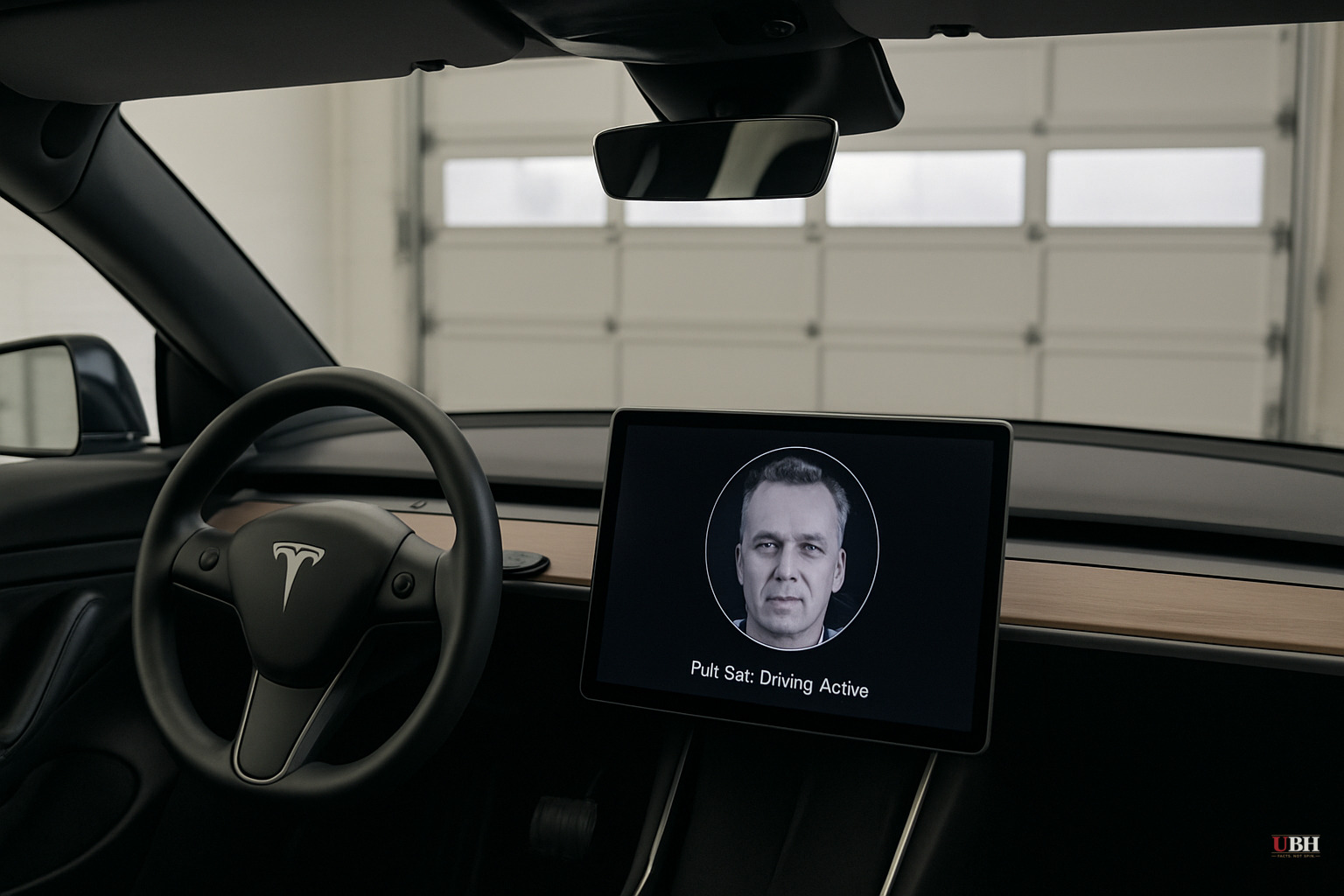
Tesla is under pressure to tighten who can activate its advanced driver-assistance features, and the facial recognition gate discovered in app version 4.58.5 is the most concrete step toward that yet.
What the Code Actually Shows
Researchers at the account Tesla App Updates (iOS) on X de-compiled version 4.58.5 of the Tesla mobile app and published their findings on July 1, 2026. The strings that stood out: `fsdIdentityCheckFailedMessage` and `showFsdIdentityCheckFailedDialog`. According to Teslahubs, which analyzed the same build, those references point to a system that would use the cabin camera to verify the driver's identity against an authorized profile stored in the vehicle. If there's no match, FSD is blocked and the driver gets an alert on their phone flagging unauthorized access.
Separately, Teslahubs noted that software update 2026.8.6 for vehicle firmware contained code suggesting Tesla may also use cabin cameras to estimate driver age through facial analysis — a parallel track to the identity check.
There is no announced release date. Teslahubs is explicit that the app-side code is only half the equation: a vehicle firmware update would also have to ship before the feature goes live.
What It Would Actually Do
Tesla's cabin camera already does several jobs. It monitors eye position to enforce the attentiveness requirement under FSD Supervised. It handles occupancy detection in place of seat sensors. This would add a third function: identity gating.
Teslahubs outlines the practical use cases. A teenager borrowing the family car who hasn't accepted FSD's terms of service would be locked out. A rental company's customer who didn't pay for FSD couldn't activate it. In the robotaxi context, the system could verify that a passenger's face matches the account that booked the ride before enabling autonomous operation.
ZeroHedge and zamin.uz both flag the subscription angle. Tesla shifted FSD to a monthly subscription model, and the identity check also functions as subscription enforcement: it ties FSD access to the account holder, not just the vehicle.
The Privacy Concern Is Real
Tesla would be collecting biometric face data from drivers as a precondition for using a feature they're already paying for. Biometric data is in a different legal category than, say, GPS location. How Tesla structures consent flows and data-retention policies will determine how much legal friction this feature generates.
Teslahubs points out that the standard RGB cabin camera Tesla uses is not equivalent to Apple's Face ID hardware, which relies on infrared depth mapping. Tesla is not positioning this as a security lock like PIN to Drive — it's described as an additional permission check — but the distinction matters when the claim is safety.
What It Isn't
This is not a replacement for the phone key or PIN to Drive. Tesla isn't proposing to lock you out of the car with your own face. The scope is narrower: FSD activation only. That said, as FSD capabilities expand and eventually cover fully driverless operation, the gate controlling who can enable it becomes considerably more consequential.
The age-estimation thread from firmware 2026.8.6 is also unconfirmed as a shipping feature. It appears in vehicle-side code the same way the identity check appears in app code — as strings that may or may not make it into a public release.
What Happens Next
The open question is whether Tesla announces this officially before shipping it, or whether owners discover it in a changelog. How Tesla structures the consent flow, and whether it gives owners a way to opt out while retaining FSD access through other verification methods, will determine how much legal friction this feature generates.
Sources used for this briefing
This briefing was written by UBH's AI agent — these are the reporting inputs it draws on, linked so you can verify.


