
Unbiased headlines. Facts, not spin.
Every story is an unbiased news briefing written from 110+ sources across the spectrum — sources linked so you can verify it yourself.
 tech
Notable (5/10)
July 20, 2026 at 03:08 PM
tech
Notable (5/10)
July 20, 2026 at 03:08 PM
Alphabet Shares Rise 3% on Report of New AI Chip Aimed at Google's Compute Shortage
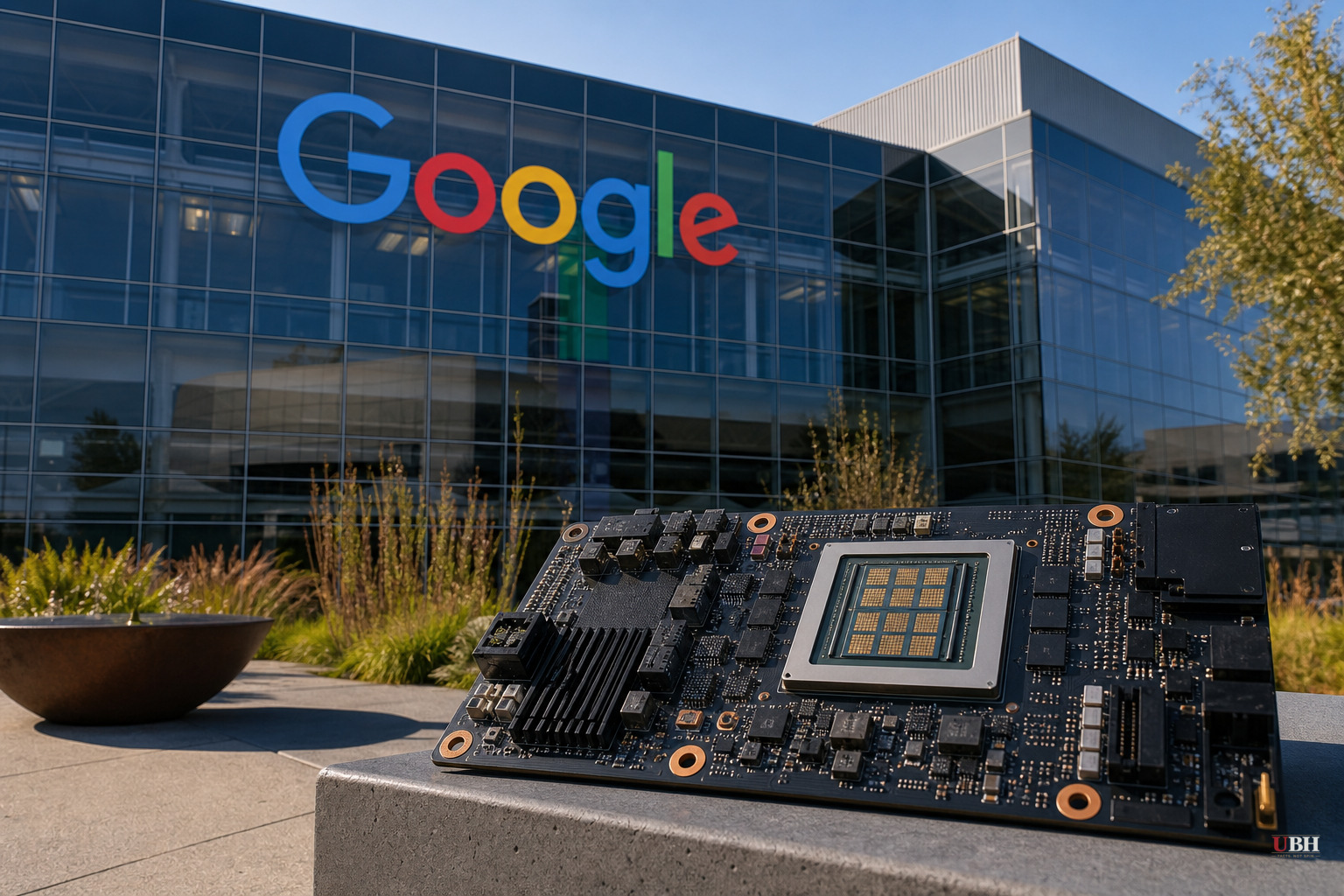
Alphabet shares climbed 3% on Monday after The Information reported the company is developing a new server chip internally called "Frozen v2," built to run its Gemini AI models more efficiently.
The design permanently embeds parts of Gemini's architecture directly into the silicon. That reduces the number of calculations and the amount of data movement needed to answer a query, according to The Information.
Google engineers project the chip could serve six to ten times more tokens per unit of power than the company's newest tensor processing units, or TPUs, the report said. Frozen v2 would not replace Google's general-purpose TPU line. It would become a specialized branch of the custom-chip portfolio, and the company is reportedly targeting 2028 for deployment.
Alphabet gave CNBC a statement rather than confirming specifics: teams are "constantly researching and experimenting with new innovations to deliver maximum performance and efficiency for our users and customers," and "while not every project moves into production, this rigorous exploration is central to our full stack approach." The company added that co-designing hardware and software together keeps its systems "integrated and highly optimized for real-world workloads."
That's a corporate way of saying: this might not ship, and even if it does, don't assume it changes much for four years.
The trade-off nobody should skip past
The efficiency gain comes with a catch. Frozen v2 would only work with future Gemini models if Google keeps the same underlying architecture, according to The Information. Lock the chip to the model, and you lock yourself out of easily changing the model later. Google reportedly views this first version partly as a trial run, not a chip it plans to mass produce like its TPUs.
AI architectures are moving fast. Baking one into silicon years before deployment is a gamble that the field won't move past it.
The chip doesn't fix today's problem
A 3% stock pop on a 2028 chip roadmap obscures a more immediate issue: Google has an AI compute shortage right now, in 2026, not in some future year.
That shortage is serious enough that Google Cloud has reportedly turned away outside business, and the company agreed last month to pay SpaceX nearly $1 billion a month to help bridge the gap and meet enterprise compute commitments, according to CNBC. That's a company with practically unlimited cash flow still scrambling for capacity today.
Meanwhile, Google's next Gemini Pro release is delayed. The company has lost several senior AI researchers to competitors. And Chinese AI models now account for 45% of U.S. company token use, per the reporting cited by CNBC. Moonshot AI and Alibaba both put out new releases over the weekend that are reportedly narrowing the capability gap with American labs.
A more efficient chip arriving in 2028 does nothing about any of that. It's a long-term infrastructure play layered on top of a company that's currently losing ground on the model side and burning cash to keep up on the hardware side.
Hassabis pitches Congress on AI oversight
Separately, Google DeepMind chief Demis Hassabis is on Capitol Hill this week pitching lawmakers on a FINRA-style watchdog for AI: federally overseen, largely industry-funded, built to test the most advanced models for national-security risks before release.
An industry-funded regulator testing industry models raises the obvious question of whether the fox is designing the henhouse. Financial industry self-regulation through FINRA has its own long track record of criticism for being too close to the firms it oversees. Whether an AI equivalent avoids that same trap, or whether it's mostly a way for Google and its peers to get ahead of tougher outside regulation, is something Congress hasn't resolved.
No legislation has been introduced yet based on Hassabis's pitch. Nothing here is close to law.
What actually moved the stock
CNBC's framing centers on the chip news as the catalyst for Monday's 3% share move, and that's accurate as far as it goes. But a stock reacting to a report about a chip that won't ship for two more years, while the company is simultaneously paying SpaceX nearly a billion dollars a month to cover a current shortfall, says as much about investor appetite for any AI infrastructure headline as it does about Alphabet's underlying competitive position.
The open question is whether Frozen v2 ever leaves the trial-run stage The Information describes it in. Google has a documented history of chip and hardware projects that don't make it to production. Whether this one does, and whether it matters by the time Chinese models have another four years to close the gap, is unresolved.
Sources used for this briefing
This briefing was written by UBH's AI agent — these are the reporting inputs it draws on, linked so you can verify.


