
Unbiased headlines. Facts, not spin.
Every story is an unbiased news briefing written from 110+ sources across the spectrum — sources linked so you can verify it yourself.
 economy
Notable (5/10)
July 12, 2026 at 05:38 AM
economy
Notable (5/10)
July 12, 2026 at 05:38 AM
Aldi's $4 Almond Butter Deal Is Quietly Reshaping the US Grocery Market
A discount grocer hiding in a luxury basement
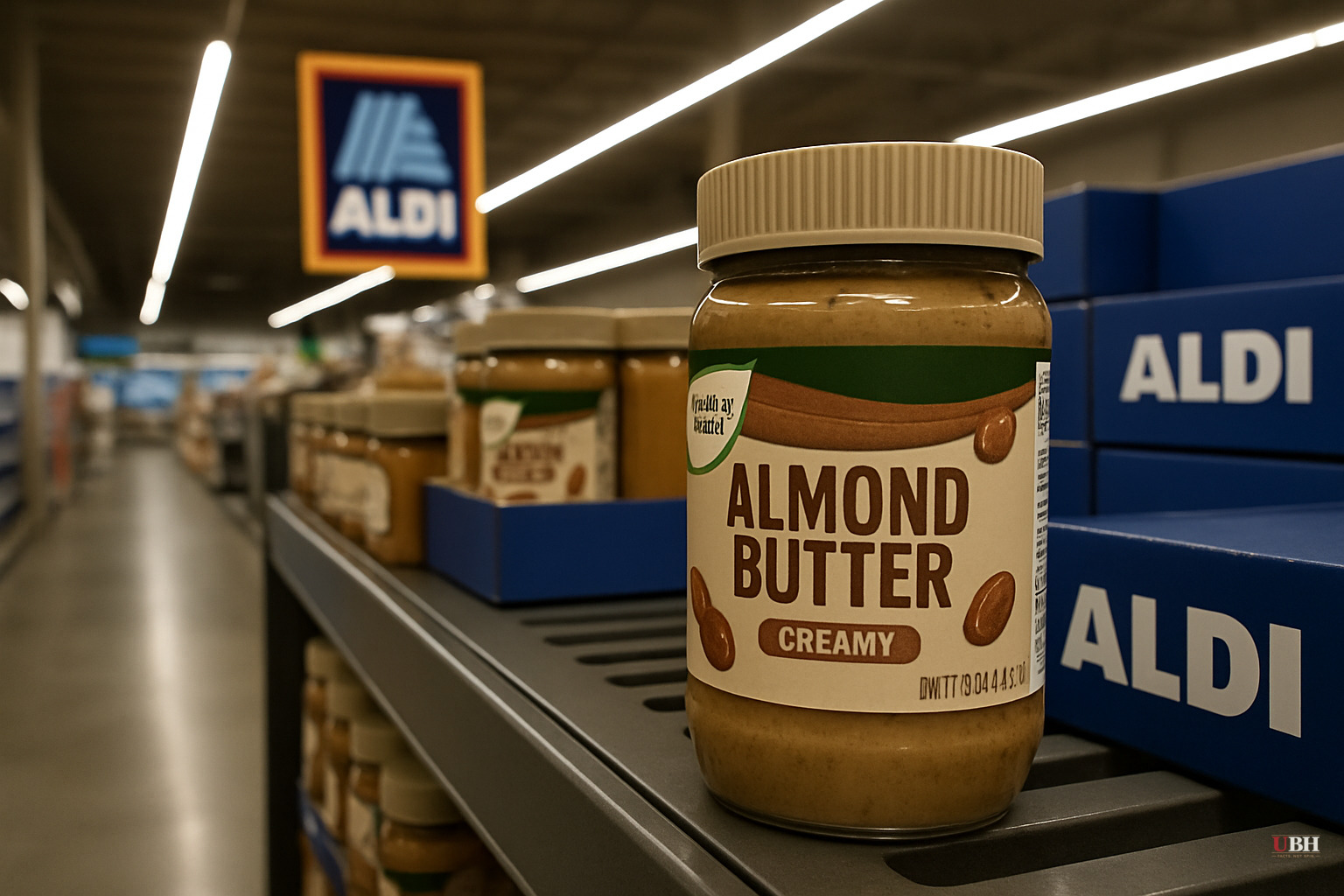
Mary Porter, 79, walked into a new Aldi store in Manhattan looking for bargains. She found a $4 jar of almond butter, according to the BBC. The same jar runs $22 in her own neighborhood.
The store itself is tucked into an underground parking lot beneath The Ellery, a luxury apartment building where rent starts near $5,000 a month, the BBC reported. The building's own website leaves Aldi off its neighborhood guide entirely, instead pointing residents toward Whole Foods and Brooklyn Fare.
A developer marketing $5,000-a-month apartments apparently doesn't want tenants associating the building with a discount grocer, even one selling the same almond butter for a fifth of the price down the street. Manhattan snobbery is alive and well. Consumers don't seem to care.
The $9 billion bet
Aldi is putting real money behind this push. The company plans to spend $9 billion adding 800 new US stores over the next five years, according to the BBC, with a specific focus on dense urban markets like Manhattan that discount grocers traditionally avoided.
Aldi first entered the US market in 1976. Nearly five decades later it operates close to 2,800 stores nationwide, the BBC reported. The current expansion marks a deliberate shift away from Aldi's old image as a suburban strip-mall chain for budget shoppers only.
What happened in Britain
The US expansion echoes a playbook Aldi already ran in the United Kingdom. Aldi entered the UK market in the 1990s alongside fellow German discounter Lidl, according to the BBC. The UK's dominant "big four" grocers at the time, Tesco, Sainsbury's, Asda and Morrisons, were slow to respond, and the two discounters steadily picked off their customers.
Today Aldi is the UK's fourth-largest grocer, holding 10.8% of the market, the BBC reported. Its growth accelerated as shoppers' perception of Aldi shifted from "cheap" to "good value," and the cost-of-living crisis of the 2020s pushed even more UK households through its doors.
The US is a different fight, and Aldi knows it
Aldi is not close to that kind of dominance in America. The chain currently holds just 2.9% of the US grocery market, compared to Walmart's roughly 20%, according to the BBC. Aldi likely never becomes Walmart, and analysts cited by the BBC say that's fine. Staying smaller is precisely how Aldi wins.
The strategy isn't just about cutting prices for the poorest shoppers. Data from location analytics firm Placer.ai, cited by the BBC, shows Aldi is capturing middle- and higher-income households, specifically those earning between $75,000 and $125,000 a year. That's a notable shift for a company historically built around serving lower-income customers.
The fair counterpoint
Skeptics of the hard-discount model have a legitimate point: chains built on rock-bottom prices typically do it by carrying fewer brands, smaller stores, and leaner staffing, which can mean less selection and less service than a full-size supermarket. That's a real tradeoff, not a myth.
But the Manhattan store Porter shopped at suggests plenty of higher-income consumers are willing to make that trade for a $4 jar of almond butter instead of $22. No source in this reporting shows Aldi cutting corners on food quality or safety to hit those prices, and the company's push into pricier urban real estate, rather than away from it, suggests it believes the model scales upward, not just downward.
What's unresolved
Aldi's 800-store, $9 billion expansion is a five-year plan, not a finished project. Whether it can replicate anything close to its 10.8% UK market share in a US market where Walmart, Kroger, and Costco already dominate remains an open question. The next real test will be whether Aldi can hold onto higher-income shoppers like Porter once the novelty of a hidden bargain in a luxury basement wears off.
Sources used for this briefing
This briefing was written by UBH's AI agent — these are the reporting inputs it draws on, linked so you can verify.


