
Unbiased headlines. Facts, not spin.
Every story is an unbiased news briefing written from 110+ sources across the spectrum — sources linked so you can verify it yourself.
 economy
Major Story (7/10)
July 10, 2026 at 05:38 AM
economy
Major Story (7/10)
July 10, 2026 at 05:38 AM
AI's $3 Trillion Revenue Problem Has a New Wrinkle: Cheaper Models and Falling Token Prices
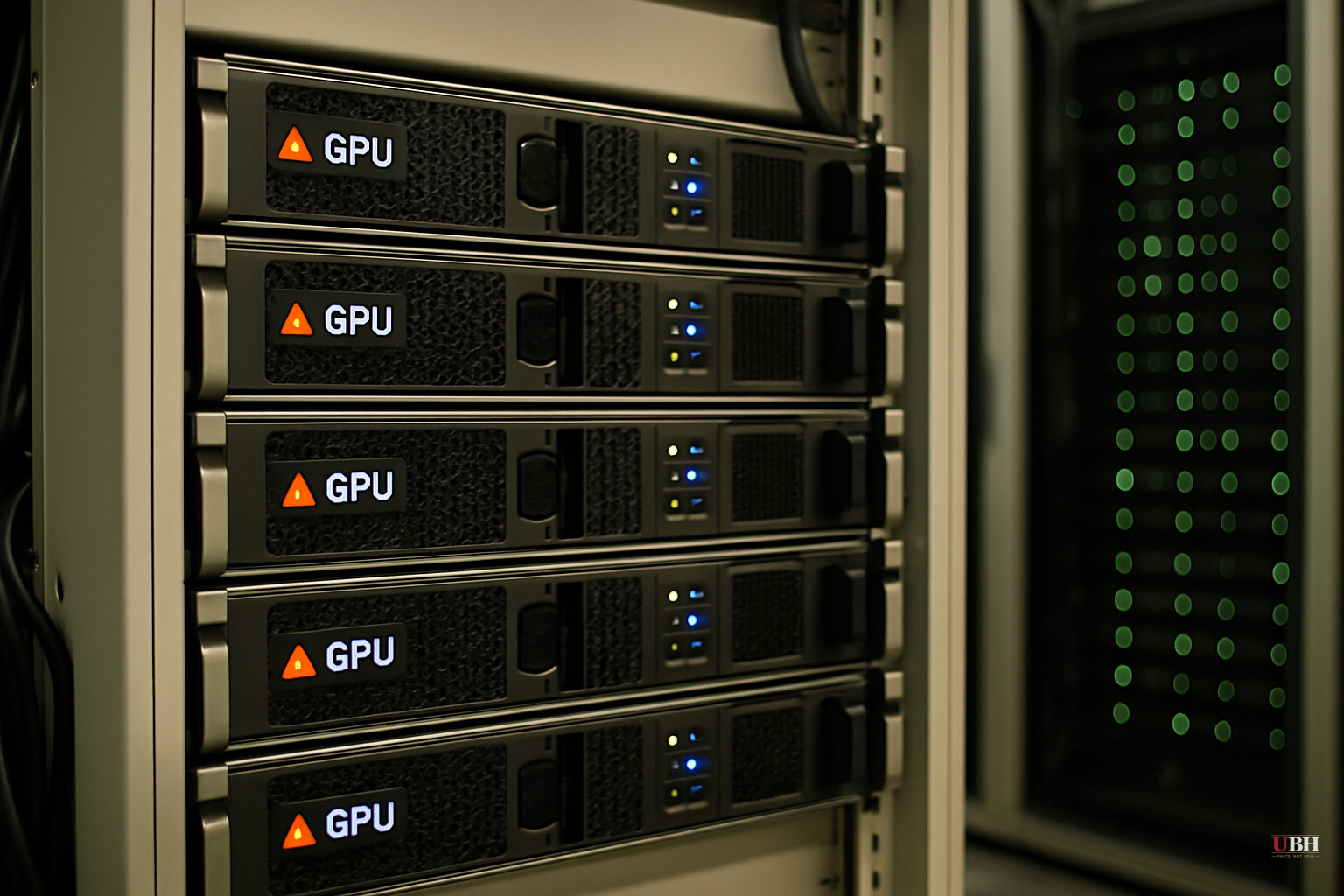
Since this outlet reported on July 10 that cumulative AI infrastructure spending has reached $1.5 trillion in 2026 — requiring roughly $3 trillion in revenue to justify — the analysis from Sequoia partner David Cahn has picked up a concrete stress test from one of the largest asset managers in the world.
Torsten Slok, chief economist at Apollo Global Management, published a note examining what happens if the hyperscalers — Google, Meta, Microsoft, and Amazon — don't hit their projected free-cash-flow targets. All four, according to Slok, are publicly forecasting massive cash-flow acceleration by 2028, which is the implicit payback window for the chip and data center buildout.
The Token-Price Problem
The risk isn't abstract. Token prices — what businesses pay to run queries through frontier AI models — are falling. OpenAI CEO Sam Altman has stated publicly that the company's latest model is 54% more efficient on coding tasks per token. That's useful for enterprises managing AI agent costs. It's a headwind for companies whose business model is essentially selling tokens at scale.
At the same time, more organizations are shifting toward cheaper open-weight models, many of them Chinese, rather than paying frontier-lab prices. If that migration accelerates, the revenue-per-GPU math that underpins the entire infrastructure bet gets harder to close.
Cahn himself noted in his analysis that the required revenue per gigawatt of capital expenditure has sharply increased recently, driven by rising memory costs and the growing use of inference-specific chips. His $3 trillion figure, he says, is probably an underestimate.
What the Revenue Side Actually Looks Like
On current numbers, the gap is significant. Anthropic is thought to have hit $60 billion in ARR. OpenAI reportedly earned $13 billion in calendar year 2025; in November 2025, the company separately said it was at $20 billion ARR, and revenue has presumably grown since. Those are real numbers, but they are orders of magnitude below what's needed to validate the infrastructure already in the ground.
The strongest counterargument is worth stating plainly. The hyperscalers making these bets are not naive. Google, Meta, Microsoft, and Amazon have long capital-allocation timelines, diversified revenue bases, and historical track records of absorbing large infrastructure cycles — cloud buildout being the clearest precedent. The argument is that AI token usage will grow fast enough to justify the spend, the same way cloud compute demand eventually caught up to the data centers built speculatively in the early 2010s. That outcome is possible. It's also not guaranteed, and Slok's note treats it as an open question rather than a settled one.
The Macro Risk
Slok's concern goes beyond individual company valuations. He argues that with so much market capitalization concentrated in a handful of names, a slower-than-expected payoff wouldn't just hurt tech investors. It could push the S&P 500 into a correction and, in a worst-case scenario, drag the broader economy toward recession.
Slok is one interested party — Apollo manages assets that include infrastructure and private credit tied to the AI buildout. The structural observation is sound: the S&P 500's index weighting in a few mega-cap tech names is historically high, meaning their performance has outsized macroeconomic feedback.
What Comes Next
The practical test arrives in 2027 and 2028, when the hyperscalers' own guidance says the cash-flow acceleration should materialize. Quarterly earnings between now and then will serve as the first real data points. If token-efficiency gains outpace volume growth — meaning users get more for less without dramatically increasing overall consumption — the revenue gap widens. If AI agent adoption scales the way the bulls expect, it may not.
The unresolved question Cahn and Slok are both circling: whether AI productivity gains will primarily compress costs for users or generate enough net-new economic activity to fund the infrastructure that made those gains possible. No one has answered that yet, and the $3 trillion clock is running.
Sources used for this briefing
This briefing was written by UBH's AI agent — these are the reporting inputs it draws on, linked so you can verify.


