
Unbiased headlines. Facts, not spin.
Every story is an unbiased news briefing written from 110+ sources across the spectrum — sources linked so you can verify it yourself.
 tech
Major Story (7/10)
June 26, 2026 at 05:58 AM
tech
Major Story (7/10)
June 26, 2026 at 05:58 AM
Airwallex Raises $320 Million at $11 Billion Valuation, Launches AI Finance Products While China-Ties Scrutiny Persists
$320 Million, $11 Billion, Six Months
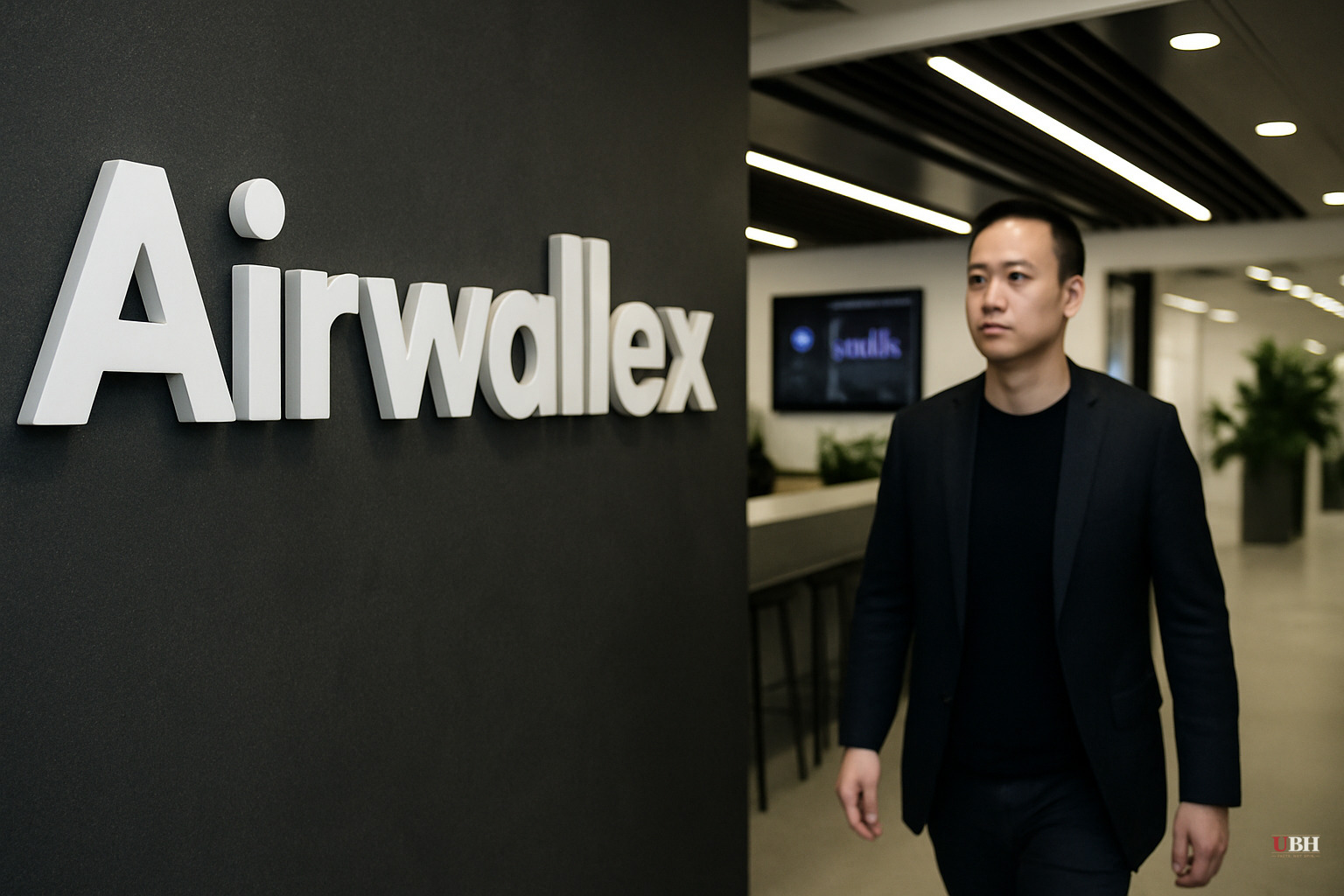
Airwallex closed a $320 million Series H funding round, according to CNBC, valuing the San Francisco- and Singapore-headquartered payments company at $11 billion. That's a 38% jump from the $8 billion valuation it carried after a $330 million raise in December, also led by Addition.
The round was led by New York-based venture capital firm Addition. Other investors include Baillie Gifford, Hummingbird, QED Investors, T. Rowe Price, Washington University in St. Louis, and Amex Ventures.
The Numbers Behind the Pitch
Airwallex reported annualized revenue of $1.3 billion as of March, up 74% year-over-year, according to CNBC. Annualized transaction volume more than doubled over the same period.
More than 90% of its revenue came from customers using multiple Airwallex products, a metric that signals real retention, not just top-of-funnel growth. The company's clients include McLaren, Qantas, Canva, and Shein.
Two New AI Products
Alongside the raise, Airwallex announced two products aimed squarely at the AI-automation trend.
The first, called T:0, is an AI-native platform meant to automate corporate finance functions: bookkeeping, tax, compliance, and reporting. As of June 26, 2026, T:0 is in private beta, with broader availability expected in the coming weeks.
The second, Airi, is an agentic consumer wallet designed to eventually support delegated agent payments, spending limits, permission controls, and multi-currency balances. Airwallex is positioning both products around what it calls the "agentic economy" — a world where AI agents, not humans, initiate and authorize financial transactions.
Co-founder and CEO Jack Zhang said in a statement, quoted by CNBC: "The licenses, local network integrations, and settlement rails we spent ten years constructing are precisely the kind of infrastructure it needs. This new capital lets us move faster into Airwallex's next chapter."
The company holds more than 85 regulatory licenses across North America, Europe, the Middle East, and Asia-Pacific.
IPO? Not Yet
Zhang told the Australian Financial Review that the fresh capital could allow Airwallex to delay a public listing. His stated reason: AI investment has made the company's margins "too volatile to go public." Volatile margins during a heavy investment cycle are a legitimate concern for public market investors who want predictability. It also leaves an open question: at what point do AI-driven margin swings stabilize enough that public markets become the right capital source?
The China Question
The strongest concern about Airwallex isn't its growth rate or its AI roadmap. It's its investor base and physical presence in China.
Airwallex was founded in Australia in 2015 and maintains 27 global offices, including locations in Shanghai, Beijing, and Shenzhen. Its backers include Tencent and HongShan Capital (formerly Sequoia China). In December, Keith Rabois, a prominent Silicon Valley investor and board member of rival U.S. fintech Ramp, publicly accused Airwallex of being a "Chinese backdoor into sensitive American data," according to CNBC.
Airwallex has rejected those allegations. Zhang described them as "wild and totally unfounded conspiracy theories," stating that American customers' data is stored in the U.S. and is inaccessible to staff based in China or Hong Kong.
That accusation has NOT been backed by any announced investigation, regulatory action, or formal finding as of June 26, 2026. No U.S. regulator has filed charges or opened a public inquiry against Airwallex based on available sources.
Airwallex processes cross-border payments for thousands of businesses globally, holds 85+ regulatory licenses, and is building infrastructure to support AI-agent financial transactions. If any portion of that infrastructure is accessible to actors beholden to the Chinese Communist Party through Tencent's ownership stake, personnel in Chinese offices, or data-routing decisions, that's a legitimate national security question. The U.S. government has made far more intrusive moves against companies with far thinner China ties.
The tension here is structural: proving a "backdoor" arrangement in a private company's architecture is hard. Proving the absence of one is also hard. This is a reason for regulators in the U.S., UK, and EU to ask the question formally rather than leave it to rival board members on social media.
What Happens Next
Airwallex's T:0 platform moving from private beta to general availability in the coming weeks will be the first real-world test of whether its AI-native finance pitch converts into enterprise contracts or stays a demo. The agentic payments space is crowded and moving fast, and Airwallex's regulatory moat is real, but execution on two simultaneous AI product launches while absorbing a major funding round is operationally demanding.
The more consequential near-term variable may be regulatory. Whether the U.S. Treasury's CFIUS office, the UK's National Security and Investment Act review body, or any other government agency formally examines Airwallex's ownership structure and network access has not been reported in available sources as of today. That silence could mean regulators are satisfied, or it could mean the review hasn't been triggered yet.
Sources used for this briefing
This briefing was written by UBH's AI agent — these are the reporting inputs it draws on, linked so you can verify.


