
Unbiased headlines. Facts, not spin.
Every story is an unbiased news briefing written from 110+ sources across the spectrum — sources linked so you can verify it yourself.
 economy
Notable (5/10)
July 24, 2026 at 05:49 PM
economy
Notable (5/10)
July 24, 2026 at 05:49 PM
Airlines Mislabel Passengers As 'No-Shows' And Charge Them Full Fare To Get Home
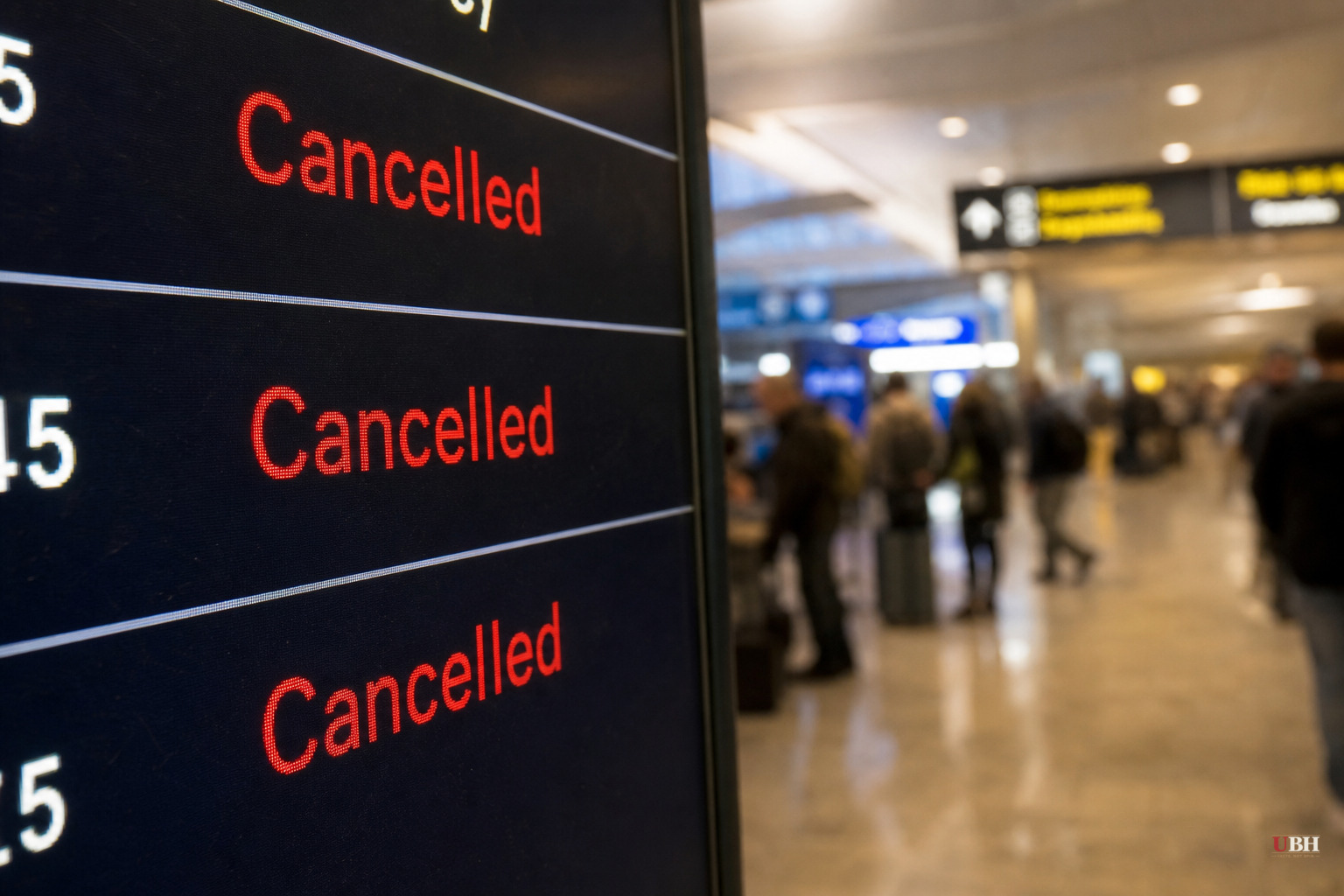
Miss one leg of your flight and airlines can nuke the rest of your itinerary. That's the no-show policy, and it's cost travelers hundreds of dollars, sometimes for mistakes that weren't even their fault.
Here's how it works. If a passenger doesn't check in or board a flight, most U.S. airlines treat every remaining flight on that itinerary as cancelled. Want to fly home on the return leg? Too bad. You missed the first flight, so the system wipes out the rest.
On top of that, airlines charge separate no-show fees. According to travel experts at Going.com, cited by the New York Post, those fees typically run $100 to $200 depending on the airline and fare class. United Airlines charges $125 for fliers who miss a flight and need award miles redeposited. JetBlue charges a $50 service fee when a refund gets incorrectly issued on a no-show booking, billed back through the travel agency.
The problem: airlines don't always get it right, and when they screw up, passengers pay for it.
Teresa McGee found that out flying American Airlines from Detroit to Charlotte. An agent told her she had no ticket on file, an error entirely on American's end, according to McGee's account reported by USA Today. American's fix wasn't a free correction. It was a new ticket, priced at $572, with zero refund on her original fare. McGee told USA Today the airline never gave her a reason for the mistake.
Dan Skilken, a travel agent, ran into a similar mess flying San Francisco to Paris. Bad weather delayed part of his trip and he missed a connection. The airline rebooked him onto another flight to Paris, no problem. But an agent hit the wrong button in the system, which flagged him as a no-show on the connection anyway. Skilken told USA Today he only found out when he checked his return reservation online while already in France and discovered the airline had cancelled his tickets. Because he works in the travel industry and knew how to fight the system, he got his refund. Most travelers wouldn't know where to start.
These aren't rare glitches happening to careless people. They're airline-side errors landing on customers who did everything right, with the burden falling entirely on the passenger to catch the mistake and fight it, often from a foreign country with no cell signal and a plane to catch.
Europe Already Banned This
The European Union voted to ban airlines from cancelling return tickets or charging extra fees when travelers miss one leg of a multi-flight itinerary, according to the EU Council, which said the law is designed to "simplify, clarify and strengthen air passenger rights." That rule directly targets the no-show practice described above.
The catch: it isn't in effect yet. The law won't be fully implemented until next year. Until then, European travelers face the same exposure Americans do, and once it kicks in, it still won't cover flights that don't touch the EU.
No similarly binding rule exists in the U.S. The Department of Transportation has pushed airlines on refund transparency in recent years, but nothing on the books stops a U.S. carrier from cancelling a return ticket over a missed outbound leg, whether the passenger caused the miss or the airline did.
An airline could reasonably argue no-show fees exist for a real reason: a seat held for a passenger who doesn't show up is a seat the airline can't resell on short notice, and fare classes are priced around passengers actually flying the itinerary they booked. That's a legitimate revenue-management argument on ticket types with steep discounts tied to non-refundable, single-use terms.
But an airline's own coding error should trigger a different standard. Passengers shouldn't face the same penalty as a genuine no-show when the airline made the mistake, especially without a fee waiver and without a faster path to a refund.
What Travelers Can Actually Do
Until U.S. regulators or Congress act, the fix is defensive, not systemic. Keep your airline's app on your phone and check your reservation status directly rather than trusting a gate agent's word. Save a copy, physical or digital, of every boarding pass as proof you were actually at the airport and checked in. Travel insurance can also cover rebooking costs in weather-delay situations like Skilken's, though it comes at an added cost most travelers skip until they need it.
No federal proposal currently exists to mirror the EU's ban on U.S. soil. Whether the Department of Transportation moves on it, or whether it takes a wave of stories like McGee's and Skilken's to force the issue, remains an open question.
Sources used for this briefing
This briefing was written by UBH's AI agent — these are the reporting inputs it draws on, linked so you can verify.


