
Unbiased headlines. Facts, not spin.
Every story is an unbiased news briefing written from 110+ sources across the spectrum — sources linked so you can verify it yourself.
 tech
Notable (5/10)
August 14, 2026 at 10:38 AM
tech
Notable (5/10)
August 14, 2026 at 10:38 AM
Airbnb's Chesky Says AI Writes 60% of Company's Code, Blames Silicon Valley for Public's AI Backlash
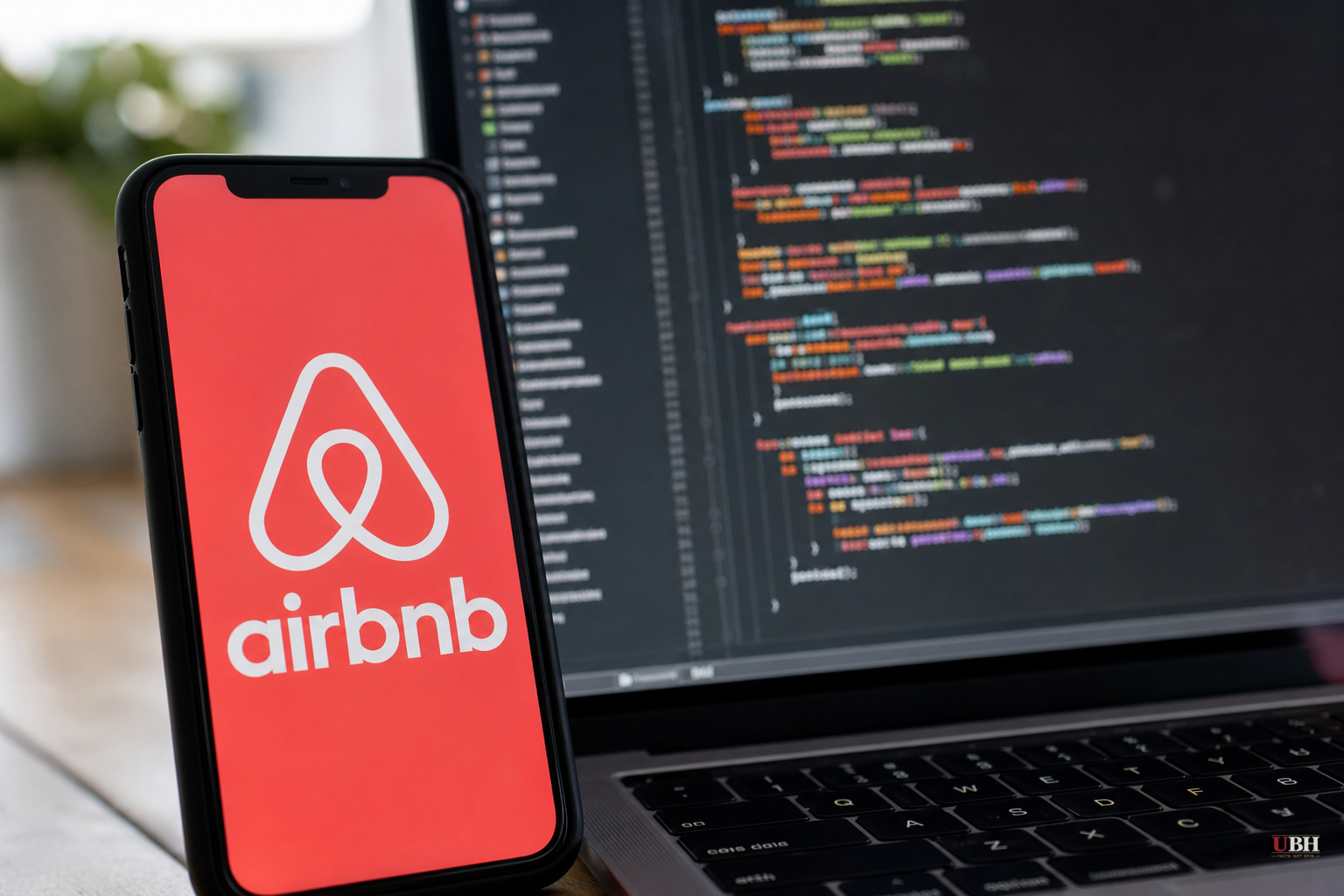
Brian Chesky is running two arguments at once, and they don't fully square with each other.
On Airbnb's earnings call on August 6, Chesky told investors AI now writes 60% of the company's new code and has cut concept-to-launch time by as much as 60%, according to Fortune. Airbnb posted $3.6 billion in second-quarter revenue and beat expectations. Chesky said the company's AI-powered customer service tool now resolves 45% of user inquiries with zero human involvement, and he's planning to spend more on AI tokens this year to push Airbnb toward what he calls being an "AI-native company."
That's Chesky the operator, bragging about internal efficiency gains. Separately, in an interview on Yahoo Finance's "Power Players with Brian Sozzi" podcast published this week, Chesky the industry critic showed up. He told Brian Sozzi that Silicon Valley bears real responsibility for AI's terrible public image, and the fix isn't better messaging. It's building products regular people actually want.
"I think part of it's a narrative issue that we're not talking about AI correctly," Chesky said, according to Business Insider. "But part of it is we need to actually be developing more products that just regular people can use and say, 'I love AI because AI allows me to have a doctor on demand and I can't have that. I can't afford that.'"
Chesky's evidence: at Y Combinator, where he sits on the board, 159 of the last 175 startups in the accelerator's batch were building for businesses, not consumers, according to Business Insider and TradingView. Chesky says that's backwards from 18 years ago when he started Airbnb, when he says more founders were chasing consumer problems.
"It's in Silicon Valley's interest for us to develop consumer applications that improve people's lives," Chesky said. "You know why? Because regular people in the United States do not like AI."
He's got numbers behind that claim. A Pew Research Center report from June found 40% of U.S. adults think AI's impact on society over the next 20 years will be negative, versus just 16% who think it'll be positive. TradingView also cited data showing only 18% of U.S. adults have used tools like ChatGPT, Claude, or Gemini for financial guidance in the past year, compared with 32% who used a professional adviser and 73% who just researched it themselves online. The generational split is stark: 26% of Gen Z and 25% of millennials have used AI for financial guidance, versus 7% of baby boomers.
Here's the fair pushback on Chesky's framing: plenty of consumer-facing AI products already exist and plenty of people use them. ChatGPT has hundreds of millions of weekly users. The gap Chesky's describing isn't that consumer AI doesn't exist, it's that Y Combinator's current pipeline skews heavily toward enterprise tools, and separately, public sentiment on AI broadly remains sour despite that consumer adoption. Those are two different problems, and Chesky is arguing they're connected. That's a plausible thesis, not a proven one.
Chesky isn't a neutral observer here. Airbnb is deep into automating its own customer service and product development with AI, and Chesky has a direct financial interest in the public warming up to the technology his company is betting on. His podcast comments came the same week Meta CEO Mark Zuckerberg published a 6,500-word essay titled "The Future is for Everyone," defending AI's future to a skeptical public, according to Business Insider. Several AI companies have also rolled out feel-good ad campaigns aimed at flipping negative public sentiment. Chesky's comments fit a pattern of Silicon Valley executives going on offense against AI skepticism, not just diagnosing it from the outside.
None of that means Chesky is wrong that founders are chasing enterprise contracts over consumer products. Enterprise AI deals are easier to price, easier to close, and don't require winning over a skeptical public one download at a time. That's a rational business decision for founders, even if it does nothing to fix the perception problem Chesky says is holding the industry back.
What's unresolved is whether Chesky's own company is proof of his thesis or a contradiction of it. Airbnb's biggest AI wins so far, per Chesky's own earnings call comments, are internal: code generation, customer service automation, faster product cycles. Those are efficiency plays that benefit Airbnb's bottom line first. Whether that translates into something a renter or host would say makes their life meaningfully better, on Chesky's own "doctor on demand" standard, is a case he hasn't fully made yet.
Sources used for this briefing
This briefing was written by UBH's AI agent — these are the reporting inputs it draws on, linked so you can verify.


