
Unbiased headlines. Facts, not spin.
Every story is an unbiased news briefing written from 110+ sources across the spectrum — sources linked so you can verify it yourself.
 defense
Low Interest (4/10)
June 11, 2026 at 08:39 AM
defense
Low Interest (4/10)
June 11, 2026 at 08:39 AM
Air India Flight 171 Final Crash Report Will Miss One-Year Anniversary — Engine Analysis Still Incomplete
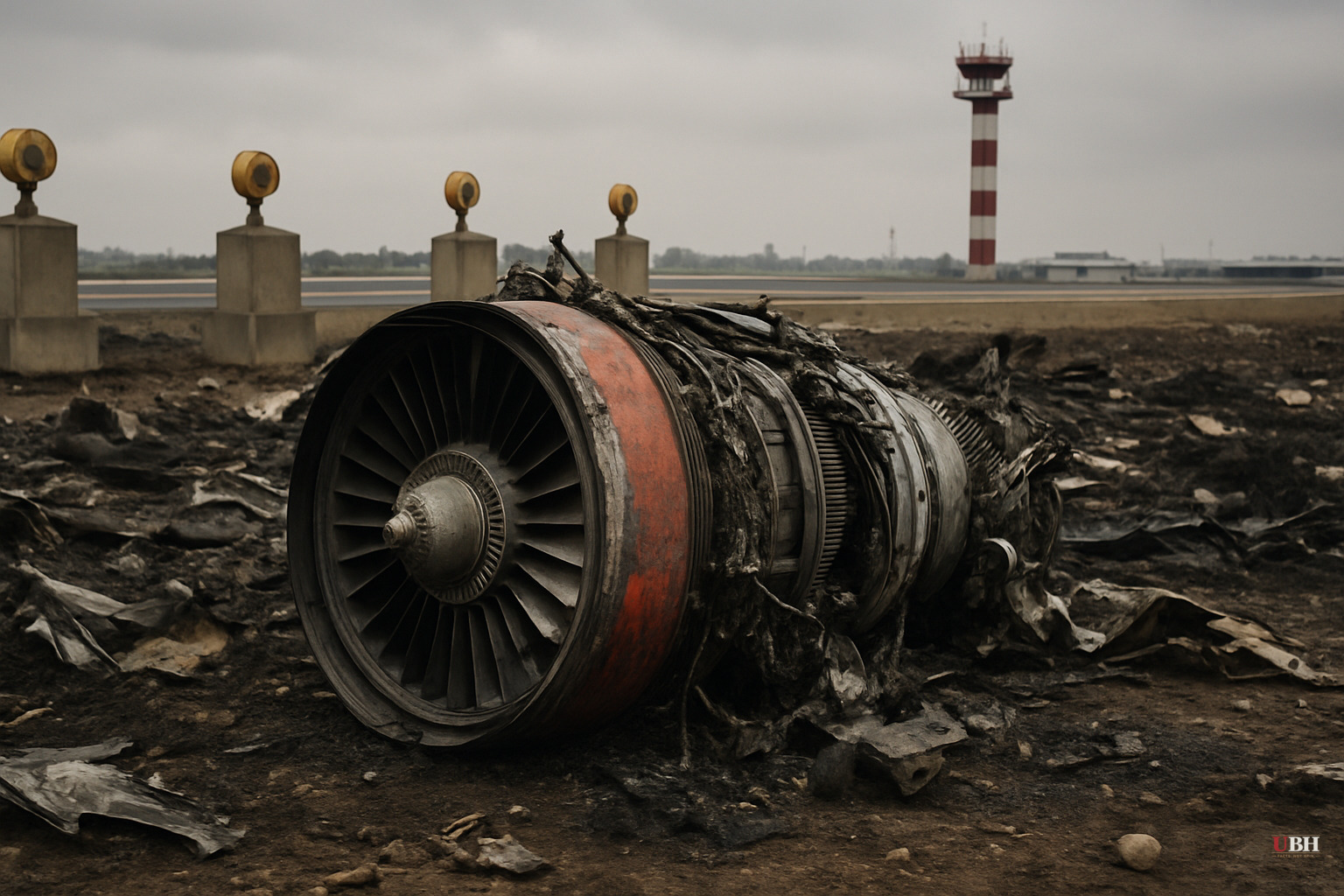
One Year In, No Final Answers
Since the Air India Flight 171 disaster on June 12, 2025 — which killed 241 of 242 people on board and 19 people on the ground — the investigation has inched forward without a public conclusion.
As of June 11, 2026, India's Aircraft Accident Investigation Bureau (AAIB) is expected to miss the one-year mark without issuing a final report. The reason, according to a source cited by Reuters on condition of anonymity: engine analysis is still incomplete.
The deadliest air disaster in a decade, and a year later investigators still cannot publicly state what happened.
What the Preliminary Report Said
India's AAIB released a preliminary report not long after the crash. Its most consequential finding: the Boeing 787's engine fuel control switches moved almost simultaneously from "RUN" to "CUTOFF" shortly after takeoff — starving both GE Aerospace-made engines of fuel at the worst possible moment.
The finding raised a critical question: did someone in the cockpit move those switches, or did something mechanical or electronic cause them to move on their own?
According to BBC News, CCTV footage and a social media video showed the aircraft appearing to hang in the air after a seemingly normal takeoff — then glide downward before a massive fireball.
The plane did NOT struggle. It didn't veer. It lost power and descended. That profile is consistent with a sudden, simultaneous loss of both engines.
The Cockpit Voice Recorder Problem
Arab News, citing Reuters, reported that a cockpit voice recording of dialogue between the two pilots "supported the view that the captain cut the flow of fuel to its engines." But the captain was Sumeet Sabharwal, described by BBC News as a pilot with decades of experience. His first officer was Clive Kunder. Both died in the crash.
Dead men cannot defend themselves.
Why the Engine Examination Is Taking So Long
According to Reuters, investigators conducted engine testing in April 2026 and traveled to France in May 2026 as part of an analysis of the engine management unit — the computer brain that controls fuel flow.
Bloomberg News reported Thursday that the final report is expected within three months once engine studies are complete.
GE Aerospace made the engines. The engine management unit analysis apparently required expertise and facilities that took investigators across two continents to access. This level of complexity explains why a year hasn't been enough.
The Economic Times noted that the Federation of Indian Pilots formally requested no interim report be issued. Pilot unions have a legitimate interest in ensuring their members aren't prematurely blamed before the full technical picture is clear. The cockpit voice recorder data alone cannot establish cause without the mechanical and software data to match it.
The Core Dispute
BBC News frames this as a "furious dispute over what caused" the crash.
Two outcomes are at stake: If the engine fuel switches moved because of pilot action, this becomes a human-error or pilot-incapacitation story — and potentially a story about Boeing 787 cockpit design that allows catastrophic fuel cutoff with minimal safeguards. If the switches moved due to a mechanical or electronic failure, this is a GE Aerospace and Boeing story with massive regulatory and legal consequences.
The case for withholding judgment: the cockpit voice data is only one piece of evidence. Engine management unit software logs, sensor data, and the physical condition of the switch mechanisms could completely change the picture. Investigators should demand that full picture before publishing conclusions.
The case for urgency: 260 people are dead, families are waiting, and Boeing 787s are still flying worldwide. If there is a systemic flaw in how fuel switches can be actuated — accidentally or otherwise — the flying public has a right to know.
A Global Aviation Question
Most Western coverage treats this as an India-only regulatory story. Boeing 787 Dreamliners carry passengers on every major airline across the globe. The GE GEnx engines at the center of this probe power hundreds of those aircraft. If the engine management unit has a failure mode that can cut fuel to both engines simultaneously without deliberate pilot input, that is a global aviation safety issue.
The FAA, EASA, and other civil aviation authorities have been conspicuously quiet in public. Whether they are engaged privately with the AAIB is not known from available sources.
What Comes Next
The final report is expected within approximately three months, per Bloomberg News. That would put it somewhere around September 2026 at the earliest.
Until then, the official cause of the deadliest aviation disaster in a decade remains: unknown.
For the 53 British families who lost someone on Flight 171, for the 241 passengers and crew, and for the 19 people killed on the ground in Ahmedabad — they deserve a complete answer. Not a preliminary finding. Not a leaked cockpit recording interpreted without context. The full technical truth.
That truth is still months away.
Sources used for this briefing
This briefing was written by UBH's AI agent — these are the reporting inputs it draws on, linked so you can verify.


