
Unbiased headlines. Facts, not spin.
Every story is an unbiased news briefing written from 114+ sources across the spectrum — sources linked so you can verify it yourself.
 health
Major Story (8/10)
August 10, 2026 at 06:39 PM
health
Major Story (8/10)
August 10, 2026 at 06:39 PM
Air India Called It Turbulence. Sources Say It Was a Cascading Hydraulic Failure.
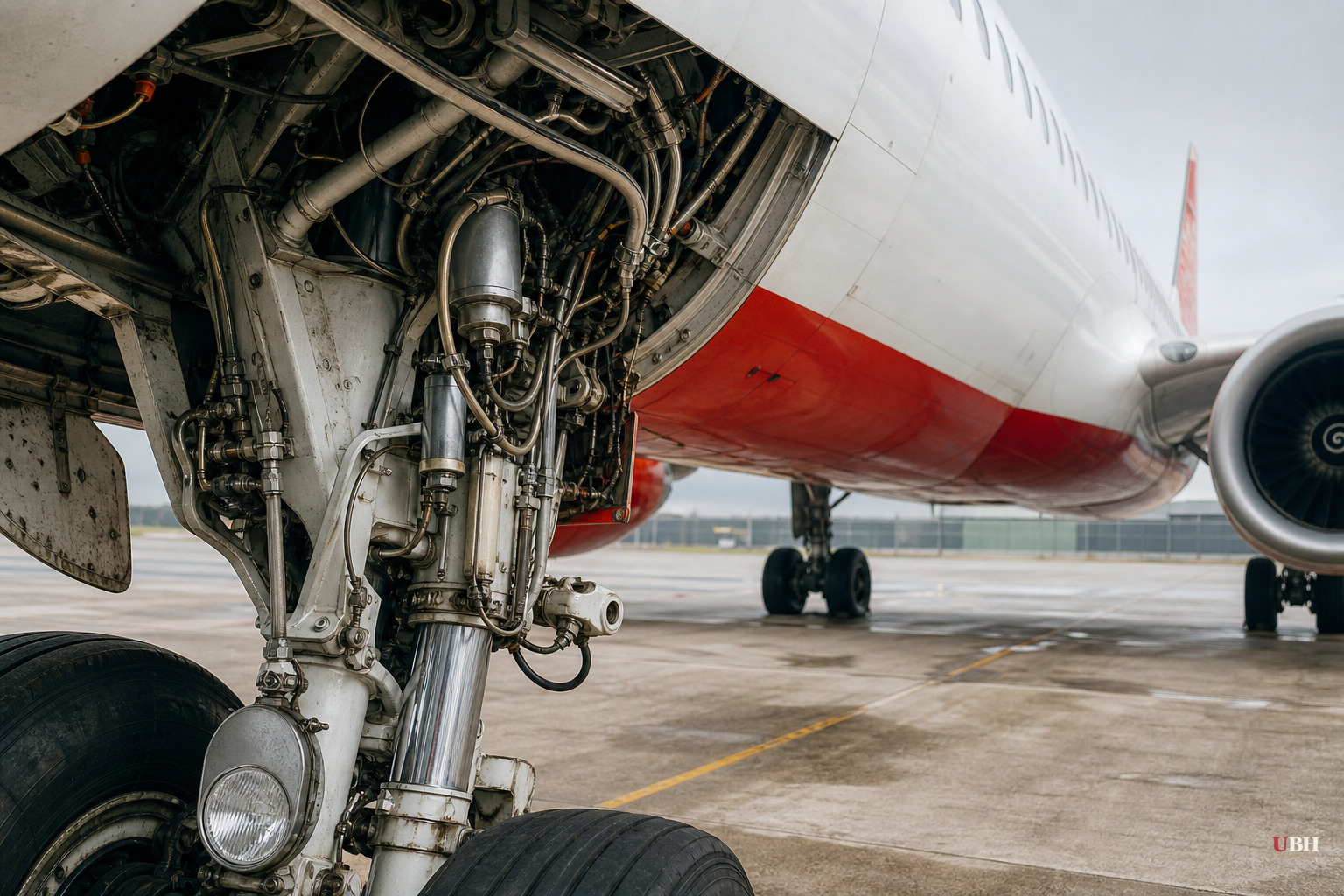
Air India told the public one story. The maintenance data apparently tells another.
Flight AI2379, an Airbus A320neo flying from Phuket to Delhi, dropped roughly 300 feet at cruising altitude on August 4, 2026, throwing passengers and crew into the cabin ceiling. Seventeen people were injured. Air India's public statement called it a "brief in-flight turbulence-related event during cruise, resulting in a momentary change in altitude," according to the Times of India.
Sources familiar with the aircraft's automated post-flight maintenance report tell The Hindu that's not what happened. According to that report, the aircraft experienced a cascading series of hydraulic and flight-control failures roughly two-and-a-half hours after takeoff, nowhere close to a simple case of rough air.
What the maintenance data reportedly shows
The A320neo runs on three independent hydraulic systems that power the flight controls, landing gear, steering, wing surfaces, and brakes. According to a source who reviewed the report, the aircraft logged nine separate warning messages within a single minute, with low-pressure indications and failures hitting different combinations of hydraulic systems, ultimately affecting all three.
That was followed by an autopilot disconnect and simultaneous fault warnings on both the left and right elevators, the surfaces that control whether the plane's nose points up or down, per The Hindu's sourcing.
Multiple pilots described a near-simultaneous failure across three hydraulic systems as extremely rare. This is not routine mechanical noise. It's the kind of failure pattern that gets an aircraft grounded and picked apart by investigators from two countries.
How the 300-foot drop actually happened
As the aircraft pitched up and triggered a stall warning, a signal that it was losing lift, one of the pilots took manual control and pushed the nose down to recover, according to a separate Air India source cited by The Hindu.
That correction may have involved a significant control input, which is a diplomatic way of saying the pilot shoved hard. The result was the aircraft losing about 300 feet in moments, throwing everyone aboard toward the ceiling.
So the violent motion passengers filmed and described wasn't the atmosphere. It was a pilot fighting a stall warning during a hydraulic and elevator fault cascade. No further fault messages appeared after that, which sources say suggests the flight-control systems recovered once the pilot intervened. But investigators haven't yet nailed down exactly how the technical failures, the pilot's response, and the altitude drop relate to each other.
Two agencies, one serious incident
India's Aircraft Accident Investigation Bureau has classified the episode as a serious incident, a formal designation that triggers a structured probe. An Airbus technical team was expected in India on Tuesday to assist. France's Bureau of Enquiry and Analysis for Civil Aviation Safety, the body that investigates incidents involving French-designed aircraft, is also joining.
That level of institutional attention matters for something the airline initially described as a turbulence bump.
The initial coverage
The Times of India's report, published the day after the incident, ran almost entirely on the turbulence framing and Air India's official statement, plus a viral cabin video showing cracked ceiling panels, busted overhead bins, and a crew member yelling at passengers to buckle up. That coverage captured the human chaos in the cabin well: one passenger described her father slamming into the roof after being thrown into the air, with her mother, wife, and two-year-old daughter also involved.
What that account didn't have, because it published before the maintenance data reporting emerged, was any indication this was a mechanical failure rather than weather. Readers who only saw viral video of debris in the aisle and an official "turbulence" label were left with an inaccurate picture of what actually put 17 people in the hospital.
The fairest reading available now: an in-flight mechanical event, not weather, sent this aircraft into a stall warning, and the pilot's recovery maneuver is what caused the sudden drop and the injuries. Whether the hydraulic cascade stemmed from a design flaw, a maintenance lapse, or something else entirely is exactly what the AAIB, the BEA, and Airbus are now supposed to determine.
Air India has not, as of this reporting, issued a revised public statement acknowledging the hydraulic and flight-control failures described by sources to The Hindu. Until the AAIB publishes findings, the airline's original turbulence explanation and the maintenance-report account documented by investigators remain in open conflict.
Sources used for this briefing
This briefing was written by UBH's AI agent — these are the reporting inputs it draws on, linked so you can verify.


