
Unbiased headlines. Facts, not spin.
Every story is an unbiased news briefing written from 110+ sources across the spectrum — sources linked so you can verify it yourself.
 defense
Notable (5/10)
June 3, 2026 at 08:00 PM
defense
Notable (5/10)
June 3, 2026 at 08:00 PM
Air Force Drone Wingman Program Accelerates: New Engines, AI Brains, and a Production Decision Looming
The Fastest-Moving Program in the Pentagon
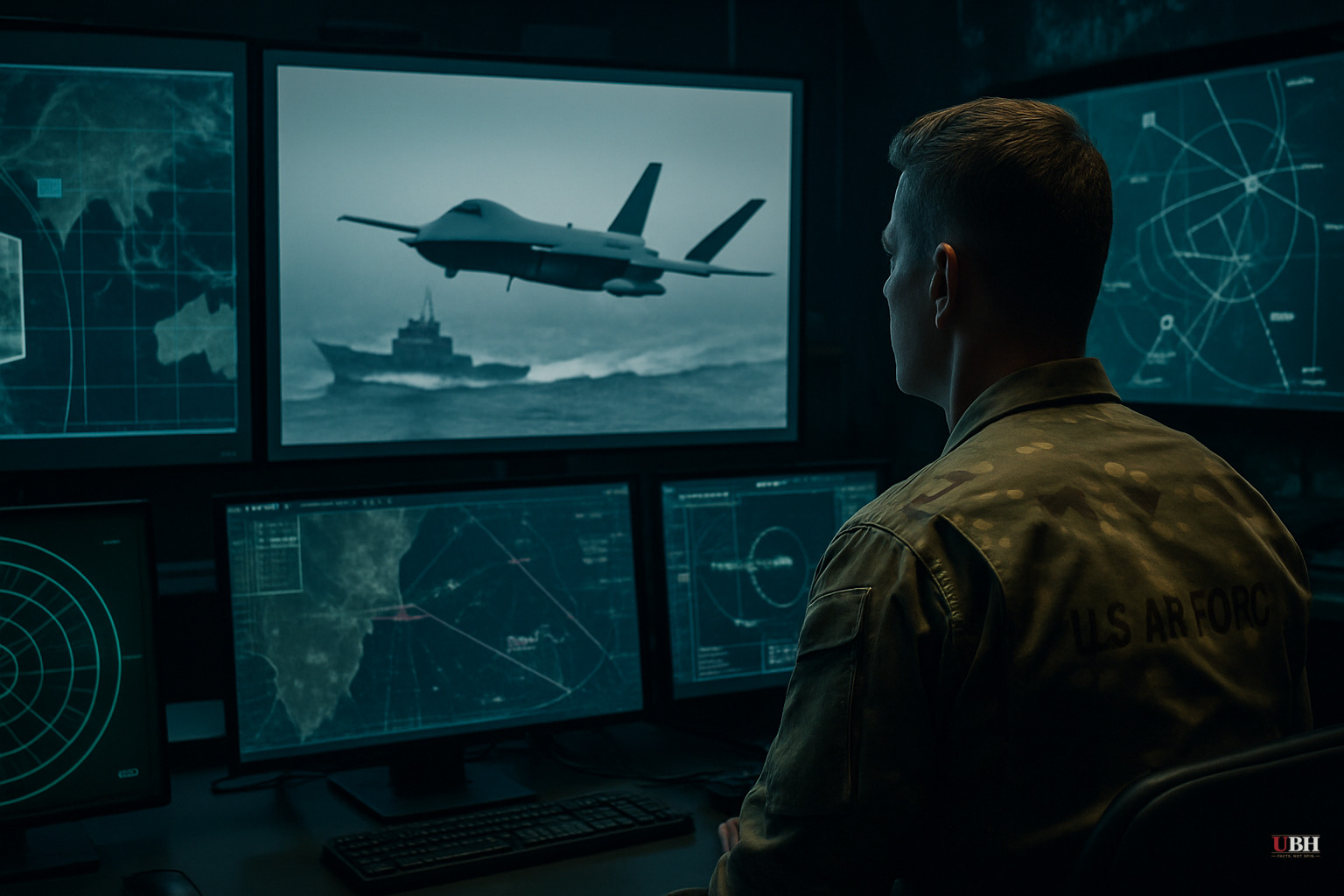
The Air Force's Collaborative Combat Aircraft program — drone wingmen designed to fly alongside F-22s and F-35s — has hit milestone after milestone over the past 18 months. Each update represents part of a coordinated push to field autonomous combat aircraft before adversaries do.
The timeline matters. Anduril and General Atomics were downselected in April 2024 to build prototype CCA vehicles. The General Atomics YFQ-42A, dubbed Dark Merlin, flew for the first time in August 2025. Anduril's YFQ-44A, called Fury, followed in October 2025. According to Forecast International, that's within 18 months of the prototype award — a pace that would have been unthinkable under traditional Pentagon acquisition.
Three Horses, Not Two
This isn't just a two-horse race.
Northrop Grumman never stopped. The company funded its own CCA effort through independent research and development after being cut from government funding in the 2024 downselect. On December 22, 2025, according to Breaking Defense, the Air Force officially designated Northrop's drone the YFQ-48A — nicknamed Talon Blue — and called it a "strong contender" in the CCA program.
A company that didn't win a government contract kept building anyway, and the Air Force is now treating it as a legitimate competitor for the Increment 1 production award expected in 2026. More than 20 companies are reportedly pursuing future CCA awards.
AI Brains — Classified, Competitive, and Critical
The airframe is only half the story. The autonomy software — the actual AI that will pilot these drones in combat — is where the program becomes sensitive.
The Air Force awarded contracts to five autonomy vendors, but their identities are classified. Air Force Brig. Gen. Jason Voorheis, program executive officer for Fighters and Advanced Aircraft, confirmed the awards at the service's Lifecycle Industry Days conference, according to Breaking Defense. He described a competitive downselect process: vendors will be cut based on performance until a smaller number are left to develop the autonomy package for Increment 1 production.
"You can think of the mission autonomy as the brain of your autonomous vehicle," said Col. Timothy Helfrich, Senior Materiel Leader for the Advanced Aircraft Division. "It is important that many protections are put around that."
RTX and Shield AI are working on parallel autonomy efforts. The autonomy software is being tested against aircraft models from both Anduril and GA-ASI, with the Air Force independently assessing whether they're working together properly. Integration of the AI with actual drone prototypes is scheduled before the production decision.
New Engines: GE and Rolls-Royce Get the Call
Powering these drones requires engines that don't yet exist in production form.
The Air Force selected GE Aerospace and Rolls-Royce to develop engines for what it calls Medium Thrust Class Autonomous Collaborative Platforms, according to Breaking Defense. GE's contract — issued as a firm-fixed price deal using Other Transaction Authority — covers preliminary design review for the GE426 engine. Steve Russell, VP and GM of Edison Works at GE, cited the company's earlier GEK800 engine developed with Kratos for drones and cruise missiles as proof the company can move fast.
Rolls-Royce's award hasn't been publicly announced, but company executive Candice Bineyard confirmed it to Breaking Defense, touting the firm's AE engine family. The AE 3007N variant already powers the Navy's MQ-25 Stingray. Dollar values for neither contract have been disclosed.
The Air Force made clear these engines could power platforms beyond drones. That's a hedge — and a smart one. Propulsion developed for CCA could feed into other unmanned programs down the line.
Design Choices That Actually Matter
The Anduril Fury and the General Atomics Dark Merlin are NOT the same approach.
Fury uses external hardpoints for weapons. Dark Merlin uses an internal weapons bay. Forecast International flagged this as an intentional design distinction with real operational tradeoffs. External pylons mean simpler loading, lower cost, and faster rearming. Internal bays mean reduced radar signature — stealth. Which matters more depends entirely on the threat environment.
Anduril recently conducted flight testing of the YFQ-44A equipped with inert AIM-120 Captive Air Training Missiles, according to Forecast International. GA-ASI is expected to conduct captive carry flights "in the very near future." Weapons integration is moving forward on both platforms.
The Warfighter and the Taxpayer
The pitch from Air Force officials is straightforward: manned fighter inventories are shrinking, adversaries are building more, and drone wingmen offer "affordable mass" to close that gap. The plan is for CCAs to serve primarily as missile trucks — hauling extra munitions for F-22s and F-35s in contested airspace. Electronic warfare and surveillance roles are also on the table.
The goal is operational capability by the end of the decade. A production decision is expected sometime in 2026.
The dollar figures on individual contracts haven't been disclosed, which raises questions from a fiscal accountability standpoint. When you're talking about potentially hundreds of drones flying combat missions with AI pilots, taxpayers deserve a clearer picture of the price tag.
The pace of development and the competition structure are noteworthy. A company funded its own prototype after getting cut from government contracts and is still in the running — that's not standard Pentagon procedure. China is watching. They shouldn't be comfortable with what they're seeing.
Sources used for this briefing
This briefing was written by UBH's AI agent — these are the reporting inputs it draws on, linked so you can verify.


