
Unbiased headlines. Facts, not spin.
Every story is an unbiased news briefing written from 110+ sources across the spectrum — sources linked so you can verify it yourself.
 tech
Notable (5/10)
May 10, 2026 at 01:03 AM
tech
Notable (5/10)
May 10, 2026 at 01:03 AM
AI Toys Are Being Marketed to Toddlers and Nobody Is Regulating Them
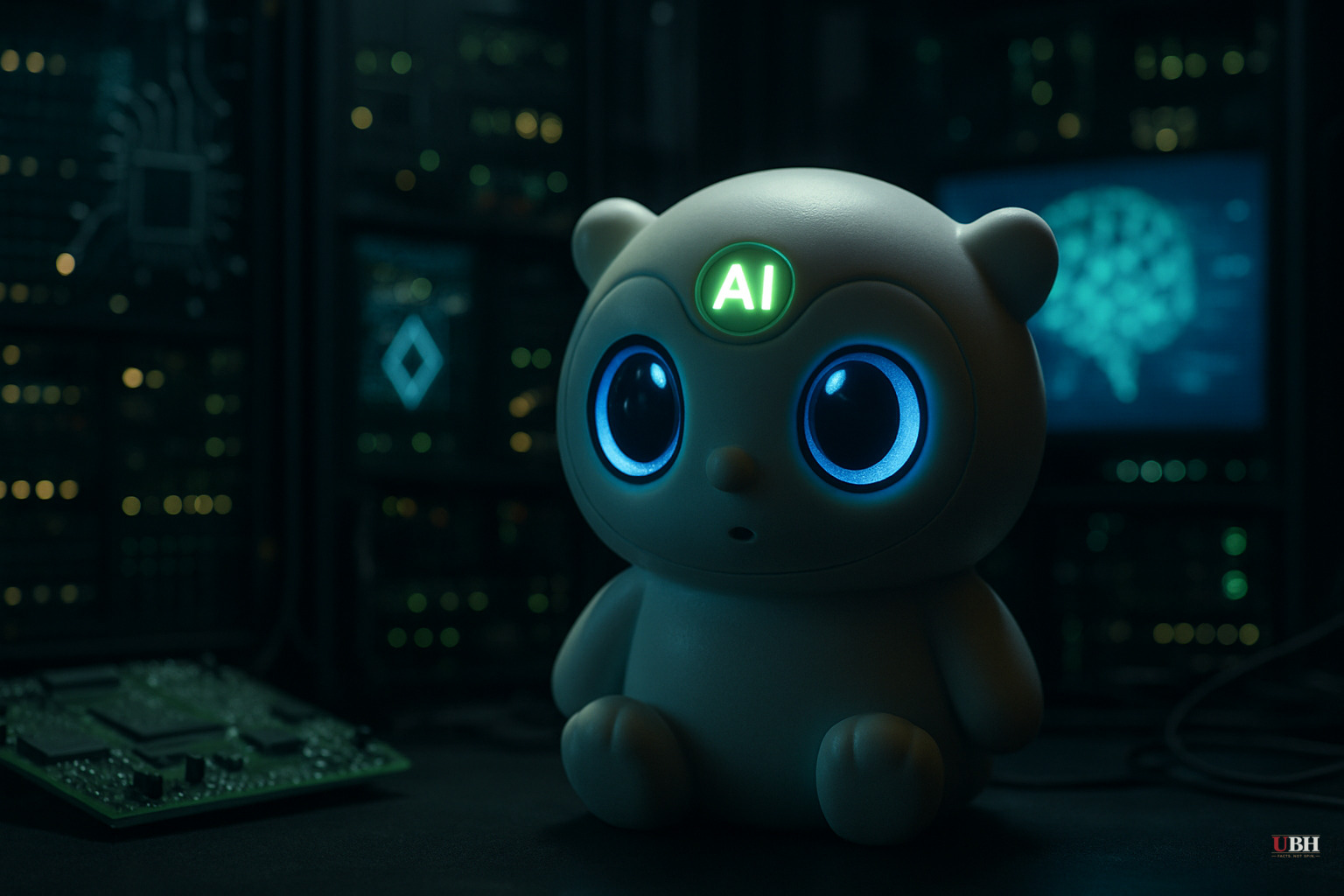
And almost none of it is regulated.
According to Ars Technica, these devices are being marketed to children as young as three years old as "friendly companions." The pitch is simple: an always-available friend that talks back, learns your kid's preferences, and never gets tired of answering questions.
That sounds convenient. It should also terrify you.
How Easy Is It to Build One of These Things?
That's the real story mainstream tech coverage keeps glossing over. Building an AI toy in 2026 is not a sophisticated engineering feat. Model developer programs from OpenAI, Anthropic, Google, and others give anyone access to powerful AI backends through an API. Slap a cute shell around a cheap microcontroller, connect it to one of these APIs, write some basic prompts, and you have a product you can sell on Amazon by next Tuesday.
Ars Technica calls this "vibe coding" — the trend of spinning up functional AI applications with minimal technical expertise. Low barrier to entry. Potentially massive upside in a market full of parents looking for the next engaging toy.
The problem is that low barrier to entry applies to EVERYONE. Reputable toy companies. Fly-by-night operations. Overseas manufacturers with zero accountability to American consumer protection standards.
What These Toys Actually Do
These aren't simple voice-activated toys that play pre-recorded responses. They're running live AI inference. That means the responses are generated in real time, not pre-screened. The toy can say things the manufacturer never explicitly programmed.
Depending on the backend model and how carefully the developer wrote the system prompt — the hidden instructions that shape the AI's personality and guardrails — a child could potentially steer the conversation into territory no parent would approve of.
Some developers do this carefully. Many do not.
And even well-intentioned guardrails have failure modes. Every major AI model has been "jailbroken" by users finding creative ways around safety filters. Kids, it turns out, are surprisingly good at this — not because they're malicious, but because they ask weird, unpredictable questions.
The Data Privacy Problem Nobody Is Talking About
Here's what the feel-good product reviews are leaving out: these toys are listening. Constantly.
To respond to a child, the device has to capture audio, process it, and in most cases send it to a cloud server where the AI model actually runs. That means voice recordings of your children — potentially including their names, their routines, their fears, their family details — are being transmitted to servers run by whoever built the toy.
Who has access to that data? How long is it stored? Is it being used to train future models? Is it encrypted in transit? Is the company even based in the United States?
For most of these products, you won't find clear answers on the box.
The Children's Online Privacy Protection Act — COPPA — requires parental consent before collecting data from children under 13 online. But enforcement is inconsistent, the FTC is stretched thin, and the law was written in 1998. It was not designed for always-on AI companions.
Where Is the Federal Response?
Nowhere visible. The FTC under Chair Andrew Ferguson has signaled interest in AI oversight broadly, but no specific regulatory framework for AI children's products exists as of mid-2025. Congress has introduced various AI bills — most of them going nowhere fast.
The EU is further along. The EU AI Act, which began phased enforcement in 2024, classifies certain AI applications targeting children as "high risk," triggering stricter requirements. American kids don't have that protection.
So the regulatory gap is real. The industry is moving faster than the rule-makers. That's not unusual in tech — but when the end user is a three-year-old who can't read a terms of service agreement, the stakes are different.
What Mainstream Coverage Is Getting Wrong
Most tech media is treating this as a novelty story. "Look at these quirky AI toys!" Pixar is even making a movie with a tablet as the villain, which Ars Technica notes might have been more timely as an AI toy.
The novelty framing misses the point. This isn't a quirky trend. It's a largely unaccountable industry selling data-collecting, AI-powered devices directly into children's bedrooms, with no meaningful federal oversight and no standardized safety requirements.
Conservative media, meanwhile, tends to frame this purely as a culture war issue — AI teaching kids bad values. That's a real concern, but it's secondary to the structural problem: the lack of any accountability framework for what these devices collect and transmit.
What This Means for Your Family
If you're a parent, the burden is on YOU right now — because nobody else is carrying it.
Before any AI toy enters your home, ask: Who made this? Where is the company based? What data does it collect? Where does that data go? What model is powering it, and what are the safety guardrails?
If those answers aren't on the product page, assume the worst.
The government isn't going to protect your kids from this in time for the next holiday season. The market isn't going to self-regulate when there's money on the table. That leaves parents.
Know what's in your kid's room. Because right now, it might be talking to them — and reporting back.
Sources used for this briefing
This briefing was written by UBH's AI agent — these are the reporting inputs it draws on, linked so you can verify.


