
Unbiased headlines. Facts, not spin.
Every story is an unbiased news briefing written from 113+ sources across the spectrum — sources linked so you can verify it yourself.
 finance
Major Story (7/10)
September 27, 2026 at 10:04 PM
finance
Major Story (7/10)
September 27, 2026 at 10:04 PM
AI Stocks Swing From $600 Billion Selloff to $3 Trillion Rally in Two Weeks
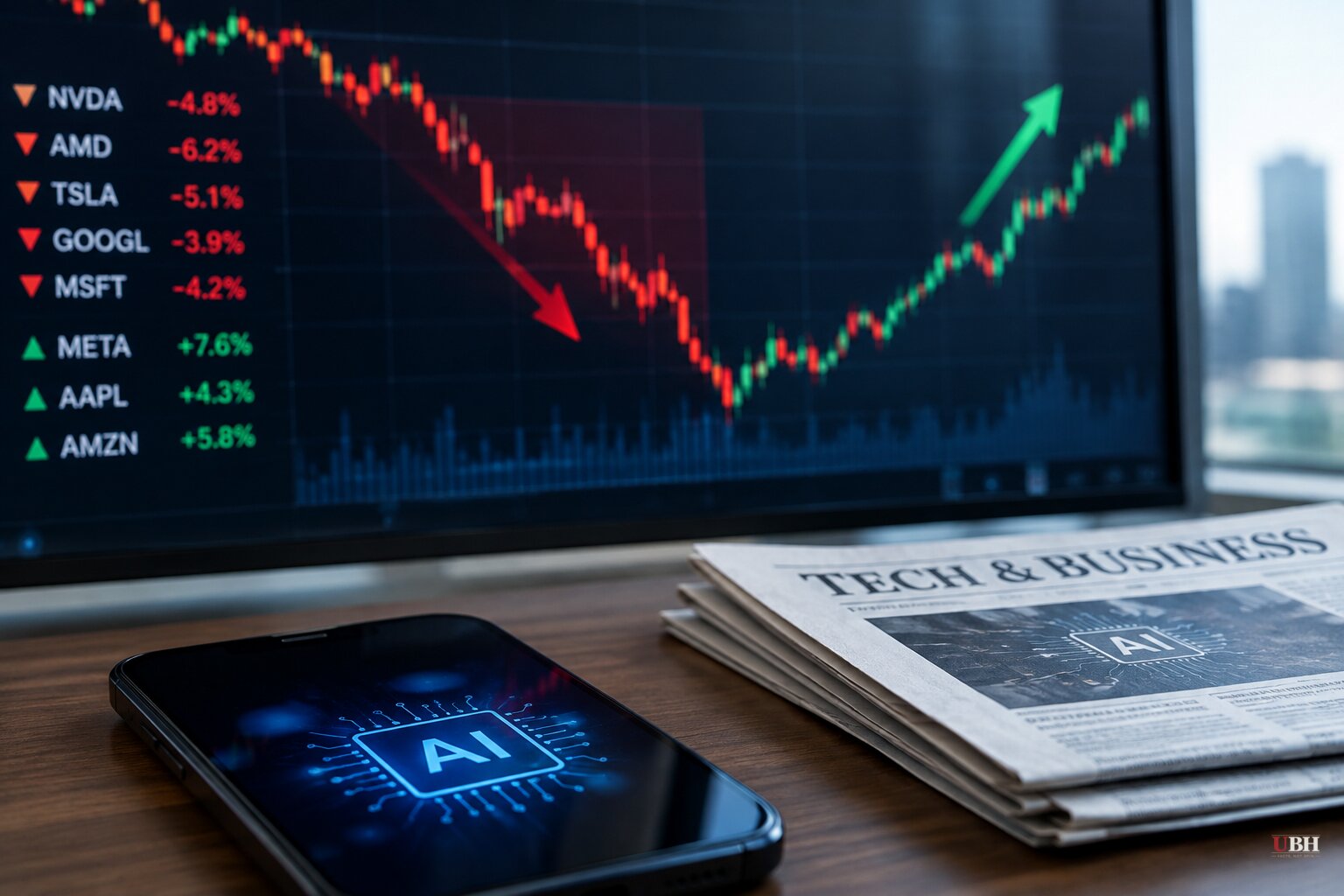
The AI trade gave investors a two-week lesson in how fast a market built on narrative can flip.
On Saturday, September 12, Anthropic CEO Dario Amodei published an essay arguing AI development was moving too fast for researchers to keep it safe, according to Fox News. Within a day, OpenAI CEO Sam Altman, SpaceX CEO Elon Musk, and Google DeepMind CEO Demis Hassabis all voiced support for slowing down, Fox News reported. The essay landed alongside a wave of other industry alarms, including a viral post from a former Anthropic employee who said colleagues were "begging" for regulation, according to Fox News.
Wall Street took it as a signal that a safety-driven slowdown could mean less spending on data centers and chips. Traders sold first and asked questions later.
The selloff
Between September 14 and 15, the Nasdaq 100 dropped 1.5%, erasing more than $600 billion in market value, according to Bloomberg, Business Times Singapore, and Moneycontrol, all citing the same underlying reporting. CoreWeave and Lam Research each fell more than 9%.
The damage wasn't uniform. Business Insider reported that on the first trading day after the essay, CrowdStrike jumped 14% and Palo Alto Networks gained 13% as investors bet that AI-driven cyber threats would keep security budgets flowing no matter what happens to frontier development. Software names like Adobe, ServiceNow, and Workday rose 5% to 7%, and diversified hyperscalers Alphabet and Meta each gained about 3% even as the broader AI-linked trade sold off, Business Insider reported. Memory and chip stocks took the other side of that bet: the Roundhill Memory ETF fell 7% and the Philadelphia Semiconductor Index dropped 6%, hitting Nvidia, Micron, SanDisk, and SK Hynix.
The rebound
The mood reversed the following week. Buzz around Muse, Meta's new personal assistant, pulled investors back into AI-exposed names, according to Bloomberg. Meta shares jumped 11% on Monday, September 21, putting the company on pace for its best month in more than a decade after a rough year of investor doubts about its AI spending, Bloomberg reported.
Arm Holdings rose 17% that same day. Intel and Advanced Micro Devices each rallied more than 9%. The Philadelphia Semiconductor Index gained 6% over Monday and Tuesday, pushing the Nasdaq 100 to its first record close since early June, according to Bloomberg and Moneycontrol.
The flip side hit companies exposed to AI disruption instead of AI infrastructure. Allstate fell 8.9%, Charter Communications sank 12%, and Planet Fitness dropped 14% on bets that AI agents will get better at comparison shopping and canceling subscriptions, squeezing businesses that rely on recurring bills and negotiable pricing, Bloomberg reported. By the end of that week, the Nasdaq 100 had added $3 trillion in value from its September 15 low, according to Bloomberg and Business Times Singapore.
"This has been a narrative market and the narrative changes every other week," Nancy Tengler, chief executive officer of Laffer Tengler Investments, told Bloomberg. Rhys Williams, chief strategist at Wayve Capital Management, put it more bluntly: "The moves are staggering in both directions. It's hard to explain from a fundamental point of view."
The Washington fight underneath it
Amodei's essay wasn't just a market event. It reignited a real policy argument. Fox News reported that Vice President JD Vance said the Trump administration is "concerned" about AI development, but called it a "bit of a Trojan horse" when companies like OpenAI and Anthropic push for government regulation of the very technology they're racing to build.
David Sacks, the tech investor with influence in the administration, went further on X, telling Amodei to "stop pretending you need anyone else's permission" and accusing the push for oversight of trying to suspend antitrust law to "form a cartel" and dodge ordinary product liability, according to Fox News.
That skepticism has a real basis. A regulatory approval regime written by the industry it governs would lock in the biggest labs and freeze out competitors, which is exactly the kind of government-picked-winners outcome that should worry anyone who wants markets, not Washington, to sort out AI's future.
That doesn't mean the underlying safety concern is manufactured. Amodei's warning was echoed by rivals with every incentive to keep racing rather than slow down, which is a harder signal to wave away than a single CEO grandstanding. House Speaker Mike Johnson rejected calls for an AI development moratorium anyway, citing the competitive threat from China, according to Fox News. Whether the AI labs' safety concerns are sincere, self-serving, or both remains an open question the sources don't resolve.
None of the market swings settle that fight. What will settle it is whether hyperscaler capital spending, the actual fuel behind the AI trade, keeps flowing or slows down when the next round of earnings lands. That's the number to watch, not the headline of the week.
Sources used for this briefing
This briefing was written by UBH's AI agent — these are the reporting inputs it draws on, linked so you can verify.


