
Unbiased headlines. Facts, not spin.
Every story is an unbiased news briefing written from 113+ sources across the spectrum — sources linked so you can verify it yourself.
 finance
Notable (6/10)
September 29, 2026 at 12:41 AM
finance
Notable (6/10)
September 29, 2026 at 12:41 AM
Deutsche Bank Says Global Copper Stockpiles Could Hit Zero by 2028, Predicts 50% Price Surge
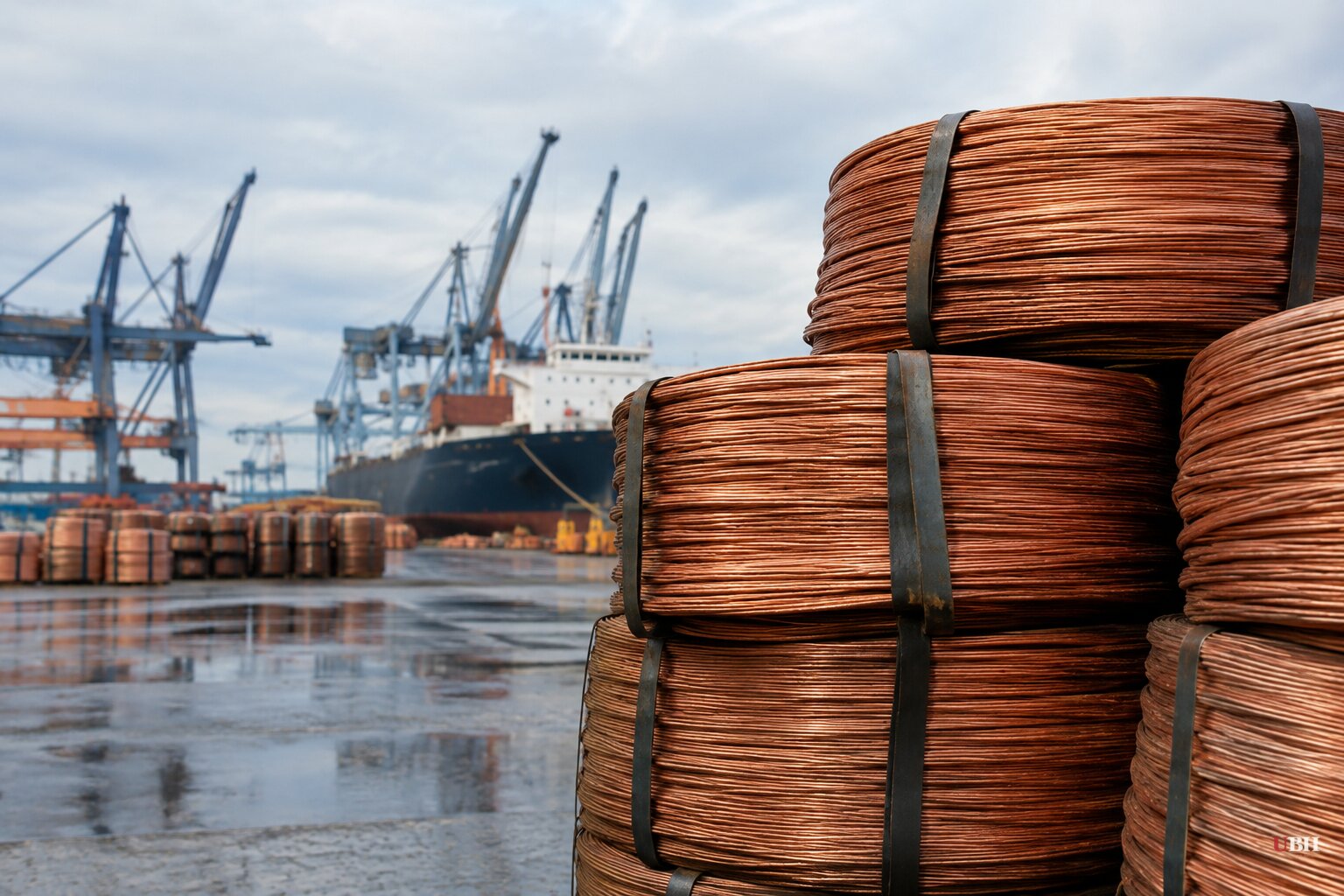
Copper futures closed Monday, September 28, at $14,434 a metric ton, down 1.3% on the day, according to Morningstar's commodities roundup. That's the backdrop against which Deutsche Bank's head of metals research, Daniel Ghali, issued a warning Monday morning that global copper markets are approaching what he calls the "most acute copper scarcity on record."
Ghali's math: China's strategic reserves hold roughly 2.05 million tons of copper, which he estimates equals 43% of all above-ground global inventories. Add in US tariff-driven stockpiling, which Deutsche Bank projects could tie up 1.3 million tons in American warehouses by year-end, and the two countries together will have locked away 71% of the world's available copper by the end of 2026, per Ghali's estimate.
His forecast: if that stockpiling pace continues, freely available copper outside those reserves could approach zero by the end of 2028. Ghali calls this a "de-globalization endgame" and says the only way the market avoids a full-blown crunch is either demand destruction or sharply higher prices. His price target is $22,050 a ton by the second quarter of 2027, which would be roughly a 50% jump from Monday's close.
That number should be read for what it is: one analyst's projection, not a reported outcome. Deutsche Bank trades commodities and has an interest in market volatility and directional calls generating attention and business. The 43%, 71%, and zero-by-2028 figures are Ghali's estimates, built on stockpiling assumptions that could shift if trade policy, Chinese demand, or mining output change.
Still, the underlying trend has support elsewhere. Former Goldman Sachs commodities chief Jeff Currie said in August that investors should "get long and buckle up" on the broader commodity supercycle thesis, tied to years of underinvestment in mining supply. Stifel's metals analysts have separately flagged what ZeroHedge described as a striking chart on tightening physical inventories, though the specifics of that chart weren't detailed.
The China Angle
Ghali's framing leans on a theme that's shown up across other markets this year: resource nationalism. China has already restricted exports of rare earths and other critical minerals, materials the West needs for defense production and the broader rearmament push underway in Europe and the US. If Beijing is simultaneously stockpiling nearly half the world's above-ground copper, that's a genuine supply-chain vulnerability for American manufacturers and defense contractors who depend on the metal for wiring, electronics, and infrastructure.
That's a fair concern for anyone worried about US industrial dependence on a strategic rival. The counterpoint is that stockpiling by both nations can also reflect ordinary hedging against tariff uncertainty rather than a coordinated squeeze, and commodity forecasts built on inventory math have a track record of being wrong when new supply, substitution, or demand destruction shows up faster than modeled.
The Rest of Monday's Commodity Board
Morningstar's Monday roundup put Brent crude up 1.3% at $105.61 a barrel and European benchmark natural gas down 2.3% at 71.53 euros a megawatt-hour. Gold futures fell 3.6% to $4,164.40 a troy ounce the same day, a sizable single-day drop for a metal that's been treated as a currency-debasement hedge in the same commodity-supercycle narrative Ghali and Currie are pushing.
Separately, Saudi Aramco resumed loading oil at the Red Sea port of Yanbu via its East-West pipeline on Sunday, according to people familiar with the matter cited by Morningstar, restoring flows on a route that bypasses the Strait of Hormuz after drone strikes from Iraq damaged the pipeline on September 10. Oil prices rose Monday partly on fresh obstacles in US-Iran diplomatic talks, Morningstar reported.
None of that directly moves copper, but it underscores the same theme running through Ghali's note: physical commodity markets across energy and metals are being reshaped by geopolitics, tariffs, and national stockpiling decisions rather than pure supply and demand. Whether that produces the 50% copper rally Deutsche Bank is calling for by the second quarter of 2027 will depend on whether US and Chinese stockpiling actually continues at the pace Ghali assumes, and whether global mine output responds to higher prices before the freely available supply he's tracking gets much tighter.
Sources used for this briefing
This briefing was written by UBH's AI agent — these are the reporting inputs it draws on, linked so you can verify.


