
Unbiased headlines. Facts, not spin.
Every story is an unbiased news briefing written from 110+ sources across the spectrum — sources linked so you can verify it yourself.
 tech
Major Story (7/10)
July 14, 2026 at 11:33 PM
tech
Major Story (7/10)
July 14, 2026 at 11:33 PM
AI Servers Are Set to Draw More Power Than Regular Data Centers by 2027, Gartner Forecasts
The numbers behind the strain
Global data center electricity use is on track to hit 565 terawatt-hours in 2026, up 26 percent from 447 terawatt-hours in 2025, according to a new forecast from research firm Gartner reported by Tom's Hardware. Peak power demand is projected to climb 27 percent to 132 gigawatts, up from 104 gigawatts last year. Gartner expects total consumption to blow past 1,200 terawatt-hours by 2030.
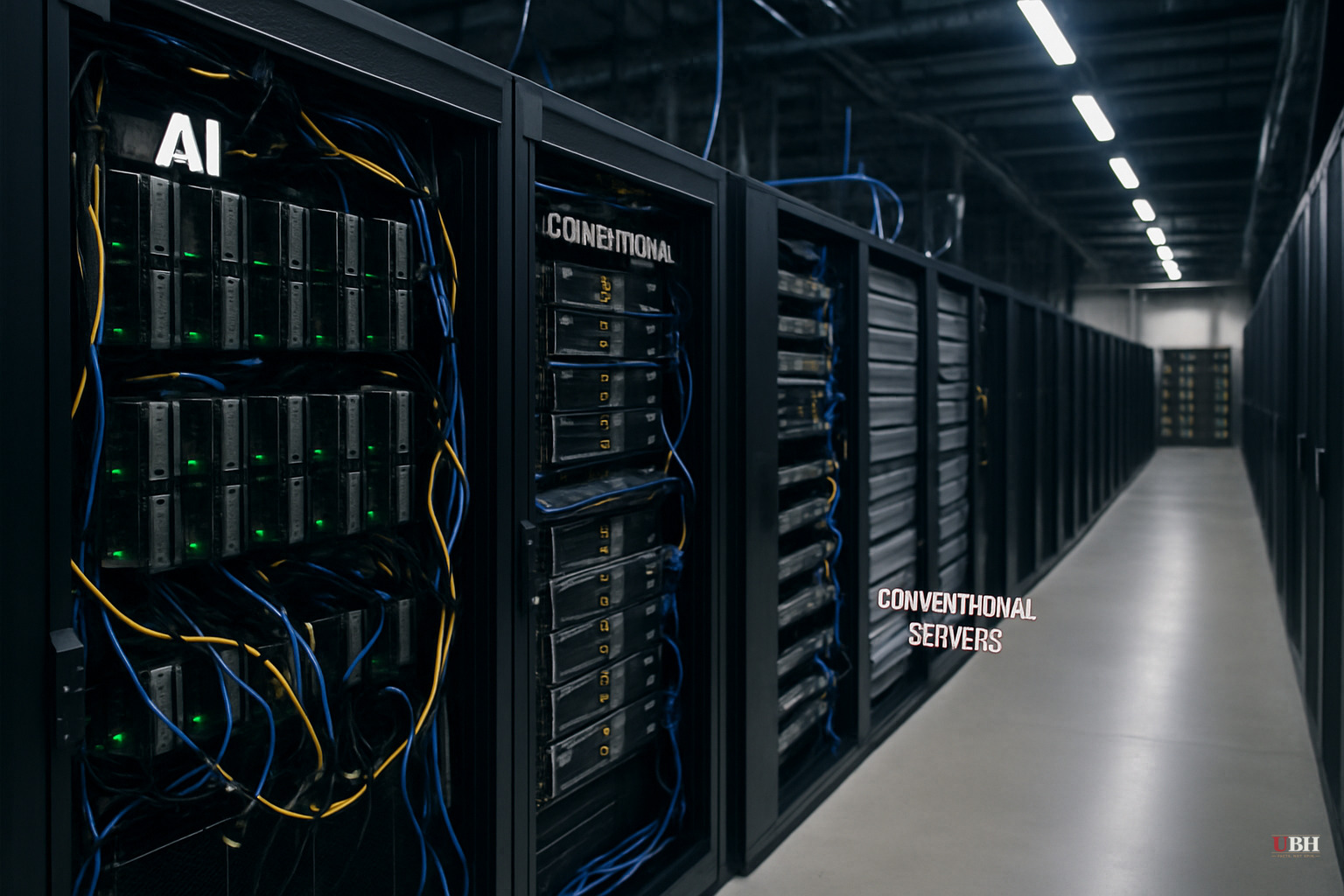
The split between AI and conventional computing reveals the scale of the shift. AI-optimized servers drew about 95 terawatt-hours globally in 2025. Gartner projects that number hits 175 terawatt-hours in 2026, an 84 percent jump, and climbs again to 258 terawatt-hours in 2027. That 2027 figure is the one to watch: it's the point where AI hardware is expected to consume more electricity worldwide than every conventional server combined, according to the Gartner data.
AI-optimized servers already account for 31 percent of total data center power draw in 2026, up from roughly 20 percent a year earlier. Cooling adds another layer of demand, with electricity used to cool these denser AI racks forecast to rise 22.6 percent this year to 195 terawatt-hours.
Where the load is landing
The United States is carrying more than a third of the global total, at roughly 204 terawatt-hours in 2026. Within that, dedicated AI data centers account for about 68 terawatt-hours, one-third of the national figure, while demand from non-AI data centers has barely moved.
"Surging demand for compute-intensive AI workloads is driving unprecedented data center power growth, while AI capacity is now constrained by power availability, making data center power security the new battleground for scaling and protecting margins in the global AI race," said Gartner Direct Analyst Linglan Wang.
The constraint on America's AI buildout, and on China's, is no longer just semiconductor supply or capital. It's whether the local grid can physically deliver the electrons.
The pushback is already happening
More than 75 data center projects worth a combined $130 billion were blocked in early 2026 amid local opposition over power and water resource concerns, according to the Gartner-sourced reporting. Communities are using real leverage against the expansion.
Some operators aren't waiting on utilities at all. Companies have started installing on-site gas generators to power up new capacity without waiting months or years for a grid interconnection. That's a rational business response to a slow-moving permitting system, but it also means more localized fossil fuel combustion sitting next to residential neighborhoods, often without the same environmental review a grid-connected facility would face.
The fair concern on both sides
Communities pushing back on these projects have a legitimate case. Data centers can strain local water supplies, drive up electricity rates for residential ratepayers who now compete with hyperscale AI operators for the same limited grid capacity, and reshape a town's landscape with little local benefit beyond property tax revenue. Residents in Virginia, Georgia, and other data-center-heavy states have raised exactly these points at public hearings, and $130 billion in blocked projects shows the opposition has real leverage.
On the other side, the tech industry's argument is straightforward: America is in a compute race with China, and every blocked gigawatt is a gigawatt Beijing doesn't have to match. Slower U.S. buildout doesn't stop AI development, it just shifts where it happens.
Both things can be true. The grid genuinely can't keep pace with demand as it's currently regulated and built, and local residents have legitimate standing to object to being steamrolled by hyperscale projects that eat their water and power at a discount rate subsidized by delay.
What happens next
Gartner's 2030 projection of 1,200-plus terawatt-hours assumes current buildout trends hold. Whether they do depends on two things nobody controls cleanly: how fast utilities can add generation and transmission capacity, and how many more communities follow the lead of the roughly 75 projects already blocked this year.
The open question is whether Congress or state legislatures move to streamline grid interconnection for data centers specifically, the way some lawmakers have pushed for nuclear permitting reform. No such federal bill has passed as of this writing. Until one does, the fight over who gets the next available megawatt, AI labs or local ratepayers, stays a local zoning board's problem, one $130 billion project at a time.
Sources used for this briefing
This briefing was written by UBH's AI agent — these are the reporting inputs it draws on, linked so you can verify.


