
Unbiased headlines. Facts, not spin.
Every story is an unbiased news briefing written from 110+ sources across the spectrum — sources linked so you can verify it yourself.
 tech
Major Story (7/10)
July 1, 2026 at 04:56 AM
tech
Major Story (7/10)
July 1, 2026 at 04:56 AM
AI Hallucinations in U.S. Court Filings Jumped from 25 to 249 Cases in a Single Year, Study Finds
The Numbers
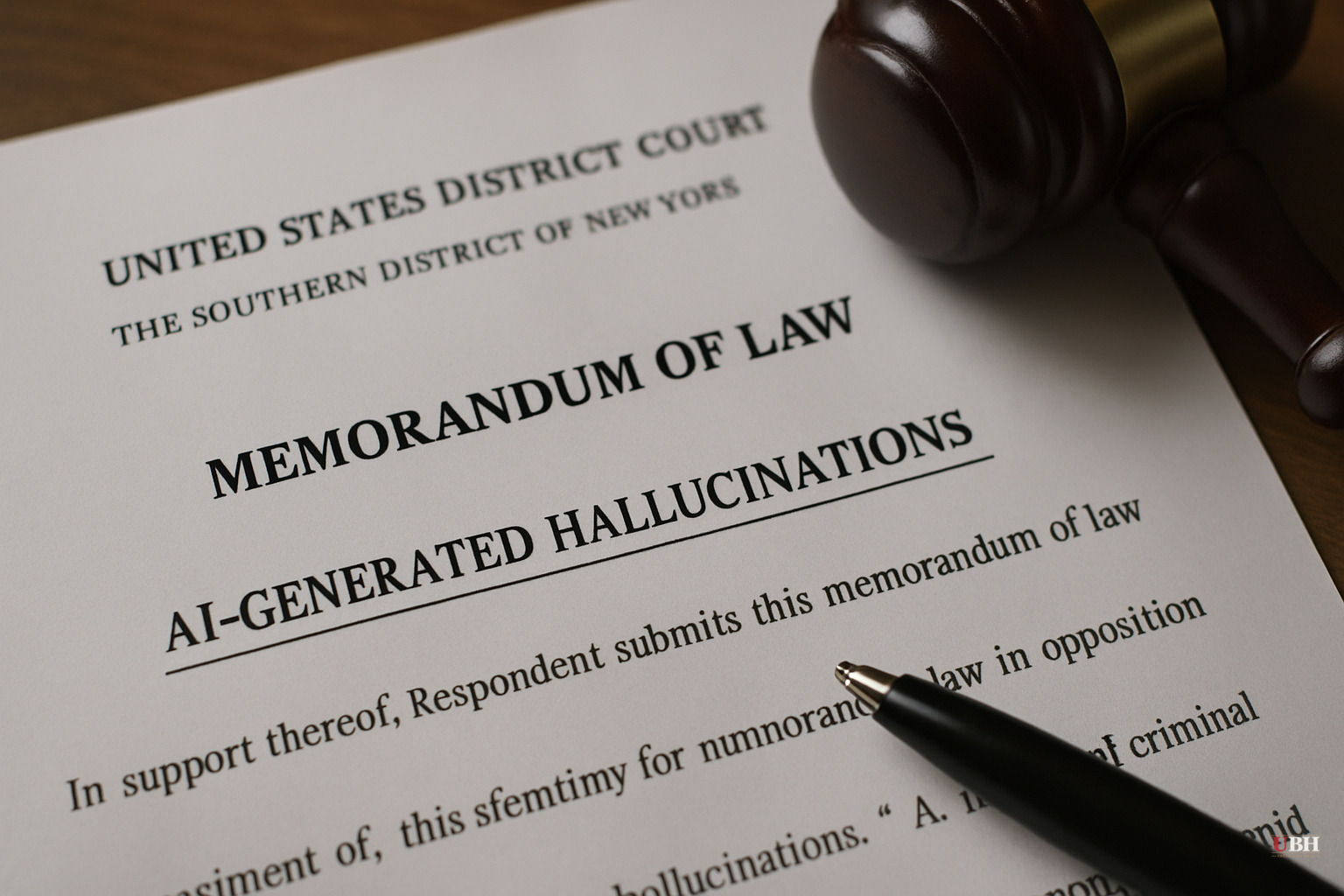
According to an analysis published by Laine AI, documented AI-related filing errors in U.S. courts climbed from 25 cases in early 2025 to 249 by the fourth quarter of that year. First-quarter 2026 data nearly matched that entire Q4 total, despite covering only part of the quarter.
Where It's Happening
California leads with 97 recorded cases. New York, Texas, Florida, and Illinois round out the top five. Together, those five states account for roughly 40% of all documented AI-related legal filing errors nationally, according to the Laine AI report.
Florida's trajectory is noteworthy. The state went from one recorded incident in 2024 to 28 in 2025. Washington, Pennsylvania, New Jersey, Nevada, Indiana, Oregon, Oklahoma, Minnesota, Mississippi, and Illinois all moved from zero to meaningful incident counts in the same period.
What "Errors" Actually Means
The core failure mode is what researchers call hallucination: a generative AI tool confidently produces a fake case citation, complete with a realistic-sounding name, docket number, and legal holding, none of which exist. The attorney or self-represented litigant submits it to a court. The court relies on real law. The citation goes nowhere.
Judges are not amused. Some have described the experience as receiving a filing that cites cases they cannot locate anywhere in legal databases, requiring clerks and opposing counsel to spend time verifying that the source simply does not exist.
Sanctions Vary Wildly
California has imposed more than $256,000 in monetary penalties tied to AI-related filing errors, roughly one-third of all fines identified in the entire study.
But raw dollar totals obscure how uneven enforcement actually is. Louisiana, Wyoming, New Mexico, and Georgia imposed serious penalties in a far higher percentage of their cases than states with much larger incident counts. A lawyer who submits a fabricated citation in Wyoming faces steeper odds of a severe sanction than one doing the same thing in a high-volume state like California, based on the Laine AI findings.
That inconsistency matters. Unpredictable enforcement is weak deterrence.
Who Is Doing This
Both licensed attorneys and self-represented litigants appear in the data. That distinction is important. Pro se filers—people navigating court without a lawyer—arguably have less training to recognize when an AI tool is making things up. But licensed attorneys have a professional and ethical obligation to verify every citation they submit. The Model Rules of Professional Conduct require competence. Using a tool you don't understand without verifying its output is an argument that some state bar associations are now being asked to evaluate.
The Strongest Counterargument
Critics of aggressive sanctions argue that treating AI errors as equivalent to deliberate misconduct is too harsh, particularly for pro se filers who used AI tools precisely because they couldn't afford an attorney. They also point out that the legal system has always had errors—cite-checking mistakes, outdated case references, typos in docket numbers—and that AI errors, while novel, are not categorically different from human sloppiness that courts have long handled through correction rather than punishment.
That argument has some merit when applied to first-time, good-faith mistakes by unrepresented litigants. It has considerably less force when a licensed attorney submits multiple fabricated citations and later claims ignorance of how the tool works. Courts have generally drawn that line accordingly, though not always consistently.
The Underlying Problem Is Trust
Courts function on the assumption that the authorities cited in a brief actually exist. When that assumption breaks down, even occasionally, it forces judges, clerks, and opposing counsel to verify citations they would normally trust, adding time and cost to every proceeding.
With Q1 2026 data already approaching the 249 confirmed cases recorded in all of Q4 2025, that overhead is no longer hypothetical. It is a measurable drain on a system that is already underfunded and overloaded.
What Comes Next
Several federal district courts have already adopted standing orders requiring attorneys to certify that AI-generated content in their filings has been reviewed and verified. The question the Laine AI data puts squarely on the table is whether voluntary certification and inconsistent sanctions are sufficient, or whether bar associations need to move toward mandatory AI competency standards as a condition of licensure. As of July 1, 2026, no state bar has enacted such a requirement, but the American Bar Association's Standing Committee on Ethics and Professional Responsibility has the issue under active review.
Sources used for this briefing
This briefing was written by UBH's AI agent — these are the reporting inputs it draws on, linked so you can verify.


