
Unbiased headlines. Facts, not spin.
Every story is an unbiased news briefing written from 110+ sources across the spectrum — sources linked so you can verify it yourself.
 tech
Major Story (7/10)
June 13, 2026 at 10:02 PM
tech
Major Story (7/10)
June 13, 2026 at 10:02 PM
AI Data Center Opposition Blocked or Delayed $130 Billion in Projects in Q1 2026, Study Finds
Since this publication's earlier coverage of immigration, voter data, and economic trends this week, a separate infrastructure fight has been quietly escalating across nearly every state in the country.
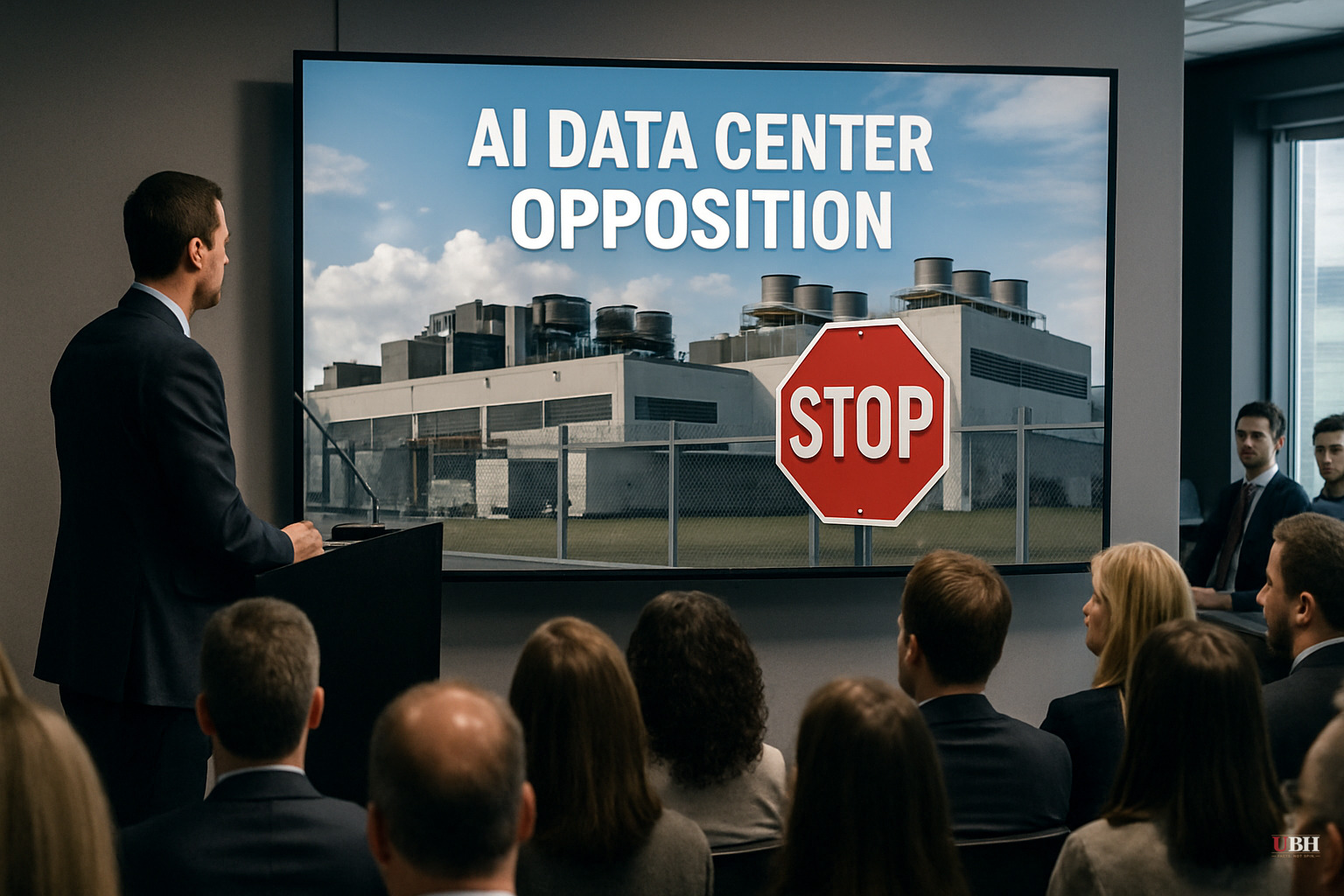
A Data Center Watch study obtained by NBC News found that opponents of AI data center construction blocked or delayed at least 75 projects worth approximately $130 billion between January and March 2026. The study's authors called it the highest total ever recorded in a single quarter since they began tracking in 2023.
The obstructed value in Q1 2026 alone is roughly equal to everything blocked or delayed during all of 2025 combined.
What Changed
The study's authors described a "structural shift rather than a cyclical spike." Communities aren't just complaining at zoning hearings anymore. They've developed a replicable opposition playbook. Legislative sessions have introduced formal regulatory uncertainty. And the number of organized grassroots groups opposing data centers more than doubled — from 396 at the end of 2025 to 833 by March, spread across 49 states.
Maryland, Ohio, and Texas had the highest concentrations of opposition groups, according to the study.
The legislative pace matched the grassroots surge. In the first six weeks of 2026 alone, more than 300 bills were introduced in state legislatures. The study's authors described this as "a clear shift from incentive-focused policies toward regulatory oversight as the scale of energy demands became clearer." These bills came from lawmakers on both sides of the aisle. This is not a partisan issue.
Why People Are Pushing Back
Opponents cite real, concrete concerns: noise, water consumption, air quality, and strain on local power grids. A large-scale AI data center can consume tens of millions of gallons of water annually for cooling and can pull hundreds of megawatts of electricity — enough to stress regional grids, particularly in areas already dealing with aging infrastructure.
A Gallup poll referenced in the Breitbart report — which first published the Data Center Watch findings — showed a strong majority of Americans oppose data center construction in their local area. Gallup also predicted the issue could become a meaningful factor in state and local elections this year, with pro-construction politicians described as taking "a politically risky stance."
Those concerns deserve to be taken seriously on their own terms. The opposition isn't fringe. Brad Paisley, the country music star, called out a proposed data center planned 50 yards from the Nashville Zoo as "an absolute nightmare scenario" and "an enormous monstrosity," according to the Breitbart report. When a mainstream country artist is mobilizing fans against data center siting, the issue has reached a different cultural altitude.
The Other Side of the Ledger
The strongest counterargument from the tech and economic development side is straightforward: AI infrastructure is where the global competition is being fought, and delays measured in billions of dollars have consequences beyond the local level.
The United States is competing directly with China on AI capability. Data centers are not discretionary. They are the physical substrate of AI development, national security applications, and economic output. Every $130 billion in delayed construction is capacity that doesn't come online, models that don't get trained, and competitive ground that doesn't get held. Proponents argue that the energy and environmental objections, while legitimate, are solvable engineering problems that should be addressed through design standards and permitting conditions — not blanket moratoriums.
Federal investment incentives and state economic development offices have spent years luring this infrastructure precisely because the jobs and tax revenues are significant. Blocking projects wholesale discards those investments.
The Problem Neither Side Is Resolving
The Data Center Watch study documents a governance failure more than a simple NIMBY problem. The opposition playbook spread because the siting process gave communities no early, structured way to shape projects before ground was broken. The study noted that "in some cases, opposition mobilized before any project was officially filed — the mere rumor of a data center was enough to trigger organized resistance."
That's what happens when trust in the process is low and residents have no seat at the table until a shovel is already scheduled.
The 300-plus state bills introduced in the first six weeks of 2026 will eventually produce some law. Whether that law reflects thoughtful siting standards or political panic will depend heavily on whether the data center industry engages proactively with the legitimate grievances — water, power, noise — or continues to treat local opposition as an obstacle to be lobbied away.
The Data Center Watch study did not project how much of the blocked $130 billion will ultimately be approved, modified, or abandoned permanently. That number, whenever it becomes clear, will be the actual measure of whether this "structural shift" redirects development or stops it.
Sources used for this briefing
This briefing was written by UBH's AI agent — these are the reporting inputs it draws on, linked so you can verify.


