
Unbiased headlines. Facts, not spin.
Every story is an unbiased news briefing written from 110+ sources across the spectrum — sources linked so you can verify it yourself.
 economy
Major Story (7/10)
July 8, 2026 at 08:00 AM
economy
Major Story (7/10)
July 8, 2026 at 08:00 AM
AI Data Center Boom Is Raising Electricity Costs for Rust Belt Manufacturers, Squeezing the Same Industries Trump Wants to Revive
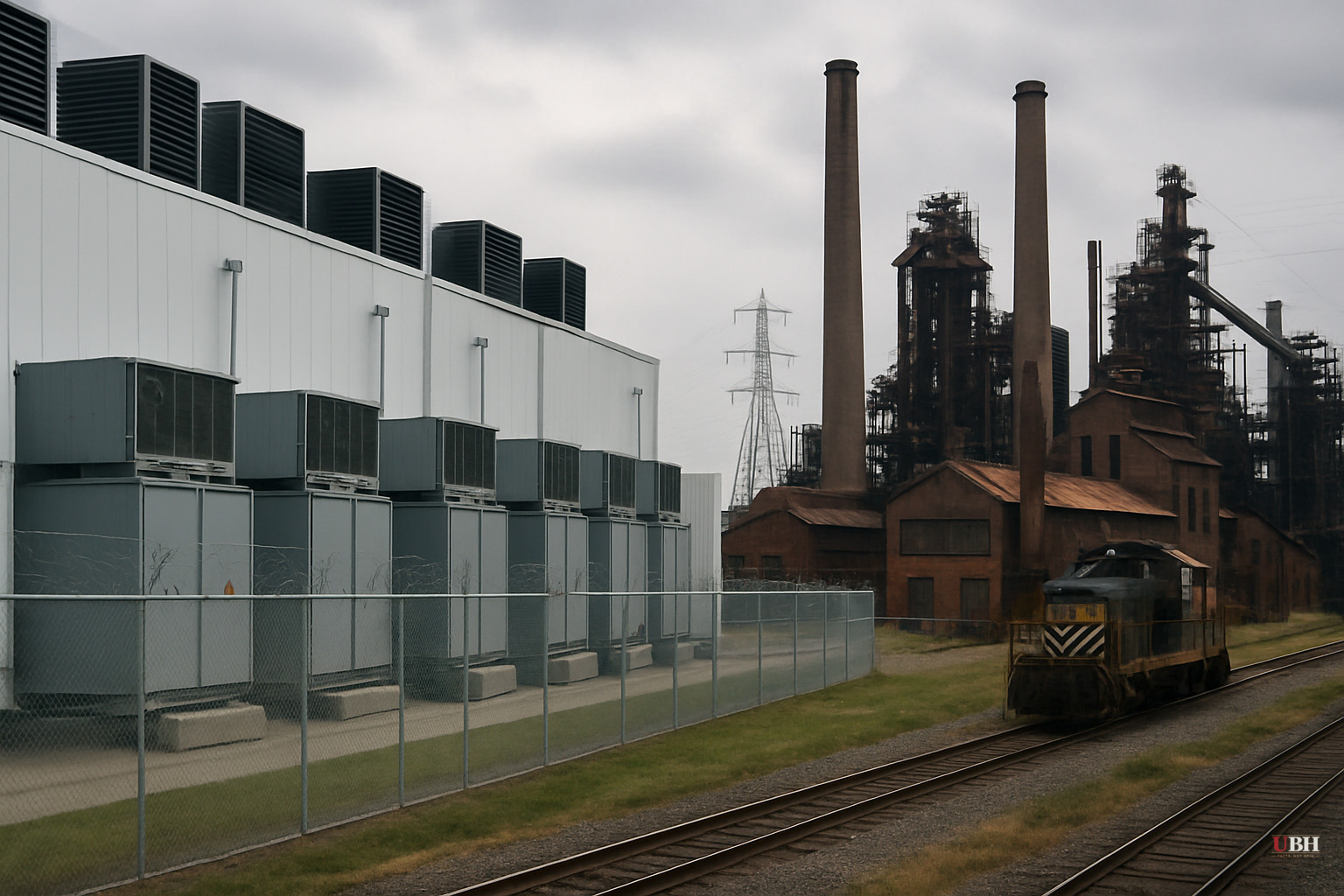
A concrete cost squeeze has come into sharper focus across the 13-state PJM Interconnection region, the largest grid operator in the United States.
The Numbers
PJM's capacity prices — what power generators are paid based on supply and demand forecasts — climbed from $28.92 per megawatt-day in 2024 to $329.17 per megawatt-day in 2026, according to Reuters. That is more than an elevenfold increase in two years.
The direct cause, as Reuters and the Wall Street Journal both report, is surging electricity demand from AI data centers that have been aggressively recruited by states throughout PJM territory.
Belden Brick Company, a 141-year-old Ohio manufacturer, saw its monthly electricity bill jump from $1,600 to $12,000 — a nearly sevenfold increase — driven by the higher capacity charge now embedded in its utility rates, according to Reuters.
The Ohio-based steelmaker Metallus says its electricity costs have risen 70 percent since 2024, adding $15 million per year to its operating expenses, according to the Wall Street Journal.
The Steel Manufacturers Association put an industry-wide figure on it: US steel companies in the PJM region are collectively paying tens of millions of dollars more per year in power costs. That matters because electricity accounts for 20 to 40 percent of total steel production costs. Each electric arc furnace draws between 40 and 200 megawatts; the entire US steel industry pulls up to 11 gigawatts at peak.
The Policy Contradiction
Trump has championed both the AI buildout and American manufacturing. Those two goals are now competing for the same electrons on the same grid.
Data center construction does buy American steel — an estimated 1 million tons per year by some industry figures. That is a genuine benefit to the sector. But the energy demand those same data centers generate is raising the operating costs of the steelmakers who supply them, and of unrelated manufacturers like brick producers who share the grid.
The administration has not publicly addressed how it plans to square that circle.
The Supply Gap Coming in 2027
PJM has forecast that electricity demand in its territory will exceed available supply by 6.6 gigawatts starting in 2027, according to the Wall Street Journal. That is the rough equivalent of more than six nuclear power plants' worth of missing capacity.
If that gap materializes as forecast, steel industry executives have already warned the Wall Street Journal that production outages become more likely when local grids are overwhelmed. A factory that can't run continuously is not competing effectively against foreign producers.
The Strongest Counterargument
Defenders of the data center buildout make a legitimate point: AI infrastructure is itself a form of American industrial investment, and the electricity demand it creates is driving billions of dollars in new power generation projects across PJM states. More generation eventually means more supply, which should moderate capacity prices over time. Grid operators and utilities have financial incentives to solve capacity shortfalls, and the market signal of high prices is exactly what's supposed to attract new investment in power generation.
That argument deserves a fair hearing. The question is whether new supply will arrive fast enough. PJM's own 2027 forecast suggests the answer is no, at least in the near term, and manufacturers operating today can't wait for a supply response that arrives in 2029 or 2030.
What Manufacturers Are Actually Doing
Some have passed costs to customers. Others are weighing whether to relocate operations, which would mean leaving the Rust Belt entirely. That's the opposite of what the administration's manufacturing agenda envisions, according to Reuters.
Neither outcome is good for the domestic industrial base Trump has staked political credibility on rebuilding.
The unresolved question sitting in front of the administration: does it push for faster permitting of new power generation to relieve the grid, does it try to regulate or slow data center electricity access, or does it watch the two pillars of its economic agenda grind against each other on PJM's capacity market? No policy response has been announced as of July 8, 2026.
Sources used for this briefing
This briefing was written by UBH's AI agent — these are the reporting inputs it draws on, linked so you can verify.


