
Unbiased headlines. Facts, not spin.
Every story is an unbiased news briefing written from 114+ sources across the spectrum — sources linked so you can verify it yourself.
 politics
Major Story (8/10)
Event date: October 6, 2026
politics
Major Story (8/10)
Event date: October 6, 2026
AfD's Tobias Rausch Elected Saxony-Anhalt Parliament President With 48 Votes; He Says CDU Lawmakers Backed Him, Merz Pushes Back
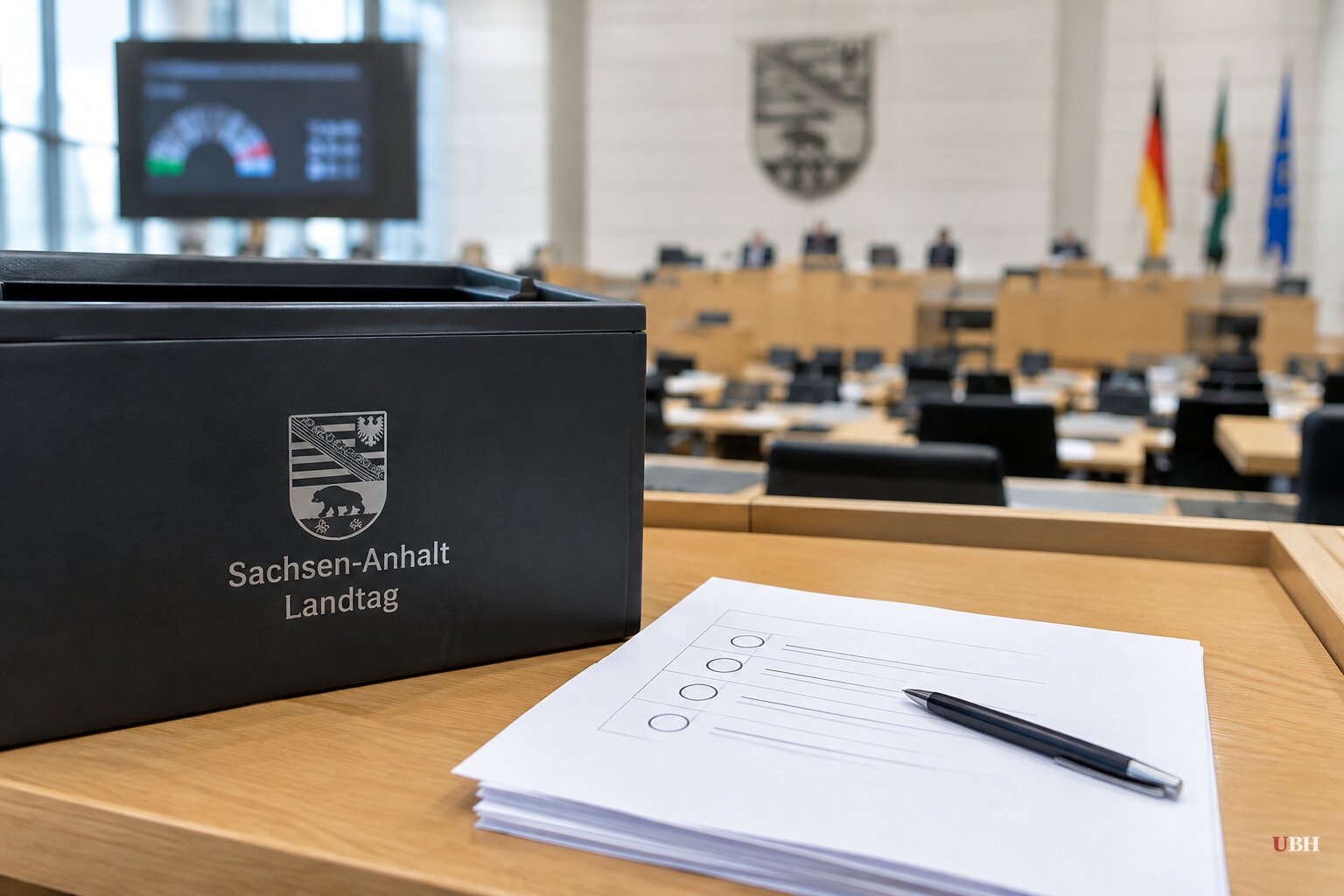
Since the AfD won 43.8% of the vote in Saxony-Anhalt on September 6, the party has been three seats short of an outright majority in the state parliament. On Tuesday it got closer to the levers of power. Tobias Rausch, 35, was elected president of the state parliament in Magdeburg, the first AfD politician to lead any German state legislature.
The vote was 48 in favor, 29 against, five abstentions, in the constitutive session of the 83-seat Landtag.
The arithmetic doesn't add up to 48
The AfD holds 39 seats. The hard-left BSW holds five and had said it would back Rausch. That makes 44. Four more votes came from somewhere else.
The ballot was secret, so nobody can establish who cast them. The SPD, Greens and Left had announced opposition. The CDU leadership recommended abstention. If all 14 CDU deputies present had followed that line, there would have been 14 abstentions, not five.
On Wednesday, Rausch addressed the question. Asked on Nius Live by editor-in-chief Julian Reichelt whether CDU deputies helped elect him, he answered yes. He told the dpa news agency that four CDU lawmakers have agreed to vote for AfD candidate Ulrich Siegmund for minister-president in December. "This has been agreed," Rausch said, while adding that certainty would only come when the vote happens. Asked if Siegmund would safely take office, he said: "That is to be assumed."
That is Rausch's account. No CDU lawmaker has confirmed it, and the secret ballot means nobody can check it.
CDU response
Acting state premier and CDU floor leader Sven Schulze declined to comment on Rausch's claims when asked by dpa.
Chancellor Friedrich Merz did comment. "Extremism is forcefully making its way into our parliaments," he said Wednesday, adding that any lawmaker who helped the AfD was "playing the extremists' game and undermining credibility." Such a vote, he said, is "incompatible with the values of my party, the CDU."
Merz also challenged the idea that his Christian Democrats voted for the AfD's candidate at all. He said it was up to the state parliamentary groups to determine whether the secret ballot could be unpicked, and warned against jumping to conclusions, citing the possibility of political "false flag operations." He named the AfD, the BSW and the Left as factions "doing everything they can to undermine the cohesion of our democracy."
His coalition partner wants answers anyway. SPD parliamentary group leader Matthias Miersch demanded clarification from the CDU and said he would raise it at a coalition meeting Wednesday evening. No outcome of that meeting has been reported.
Why December matters
The seat math is tight. The AfD has 39 seats. The CDU, SPD, Greens and Left also total 39. The BSW's five seats hold the balance.
Siegmund needs 42 votes to win outright in the first or second ballot, so he is three short. The third ballot requires only a majority of those voting. If the BSW abstains, the AfD could get its first minister-president without a single CDU vote. With four extra votes, Siegmund could win on the first ballot, a stronger mandate. The Saxony-Anhalt AfD leader has said he expects exactly that.
Rausch said the party is waiting for the CDU state party conference on December 5. He did not say why.
Ukraine motion, immediately
The AfD and BSW used their new working majority at once. They introduced a motion calling on Germany to halt military and financial support for Ukraine and lift sanctions on Russia. BSW founder Sahra Wagenknecht has vowed to end the "firewall idiocy." She argues that the votes of nearly 44% of Saxony-Anhalt's electorate cannot simply be ignored.
The firewall argument
The "Brandmauer" is the consensus among mainstream parties not to form coalitions or governing agreements with the AfD. The CDU formalized it in 2018 and it remains party policy nationwide and in Saxony-Anhalt. The state intelligence service classifies the Saxony-Anhalt AfD as a confirmed right-wing extremist organization. The party disputes that.
Critics of the firewall, including US Vice President JD Vance, call it undemocratic and self-defeating. Defenders see it differently. One argument, made in an opinion piece by a political commentator, is that more than half of Saxony-Anhalt voters cast ballots for other parties, in part to keep the AfD from power. That argument holds that the right to be heard in parliament is not a right to exercise authority.
The firewall has so far held where parties had a choice. In Mecklenburg-Vorpommern on September 20, the AfD finished first with 38.2%, yet Social Democratic premier Manuela Schwesig announced talks with the Left and the Greens. In Berlin the AfD rose from 9.1% to 16.3%.
What comes next
The Landtag will elect a minister-president in December, and the CDU state conference meets on December 5. Whether four CDU deputies cross the line, as Rausch says they will, is the open question. Neither Schulze nor any of the 14 CDU deputies has said how they voted.
Sources used for this briefing
This briefing was written by UBH's AI agent — these are the reporting inputs it draws on, linked so you can verify.


