
Unbiased headlines. Facts, not spin.
Unbiased Headlines is an independently owned news organization. We bring you the facts, not opinions, written fresh from 110+ named sources. Sources linked so you can verify it yourself.
 health
Notable (6/10)
Event date: October 23, 2026 ·
ACOG Advises Stopping GLP-1 Drugs 1 to 2 Months Before Pregnancy, Avoiding Them During It
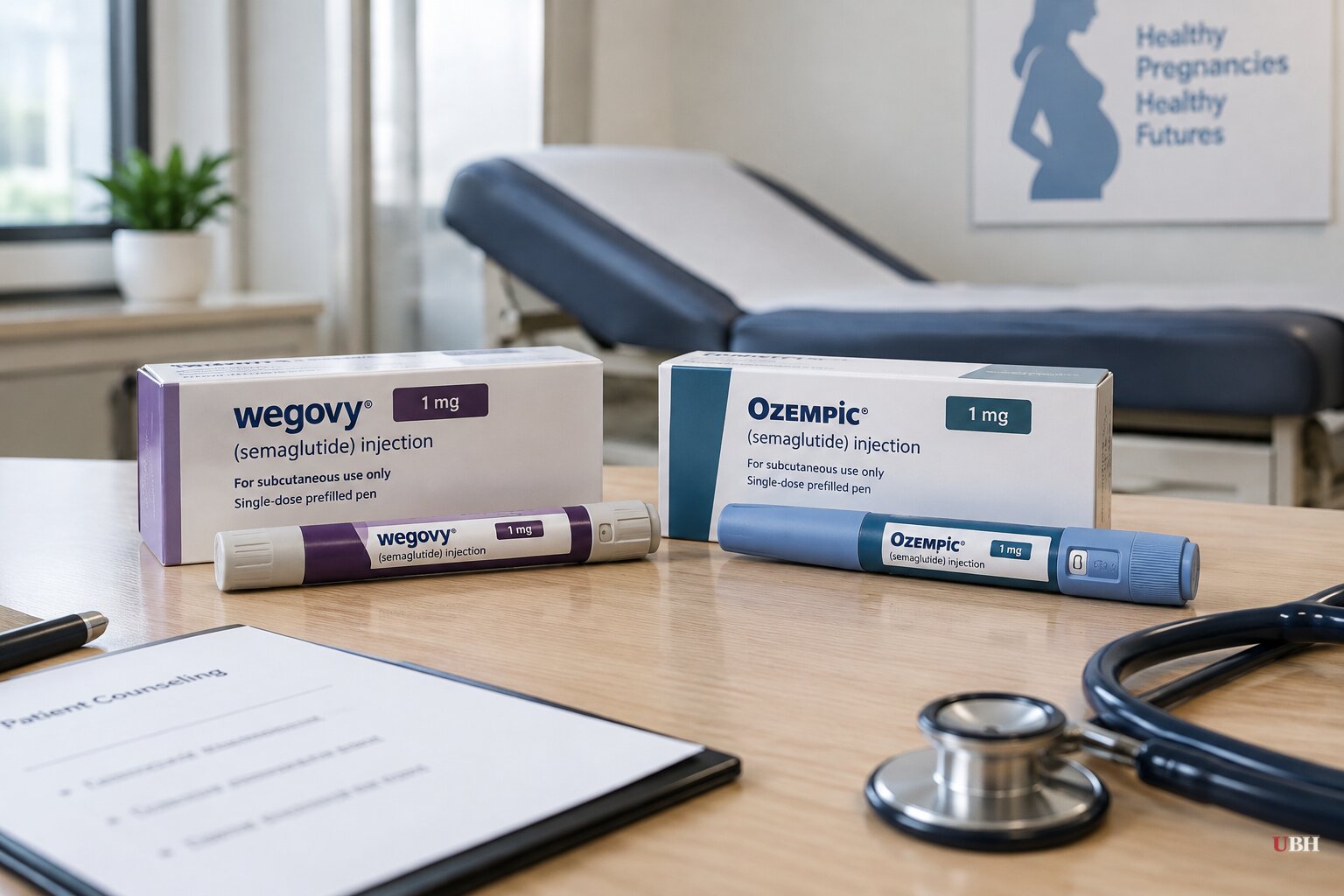
The American College of Obstetricians and Gynecologists (ACOG) on Friday, Oct. 23, released its first practice advisory on GLP-1 drugs before, during and after pregnancy. The advice to doctors is plain: tell patients to consider stopping the drugs one to two months before trying to conceive, and do not use them during pregnancy.
The advisory is titled "Use of Glucagon-Like Peptide-1 Receptor Agonists in Pregnancy and Lactation." ACOG called it "long-awaited."
Why ACOG moved now
Use of the drugs has spread fast among women of childbearing age. "Currently, as many as 1 in 300 women are exposed to GLP-1s prior to pregnancy," said D. Yvette LaCoursiere, MD, the guidance's lead author and a professor at the University of California, San Diego.
Prescriptions from a woman's own doctor are only part of it. LaCoursiere said the drugs are now "widely accessible through online providers and medical spas," which raises the odds of exposure during pregnancy.
New data shows the trend among mothers. Researchers at the University of Southern California reported earlier this month that the share of new mothers receiving GLP-1 prescriptions rose 24-fold from 2018 to 2025. A survey published Thursday by EY-Parthenon found most Americans taking the drugs now use them for weight loss rather than diabetes or other conditions.
What the guidance says
The advisory tells ob-gyns to warn patients that there is not enough safety data on GLP-1 use in pregnancy. It recommends patients consider discontinuing the drugs one to two months before pregnancy.
The timing is about how long the drugs linger. Most GLP-1 medications have long half-lives, so clearing them from the body can take days or weeks. The guidance includes a table listing each GLP-1 drug and its half-life.
The evidence is mixed and incomplete. In animal studies, GLP-1 use in pregnancy was associated with lower fetal weight, growth restriction, abnormal bone development and reduced maternal food intake and weight gain.
In humans, the picture is less alarming but far from settled. ACOG says the molecular makeup of GLP-1s makes transfer across the placenta unlikely, though Healio reports the organization also said there are not enough clinical data to confirm that theory. Available human data have not shown a consistent increase in birth defects. ACOG still says safety data is limited, particularly for indirect effects and for newer drugs entering the market.
ACOG also flagged a separate risk: GLP-1-related drops in calorie and nutrient intake may cause problems during pregnancy and the postpartum period.
Contraception and fertility
The advisory notes that GLP-1-related weight loss may increase fertility. "It's important for OB/GYNs to speak with patients who do not wish to become pregnant about reliable contraception," ACOG's release said.
For patients taking the drugs for diabetes, the advice is not to change treatment without a plan from their prescribing team.
Breastfeeding is not a green light
The lactation section is the most open-ended. ACOG tells doctors to say it is unclear how GLP-1 use after delivery could affect breastfeeding. Decisions should weigh limited data, the specific medication and the needs of the mother and infant.
The Independent reported the guidance suggests the shots might be acceptable while breastfeeding after a baby's first month. LaCoursiere cautioned against reading that as an endorsement. She told The Wall Street Journal the guidance supports a conversation with a provider, not blanket approval.
"We know that GLP-1s have an impact on caloric and nutrient absorption. How does that impact the breast milk? We don't know," LaCoursiere said.
Where the drugs are used, Healio reports, ACOG says clinicians should closely monitor the infant's weight gain.
What comes next
ACOG did not pretend to have final answers. "This is a fast-moving area of research, so for now we need to proceed with caution and reassess as more data becomes available," LaCoursiere said.
The open questions are specific. No one yet knows what GLP-1s do to breast milk composition or infant growth. And the newest drugs reaching the market have even less pregnancy data than the older ones. ACOG says it will update its advice as that research comes in.
Sources used for this briefing
7 links from 7 independent newsrooms (syndicated copies of the same report count once)
These are the sources it draws on, linked so you can verify.


