
Unbiased headlines. Facts, not spin.
Every story is an unbiased news briefing written from 110+ sources across the spectrum — sources linked so you can verify it yourself.
 health
Major Story (7/10)
July 3, 2026 at 05:16 PM
health
Major Story (7/10)
July 3, 2026 at 05:16 PM
ACA Enrollment Dropped 3 Million in Early 2026. The Debate Over Why Is Now a Political Fight.
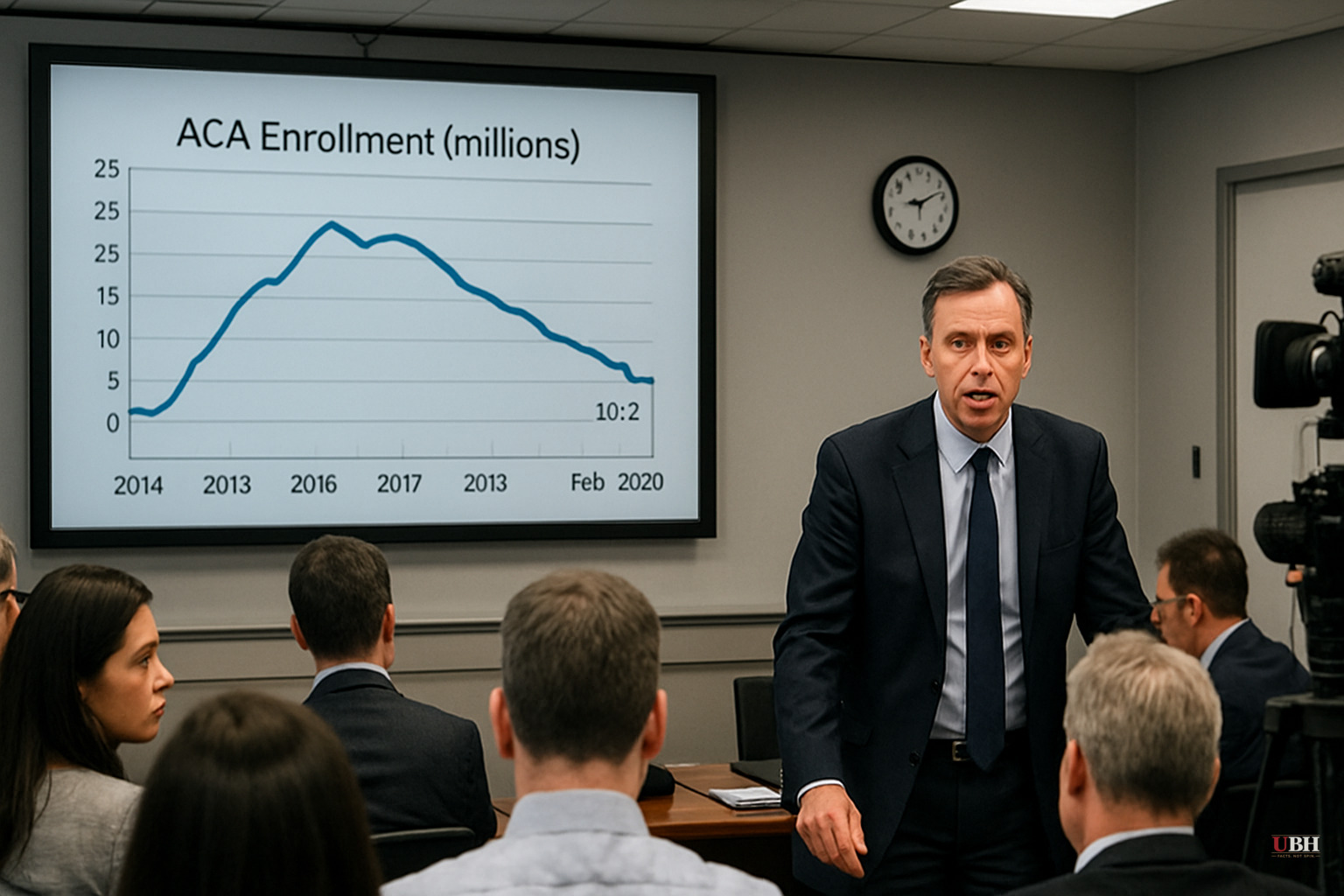
Since ACA marketplace enrollment peaked during the Biden era's enhanced-subsidy years, the February 2026 numbers have marked a clear reversal: 19.2 million effectuated enrollees, down from 22.1 million at the end of 2025, according to data released by the Department of Health and Human Services.
"Effectuated" enrollment means people who both signed up and successfully paid their first premium. The 2.9 million drop reflects people who either couldn't afford to stay or were removed from the rolls.
What HHS Says
The Department of Health and Human Services framed the decline as, at least in part, a success. HHS pointed to its own program integrity work, saying it estimates "improper, phantom and fraudulent enrollment" peaked at 5.6 million people in 2025. The Centers for Medicare & Medicaid Services confirmed it canceled coverage for 250,000 people who were enrolled without their consent.
A CMS spokesperson told CNBC: "Republicans, under President Trump are working to deliver health care affordability across the board. CMS will continue to root out waste, fraud, and abuse wherever it is found to protect Americans' tax dollars."
That claim deserves a fair hearing. Broker-assisted fraudulent enrollment was a documented problem during the Biden years, and CMS has published specific numbers behind its cancellation actions. If 250,000 people were genuinely enrolled without their knowledge, removing them is the right call regardless of the politics.
What the Experts Say
Health policy researchers are skeptical that fraud removal explains the bulk of a 2.9 million decline.
Jonathan Oberlander, a professor of health politics and policy at the University of North Carolina at Chapel Hill, told CNBC the fraud argument provides political cover "in a midterm election year," when affordability is "Americans' preeminent concern." His view: the timing and scale of the drop point squarely at the lapse of enhanced ACA premium subsidies, which expired at the end of 2025.
Those enhanced subsidies were a core Biden-era policy that sharply reduced monthly premiums for marketplace enrollees. When they expired, premiums for many households went up significantly. The data HHS released covers February 2026, the first month in which enrollees were paying full post-subsidy-lapse premiums. The correlation is direct.
Both Arguments Have Limits
The administration is right that fraudulent enrollment was a real, documented problem. CMS's own data shows 250,000 people enrolled without consent, and the claim of 5.6 million improper enrollments at peak is an HHS estimate, not a fabrication. Cleaning that up is legitimate.
But 250,000 confirmed cancellations cannot arithmetically account for a 2.9 million drop. The administration has NOT provided a sourced breakdown showing fraud removal explains the remaining 2.6 million. Until that accounting exists, attributing the entire decline, or even most of it, to fraud cleanup is an assertion without sufficient evidence behind it.
Oberlander and other policy experts are on firmer empirical ground that subsidy expiration is the dominant cause, but they are also making a political argument. Calling it purely a Republican-manufactured cover story ignores the legitimate fraud problem that preceded this enrollment drop.
What Congress Did
The subsidy lapse was NOT a Trump executive action. It was a legislative outcome. Democrats pushed to extend the enhanced subsidies during 2025's government shutdown fight; Republicans allowed them to expire when the continuing resolution passed without renewal. That's a factual sequence, not a matter of spin.
Beyond the subsidy expiration, the GOP's "big beautiful bill" included administrative changes to the ACA marketplace. CNBC reported that policy analysts estimate those changes will further reduce enrollment going forward. Specific projections were not detailed in the published data, but independent estimates of the bill's coverage effects are likely to surface from the Congressional Budget Office.
The Number That Still Needs an Answer
HHS says fraudulent enrollment peaked at 5.6 million in 2025. If that figure is accurate, the 2025 enrollment peak of 22.1 million was artificially inflated, and a drop back toward 19 million could reflect a correction toward genuine enrollment rather than a loss of real coverage.
But if the 5.6 million figure is overstated, or if the fraud-cleaning effort has already been largely completed while 19.2 million reflects the new floor, then the post-subsidy-expiration cost burden is pushing real people off insurance they previously carried.
CMS has not yet published a granular breakdown of which portion of the 2.9 million decline came from program integrity actions versus voluntary non-payment due to cost. That accounting, if it exists, would settle most of the empirical dispute. Whether HHS releases it before the midterm elections is an open question.
Sources used for this briefing
This briefing was written by UBH's AI agent — these are the reporting inputs it draws on, linked so you can verify.


