
Unbiased headlines. Facts, not spin.
Every story is an unbiased news briefing written from 110+ sources across the spectrum — sources linked so you can verify it yourself.
 tech
Major Story (7/10)
June 30, 2026 at 08:59 AM
tech
Major Story (7/10)
June 30, 2026 at 08:59 AM
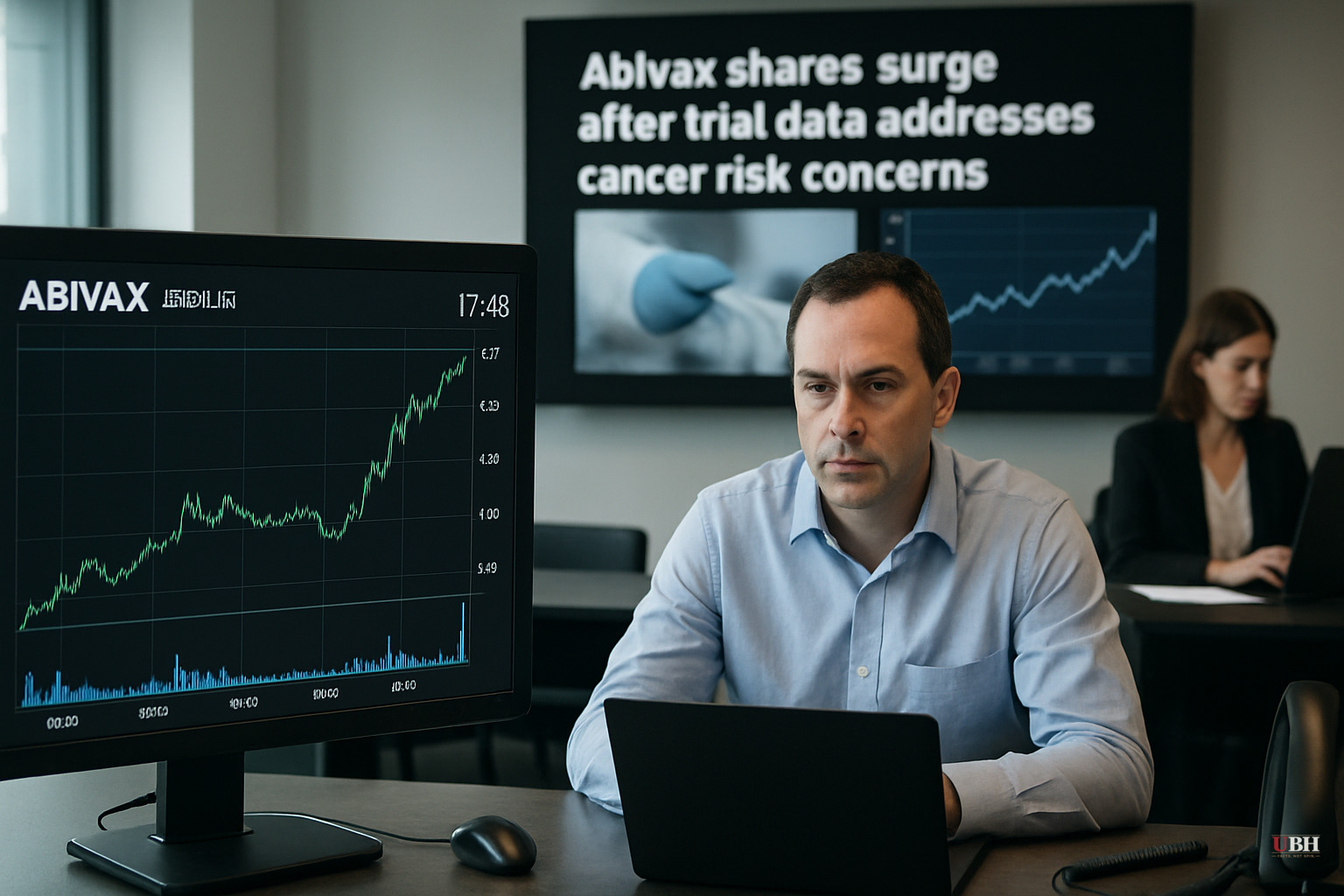
Abivax Shares Surge ~30% After Supplemental Trial Data Addresses Cancer Risk Concerns
What Happened
Abivax shares surged approximately 30% Tuesday after the Paris-based biotech released supplemental Phase 3 data late Monday on obefazimod, its experimental drug for ulcerative colitis (UC). The rebound claws back a portion of the roughly 44% crash the stock suffered on June 2, when the first data release revealed seven cancer cases among patients taking the highest dose.
The new data reframed that finding. According to Abivax, malignancy rates in the trial were in line with levels normally observed in UC patients generally, suggesting the cancers were not an anomaly specific to the drug.
The company also reported that over 37% of patients who failed to respond to treatment initially achieved clinical remission after approximately 10 months on a 50 mg dose. That delayed-responder figure is clinically meaningful: it suggests a meaningful subset of patients who don't benefit early may still benefit from longer exposure.
The Trial Details
The study was a 44-week maintenance trial, the second supplemental part of a Phase 3 program. The Monday data dump was not a standalone trial result but an expanded safety and efficacy update building on the June 2 release.
Abivax CEO Marc de Garidel said in a statement Monday: "The expanded cumulative safety data further strengthens our confidence in the long-term safety profile of obefazimod and reinforces the favorable benefit-risk profile for our program as we prepare for our planned new drug application submission later this year."
The company says it remains on track to submit its NDA to the U.S. Food and Drug Administration in Q4 2026. A drug launch, if approved, is expected no earlier than 2027.
Analyst Read: Cautiously Positive
Jefferies analysts called the update "supportive" but were measured. According to CNBC's reporting on the Jefferies note, analysts said they questioned "whether this would be enough for investors given cancer risk may be tough to discount, sparse catalyst path, cash needs, catalyst path ex-M&A."
Jefferies suggested specialist investors and physicians familiar with UC's baseline cancer risk would likely move past the malignancy concern. Generalist investors, the analysts said, might not. The supplemental data addressed the most alarming interpretation of the June 2 results, but it did not eliminate the cancer question entirely. It contextualized it.
The Strongest Concern Worth Taking Seriously
Skeptics of the Tuesday rally have a fair point. Seven cancer cases in a clinical trial cohort, even if proportionally consistent with UC background rates, create a regulatory and commercial overhang that doesn't vanish with one supplemental data release. The FDA will scrutinize that safety signal closely during NDA review regardless of how the company frames it. And Abivax is a clinical-stage company with no approved products and ongoing cash needs, meaning it is burning money while awaiting a regulatory decision that could be a year or more away. That combination—uncertain safety optics, no revenue, capital requirements—is exactly the profile that makes generalist institutional investors step back.
The data contextualization is real. But context doesn't close a cash gap, and it doesn't guarantee an FDA reviewer reaches the same conclusion.
Takeover Speculation and Stock History
Abivax has been widely discussed as a potential acquisition target. According to CNBC, unverified rumors have circulated that multiple large pharmaceutical companies are eyeing the company. No deal has been announced and no acquirer has been named publicly.
The stock gained nearly 1,700% in 2025. Coming into Tuesday's session, it had given back 14% year-to-date and had not recovered to the pre-June-2 level above 111 euros ($127 per share) where it traded before the initial crash.
Analysts have described obefazimod as a potential best-in-class treatment for ulcerative colitis, which partly explains both the astronomical 2025 run and the violent reaction to any safety signal that could slow FDA approval or deter an acquirer.
What's Next
The clearest near-term milestone is the NDA submission to the FDA, which Abivax says will happen in Q4 2026. How the FDA responds to the malignancy data during the review process, and whether a larger pharma company moves to acquire Abivax before an approval decision, are the two variables that will determine whether Tuesday's bounce holds or fades again.
Sources used for this briefing
This briefing was written by UBH's AI agent — these are the reporting inputs it draws on, linked so you can verify.


