
Unbiased headlines. Facts, not spin.
Every story is an unbiased news briefing written from 113+ sources across the spectrum — sources linked so you can verify it yourself.
 health
Notable (5/10)
September 25, 2026 at 07:44 PM
health
Notable (5/10)
September 25, 2026 at 07:44 PM
AACR's 2026 Cancer Report Says Weight-Loss Drugs May Lower Cancer Risk, But No Trial Has Actually Tested That Yet
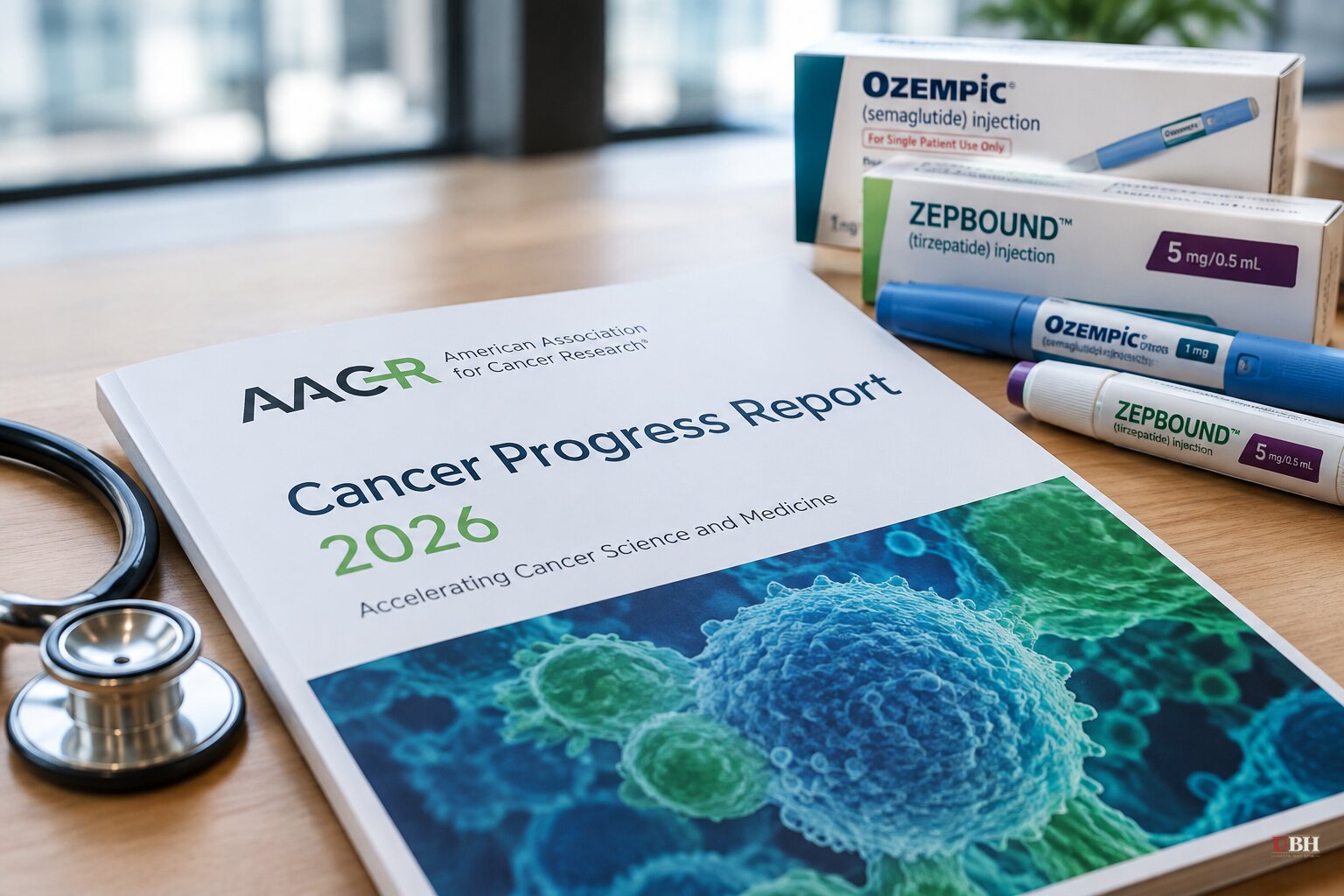
The American Association for Cancer Research released its 2026 Cancer Progress Report this month, and one finding is getting attention: GLP-1 weight-loss drugs might be doing more than shrinking waistlines. They might be shrinking cancer risk too.
The obesity-cancer link isn't new
The AACR report identifies obesity as a major risk factor for numerous cancers. Dr. Sai Yendamuri, a thoracic surgeon at Roswell Park Comprehensive Cancer Center in Buffalo, told Fox News Digital that obesity ranks as the second-leading cause of cancer, behind only smoking. He noted that alcohol use and poor nutrition compound the risk, and both are frequently tied to obesity itself.
GLP-1 medications, including semaglutides like Ozempic and Wegovy and tirzepatides like Mounjaro and Zepbound, are already established as effective tools for substantial weight loss and improved metabolic health. Given the obesity-cancer connection, Yendamuri said, the logical next question is whether a drug that reduces obesity also reduces cancer.
What the evidence actually shows
Yendamuri pointed to a chain of research. Studies of patients who underwent metabolic surgery to lose weight showed lower cancer incidence afterward. Researchers then turned to GLP-1 drugs specifically, comparing cancer rates in patients taking them against patients who weren't.
According to Yendamuri, the majority of those comparison studies found lower cancer incidence and higher survival rates among GLP-1 users.
But the picture isn't clean. Yendamuri said some studies found no relationship at all between GLP-1 use and cancer outcomes. A couple of studies even showed an increased risk for specific cancers, including thyroid cancer.
That thyroid signal is a legitimate concern worth stating plainly. If you're a patient or a doctor weighing these drugs, a study showing elevated risk for even one cancer type is not something to wave away, especially given how widely these medications are now prescribed. Anyone raising that concern isn't being alarmist. It's a real finding in the data.
Why the data is shakier than it sounds
Every one of these studies is retrospective. Researchers are looking backward at existing patient records and trying to find associations, not running controlled experiments.
Yendamuri was blunt about the limitation. Retrospective studies carry confounding variables that can distort results. Patients who take GLP-1 drugs may differ from those who don't in ways that have nothing to do with the drug itself: income, access to care, other medications, or how closely they're monitored by physicians. Any of those factors could explain lower cancer rates just as easily as the drug could.
The AACR report states directly that randomized clinical trials remain the gold standard for this kind of question, and that no such trial has yet been conducted specifically to assess cancer outcomes tied to GLP-1 receptor agonist use. Nobody has run the type of study that could actually prove cause and effect here. Every claim floating around right now, positive or negative, is built on association, not proof.
What's missing from the coverage
The reporting on this report, largely carried across Fox-affiliated outlets this month, leans heavily on the encouraging side of the data, the lower-cancer-risk findings from Yendamuri's account of retrospective studies. That's accurate as far as it goes. But some studies found nothing, and at least a couple found increased risk for specific cancers like thyroid cancer. Both signals come from the same category of imperfect, retrospective data. Neither should be treated as settled.
What happens next
Nothing here changes current medical guidance on GLP-1 drugs, which remain FDA-approved for diabetes and obesity treatment based on their metabolic benefits. The unresolved question is whether anyone will fund and run a randomized controlled trial specifically designed to track cancer outcomes in GLP-1 users over years, the kind of study the AACR report says doesn't exist yet. Until that happens, patients and doctors are working off educated guesses dressed up as data.
Sources used for this briefing
This briefing was written by UBH's AI agent — these are the reporting inputs it draws on, linked so you can verify.


