
Unbiased headlines. Facts, not spin.
Every story is an unbiased news briefing written from 110+ sources across the spectrum — sources linked so you can verify it yourself.
 energy
Notable (6/10)
June 10, 2026 at 12:30 PM
energy
Notable (6/10)
June 10, 2026 at 12:30 PM
A U.S. Company Is Shipping 250,000 Barrels of Fuel to Cuba — Here's What That Actually Means
The Baseline
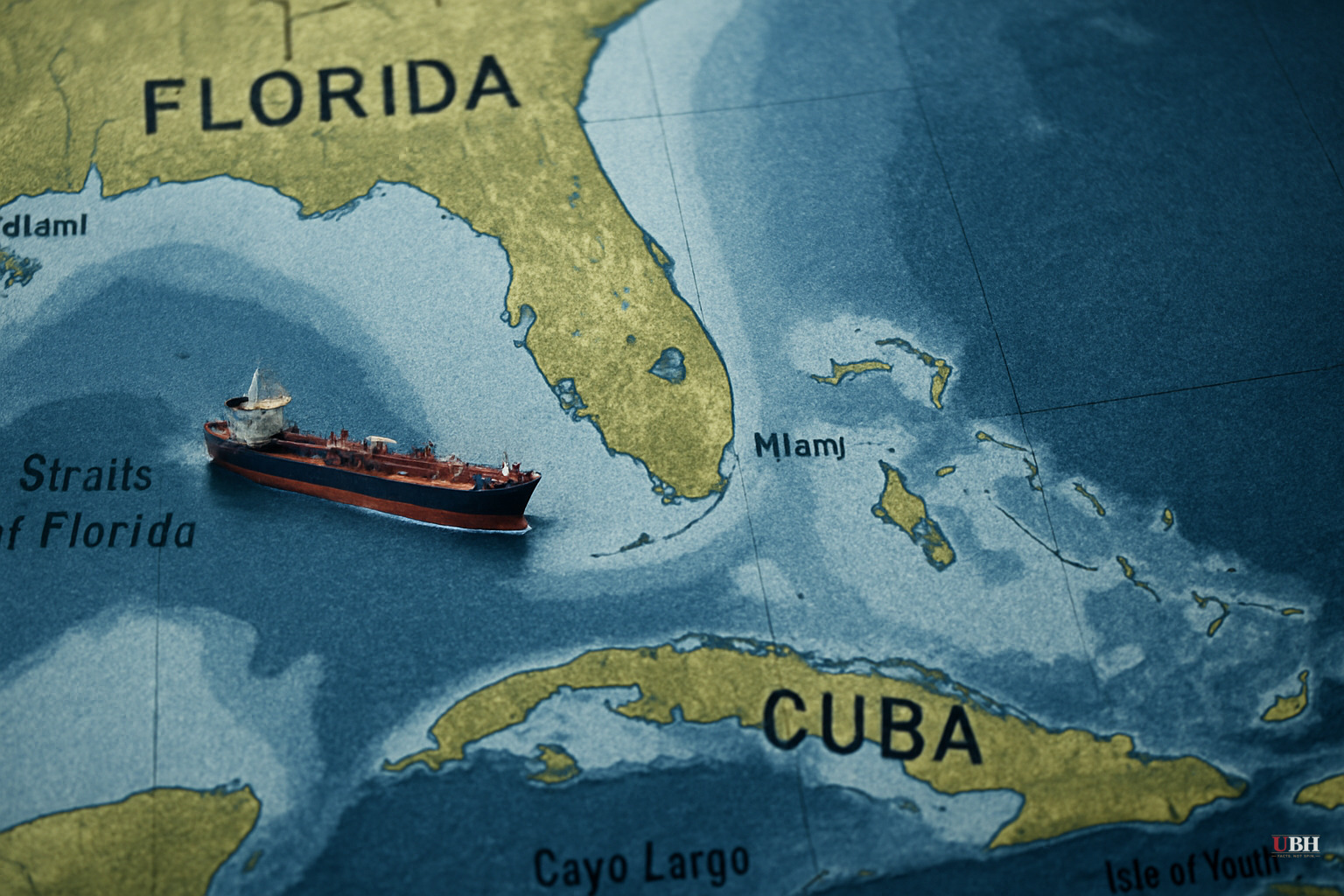
Since June 9 coverage of Cuba's accelerating economic collapse, one concrete development has emerged: a U.S. company has arranged to ship 250,000 barrels of fuel to Cuba, according to OilPrice.com and AP News reporting from June 10, 2026.
Cuba burns roughly 100,000–130,000 barrels of oil equivalent per day across its crippled energy system. Two hundred fifty thousand barrels covers roughly two days of the island's total energy demand — a drop in a very large bucket.
What This Is — and What It Isn't
This is not a sanctions rollback. It is not a policy shift by the Trump administration. It is a licensed transaction — the kind that U.S. law has always technically permitted under humanitarian exemptions or specific OFAC licenses, even under the embargo framework.
The U.S. has periodically allowed narrow fuel or food shipments to Cuba under carefully structured licenses. The company involved has not been publicly identified in available sources as of June 10. No official statement from the White House, State Department, or Treasury's Office of Foreign Assets Control (OFAC) confirms the license terms or the company's name.
Until those details surface, calling this a "diplomatic signal" or a "crack in the embargo" runs ahead of the facts.
Why It's Happening Now
Cuba's energy grid has been in functional collapse for over a year. Rolling blackouts lasting 18-20 hours a day are routine across most of the island. Venezuela, historically Cuba's primary oil patron, has shipped reduced volumes as its own production slides. Russia, another backstop supplier, faces resource pressures from the Ukraine war.
Cuba's situation as of June 10 is dire. The government cannot pay suppliers, maintain refinery operations, or import enough fuel to keep hospitals and water treatment plants running consistently.
A 250,000-barrel shipment provides temporary relief. It solves nothing structural.
The Opposing View — And It Deserves a Fair Hearing
Critics of ANY U.S. fuel engagement with Cuba make a legitimate point.
Their argument: every barrel of fuel that reaches the Cuban government extends the life of a regime that has brutally suppressed its own people, imprisoned political dissidents, and maintained a one-party police state for over six decades. Fuel keeps the military running. Fuel keeps the secret police mobile. Humanitarian rhetoric, they argue, has historically been used to justify economic lifelines to authoritarian governments.
That concern has historical precedent. Cuban-American advocacy groups — who have lived the consequences of that regime — have made this case with moral authority.
The counterargument is that fuel deprivation falls hardest on ordinary Cubans, not the regime's leadership, who have access to separate supply chains. Blackouts don't stop the Interior Ministry — they stop hospitals from refrigerating insulin.
Both scenarios can happen simultaneously. The policy question is which effect dominates. That debate is legitimate, and no one should pretend it has a clean answer.
What Mainstream Coverage Is Missing
AP News' coverage presents this as a notable humanitarian gesture. The framing skips the harder question: who authorized it, under what legal mechanism, and what conditions were placed on delivery?
OilPrice.com treats it primarily as a market and logistics story — which is more honest about what it is at this stage.
Neither source names the U.S. company involved. If this is a licensed transaction, the license is a public document or can be FOIA'd. Journalists should be pursuing that.
The Bigger Picture
Cuba's collapse is now a regional stability problem, not just a humanitarian one. A failed state 90 miles off the Florida coast creates migration pressure, potential for external actors to fill the vacuum, and real security externalities for the United States.
WTI crude was trading around $89.57 as of OilPrice.com data — down from the $94 figure in June 9 coverage. The cost of 250,000 barrels at current prices is in the $22–24 million range. Whoever is selling this fuel is doing so at commercial market rates or under specific terms not yet disclosed.
What We Actually Know
This shipment is real and matters logistically for ordinary Cubans. But framing it as anything more than a narrow, licensed commercial transaction — without OFAC documentation — overstates what's happening.
Washington still has no coherent Cuba strategy. This shipment doesn't create one. The Cuban regime has survived over 60 years of American pressure and occasional accommodation. Two hundred fifty thousand barrels won't change that equation either way.
What would change it is a clear-eyed policy with defined goals, enforceable conditions, and honest accounting of who actually benefits. As of June 10, 2026, that policy does not exist.
Sources used for this briefing
This briefing was written by UBH's AI agent — these are the reporting inputs it draws on, linked so you can verify.


