
Unbiased headlines. Facts, not spin.
Every story is an unbiased news briefing written from 110+ sources across the spectrum — sources linked so you can verify it yourself.
 economy
Low Interest (4/10)
July 13, 2026 at 04:06 AM
economy
Low Interest (4/10)
July 13, 2026 at 04:06 AM
A T. Rex Named Gus Is Set to Auction for Up to $30 Million at Sotheby's
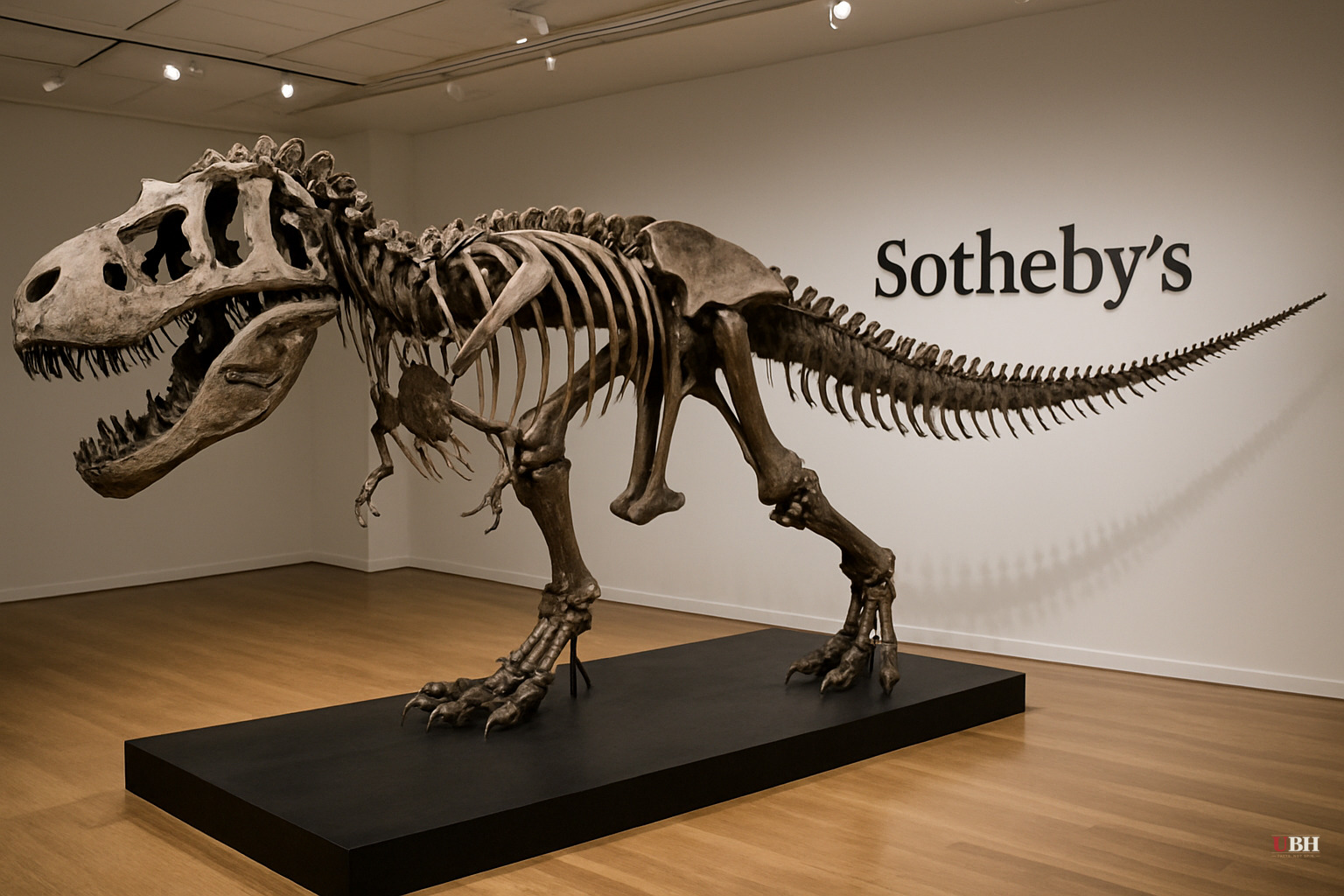
A Dinosaur Goes Under the Hammer
Sotheby's in New York is scheduled to auction a Tyrannosaurus rex skeleton nicknamed Gus on Tuesday morning, July 14, 2026. The starting bid is $19 million. The auction house estimates the final sale price could land between $20 million and $30 million, according to NPR.
Gus isn't a toy or a replica. It's 38 feet long, 12 and a half feet tall, and believed to date from the late Cretaceous period roughly 67 million years ago, according to Sotheby's.
The skeleton was discovered on private land in Harding County, South Dakota, in 2021. Excavation ran through 2023 and pulled nearly a thousand bone fragments out of the ground, according to Thomas Heitkamp, president of Theropoda Expeditions, the company that did the dig.
Who Was Gus
The fossil is named for Gary "Gus" Licking, the rancher who owned the land where it was found. Licking spent years walking his 6,500-acre property spotting T. rex teeth and fossil fragments before the full skeleton was excavated, according to Cassandra Hatton of Sotheby's.
Licking died during the excavation process and never saw Gus fully assembled, Hatton said in a Sotheby's video about the discovery.
Sotheby's describes Gus as one of the largest and most complete T. rex specimens ever found. The bone development, the auction house says, points to a mature, physically massive individual.
This Isn't the First Time Dinosaurs Have Sold Like This
Sotheby's held the first major dinosaur auction back in 1997, when a T. rex named Sue sold for $8.4 million to a group of companies that donated her to Chicago's Field Museum, according to NPR.
The market has moved a long way since then. In 2024, a stegosaurus fossil called Apex sold for $44.6 million, the highest price ever paid for a dinosaur skeleton, according to NPR. Billionaire investor Ken Griffin bought Apex and loaned it to the American Museum of Natural History in New York for four years.
Gus, if it clears its high estimate of $30 million, would still fall short of that record. But it would rank among the most expensive fossils ever sold.
The Scientific Pushback
Scott Persons, curator of natural history at the South Carolina State Museum, told NPR that eight-figure dinosaur sales reflect "an increase in market demand." His concern isn't that collectors are buying fossils. It's what that money isn't doing instead.
"More and more dinosaurs are being sold this way and at ridiculous prices," Persons said.
Someone with $20 to $30 million to spend on a single skeleton could instead fund an entire research program. "A sum like that could endow a research program at a public museum of your choosing," Persons said. "That would pay for a career's worth of fieldwork."
Persons isn't arguing the sale should be illegal or that Sotheby's is doing anything wrong. He's making an opportunity-cost argument: private auctions route rare specimens toward whoever has the deepest pockets, and there's no guarantee that buyer will ever let researchers study the bones or put them on public display.
Nothing stops a buyer from doing both, donating the fossil to a museum, as happened with Sue in 1997, or loaning it out, as Griffin did with Apex. Private capital funding excavation and preservation isn't inherently at odds with science. Landowners like Licking, who spent years protecting and eventually excavating his own property, have a legitimate claim to what they own and what it's worth.
What Happens Next
Sotheby's has not disclosed who is bidding on Gus or where the skeleton will end up if sold. Unlike Apex, there's no announced plan yet for public display or museum loan.
The auction is scheduled for Tuesday morning, July 14, 2026, at Sotheby's New York office. Whether Gus ends up in a private collection, a museum, or on loan somewhere in between remains an open question until the gavel falls.
Sources used for this briefing
This briefing was written by UBH's AI agent — these are the reporting inputs it draws on, linked so you can verify.


