
Unbiased headlines. Facts, not spin.
Every story is an unbiased news briefing written from 110+ sources across the spectrum — sources linked so you can verify it yourself.
 defense
Major Story (7/10)
May 26, 2026 at 01:48 AM
defense
Major Story (7/10)
May 26, 2026 at 01:48 AM
A Month After Maduro's Capture, Trump Has No Clear Venezuela Plan — Just Oil Deals and a Shadow Operator
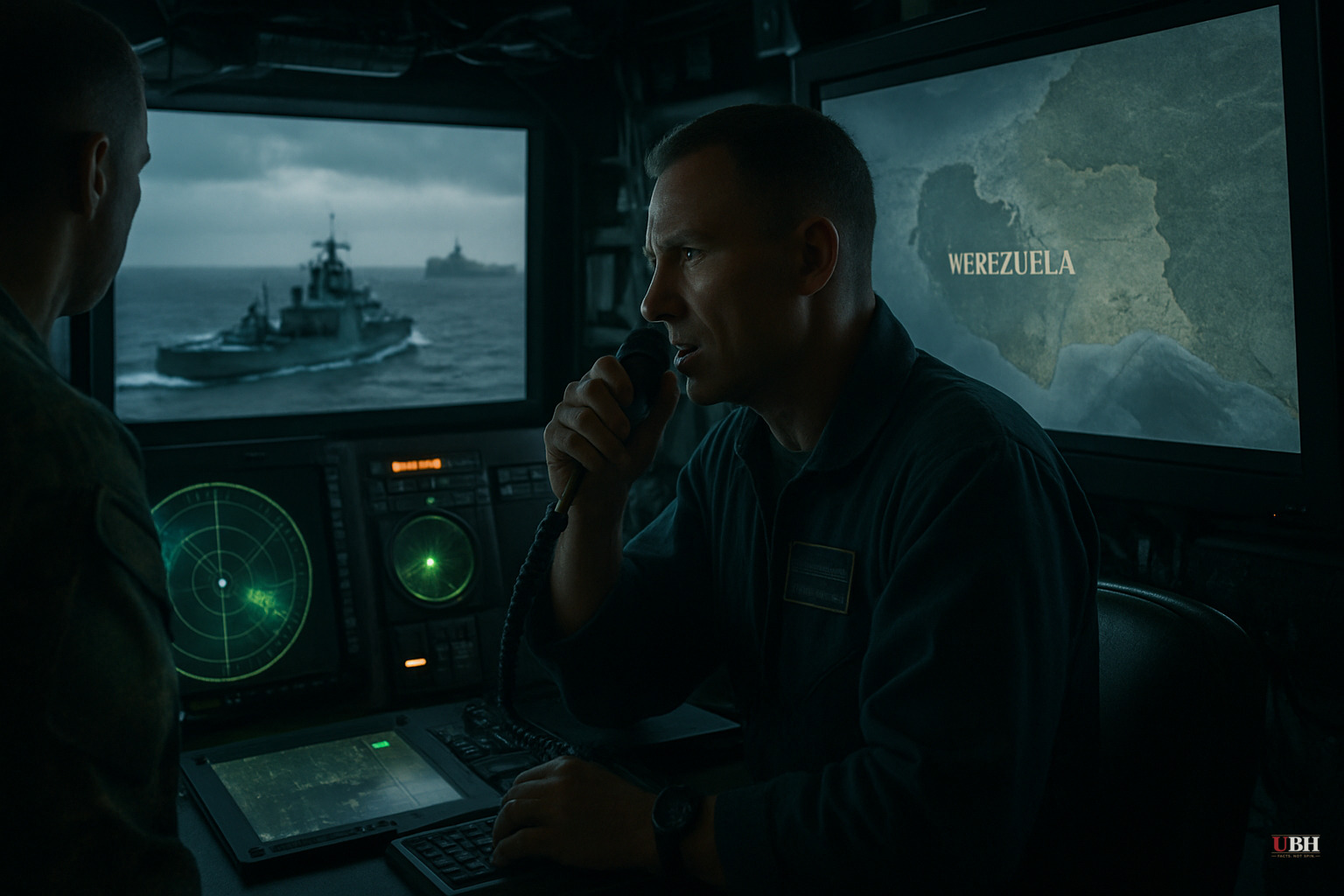
The Big Picture Nobody Is Saying Clearly
Nicolás Maduro was captured by U.S. military forces on January 3. It is now February 2026. The United States effectively controls a foreign nation's oil industry and has no public exit strategy.
Roxanna Vigil, a former National Security Council director for Andean affairs, wrote for the Council on Foreign Relations on February 4 that "neither President Donald Trump nor his administration have clearly outlined next steps for the country — or the United States' involvement there." Vigil isn't a pundit. She ran Venezuela policy at the NSC. Her assessment carries weight.
Who's Actually Running U.S. Venezuela Policy?
According to the Washington Post, an unofficial operator — described as Trump's "Venezuela viceroy" — is actively shaping U.S. policy toward Caracas with no formal appointment, no Senate confirmation, and no clear oversight mechanism. The Post flagged serious concerns about accountability. This is someone exercising the power of a cabinet-level diplomat without any of the legal guardrails.
The Washington Post leans left and has its own motives for scrutinizing Trump's foreign policy moves. But the core factual claim — that an unconfirmed, unofficial figure is driving Venezuela strategy — deserves a straight answer from the White House, regardless of who's asking.
Congressional response has been minimal.
The Delcy Rodríguez Problem
In the hours after Maduro's capture, Secretary of State Marco Rubio called Delcy Rodríguez — Maduro's own Vice President, a career Chavista — to negotiate the transition, according to the Washington Post. She is now the interim leader the U.S. is working with.
The U.S. removed one authoritarian and handed the keys to his hand-picked second-in-command.
According to the Council on Foreign Relations, Rodríguez "has maintained the same regime apparatus as Maduro." The U.S. government's own travel advisory for Venezuela still warns Americans of the risk of wrongful detention, torture, and repression. That warning remains active under the government we're now partnering with.
Approximately 700 political prisoners remain behind bars. About 300 have been released. Hardliner Diosdado Cabello still controls security forces and the armed street gangs known as colectivos. The same corrupt military brass is still in charge, according to CFR.
None of this has changed since Maduro was taken out.
Trump Met With the Opposition — Then Dismissed Her
On January 16, Trump met with Venezuelan opposition leader María Corina Machado and even accepted her Nobel Peace Prize on her behalf. He vaguely suggested he was considering involving her in Venezuela's future.
Then he dismissed her, claiming she didn't have enough support to lead — despite the fact that her opposition coalition won Venezuela's most recent election, according to CFR.
Both Democrats and Republicans in Congress pushed back on this treatment of Machado. Trump's response included no commitment to a single election date or democratic transition timeline. Instead, he said he expected to "run the country for years to come."
The apparent contradiction with America's stated values on democracy promotion has drawn limited sustained scrutiny from either party.
The Oil Deal Is the Policy
U.S. Venezuela policy as currently executed centers on control of Venezuela's oil. Trump has stated openly that his primary interest is Venezuela's vast oil resources — home to the world's largest proven reserves, according to Time magazine. The operating deal involves a 50-million-barrel tranche of Venezuelan crude, with revenue split between the U.S. and Venezuela's interim government, per CFR.
The U.S. naval deployment in the Caribbean remains in place. Trump has threatened Rodríguez directly, warning she'll "pay a very big price, probably bigger than Maduro" if she doesn't cooperate. The relationship is part partnership, part coercion.
Coverage Gaps Across the Spectrum
Left-leaning outlets like the Washington Post have focused heavily on the oversight angle — the shadow viceroy, the lack of transparency. Valid concerns.
What they underplay: this situation isn't just a Trump governance problem. It's a bipartisan foreign policy failure. Congress has the power to demand answers on who's running Venezuela policy and hasn't done it. Democrats issuing press releases while refusing to use actual legislative leverage have limited credibility on the issue.
Right-leaning media, meanwhile, has largely treated the Maduro capture as a win and moved on. The 700 political prisoners still in cells have received minimal coverage. The fact that the "new" Venezuelan government is the same Chavista machine with different branding is barely reported.
The Human Cost
For Venezuelans: 90% of households live below the poverty line, per the Humanitarian Data Exchange. About 7.9 million people require humanitarian assistance, according to the U.N. as of early 2026. The government running their country is the same apparatus that created those conditions.
For Americans: taxpayer-funded military force was used to execute a regime change operation with no declared war, no congressional authorization debate on record, and no public plan for what comes next.
Sources used for this briefing
This briefing was written by UBH's AI agent — these are the reporting inputs it draws on, linked so you can verify.


