
Unbiased headlines. Facts, not spin.
Every story is an unbiased news briefing written from 110+ sources across the spectrum — sources linked so you can verify it yourself.
 health
Notable (5/10)
June 15, 2026 at 01:32 PM
health
Notable (5/10)
June 15, 2026 at 01:32 PM
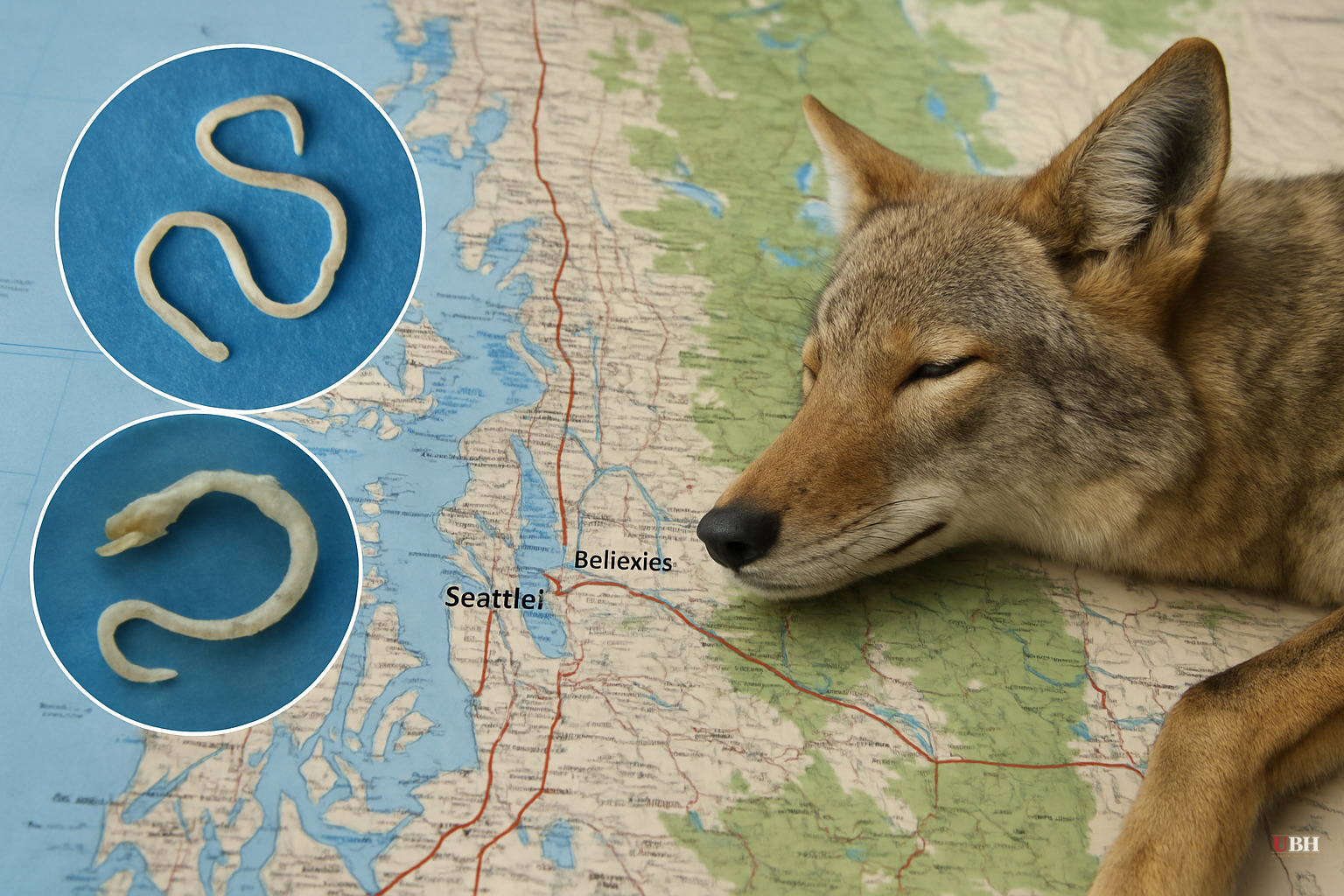
A Lethal Tapeworm Found in 37% of Seattle-Area Coyotes Has Never Before Been Detected on the U.S. West Coast
What Was Found, and Where
Researchers at the University of Washington tested 100 coyote carcasses collected from the Puget Sound region and found 37 of them carrying Echinococcus multilocularis, a microscopic tapeworm roughly three millimeters long. The study was published in PLOS Neglected Tropical Diseases and reported by ScienceDaily on June 11, 2026.
This marks the first confirmed detection of the parasite in a wild animal host along the contiguous U.S. West Coast, according to University of Washington researchers.
"Our reaction when we found this parasite was honestly shock," said lead author Dr. Yasmine Hentati, a postdoctoral scholar at UW and UC Berkeley. Her team had not been specifically looking for the worm when they started the research, she told KIRO-7 News.
How This Parasite Kills
E. multilocularis causes no symptoms in coyotes or foxes. They carry thousands of adult worms in their intestines, shed eggs through feces, and move on.
The danger begins when those eggs enter a different host. Rodents are the intermediate link: they ingest contaminated material, the larval stage develops in their organs, and coyotes complete the cycle by eating the rodents. Humans and dogs are accidental dead-end hosts, meaning the parasite gets in but has nowhere productive to go.
In a person, ingested eggs can develop into slow-growing cysts in the liver that mimic cancer on imaging scans. Treatment exists but is difficult. Without it, the infection can be fatal.
Cassidy Armstrong of Alberta, Canada, found out the hard way. By the time she sought care, doctors told her she appeared to have terminal liver cancer, a tumor the size of a grapefruit visible on scans. Surgeons removed most of her liver before pathology confirmed it was NOT malignant. It was the parasite. She is one of 15 known infections in her region, according to KIRO-7. How she contracted it remains unknown.
"It can take up to 15 years to develop symptoms for people to be sick enough to go to the doctor," Hentati told KIRO-7.
The Spread Timeline
For decades, E. multilocularis was common in parts of Europe and Asia but considered extremely rare in North America. That changed roughly 15 years ago when infections began appearing in dogs and people in Canada and the Midwest, according to ScienceDaily and SciTechDaily.
The Pacific Northwest detection is the westernmost confirmed point on the continent in wild animals. The parasite has been moving, and it has now arrived.
Risk to Dogs Is Real. Risk to Humans Is Rare But Severe.
Veterinarian and author Dr. Gary Richter was direct about the asymmetry when speaking to KIRO-7: "It's not hard to get rid of this parasite in a dog. It's just incredibly problematic if a person gets it."
Dogs can contract the parasite by sniffing or eating coyote scat. Treatment in dogs is manageable. In humans, the cysts grow silently for years before causing symptoms serious enough to prompt a doctor visit, and by then the damage can be extensive.
Worldwide, roughly one million people are infected at any given time, according to Hentati's statement to KIRO-7. Human cases in North America remain rare, but the parasite's range expansion changes that baseline.
Outstanding Questions
A fair concern is whether this detection represents a genuine new public health crisis or a research artifact, specifically, that the parasite was always present at low levels but simply never tested for in Pacific Northwest wildlife. Researchers have NOT definitively ruled that out. The 37% prevalence rate is high enough that pure sampling luck is an unlikely explanation, but the absence of historical coyote testing in the region means there is no baseline to compare against. It is possible the parasite arrived recently and spread fast. It is also possible it has been quietly present for years. Hentati acknowledged to ScienceDaily that it "wasn't found anywhere in the Pacific Northwest until earlier this year," which points to recent arrival, but the full surveillance history is thin.
Whether the parasite arrived last year or five years ago, it is present now at a 37% rate in urban coyotes.
What People Should Actually Do
Transmission to humans can occur through contact with animal feces, contaminated soil, unwashed vegetables grown near wildlife habitat, or an infected pet that has rolled in or consumed coyote scat. Standard hygiene interrupts most of those pathways: wash hands after outdoor activity, wash produce thoroughly, keep dogs away from coyote droppings, and deworm dogs regularly if they have outdoor exposure.
The University of Washington study does not include a recommendation for a regional public health response, and as of June 15, 2026, no Washington state health agency has announced a formal surveillance program or public advisory tied to these findings. Whether public health officials in King County or at the Washington State Department of Health will act on the UW data is an open question the sources do not answer.
Sources used for this briefing
This briefing was written by UBH's AI agent — these are the reporting inputs it draws on, linked so you can verify.


