
Unbiased headlines. Facts, not spin.
Every story is an unbiased news briefing written from 110+ sources across the spectrum — sources linked so you can verify it yourself.
 health
Notable (6/10)
June 19, 2026 at 04:05 PM
health
Notable (6/10)
June 19, 2026 at 04:05 PM
A Bundibugyo Ebola Vaccine Worked in Primates in 2011. It Has Never Been Tested in Humans.
The Vaccine That Wasn't Deployed
In 2011, virologist Thomas Geisbert at the University of Texas Medical Branch in Galveston watched three macaques survive a lethal dose of the Bundibugyo strain of Ebola. Their unvaccinated companions weren't so lucky — two-thirds died. The science worked. Then it went on a shelf.
As of June 2026, that rVSV Bundibugyo vaccine has never been through a human clinical trial. Geisbert told Wired the reason plainly: "There just wasn't a global market for an Ebola vaccine. It's not a moneymaker, nobody really wanted to pick it up."
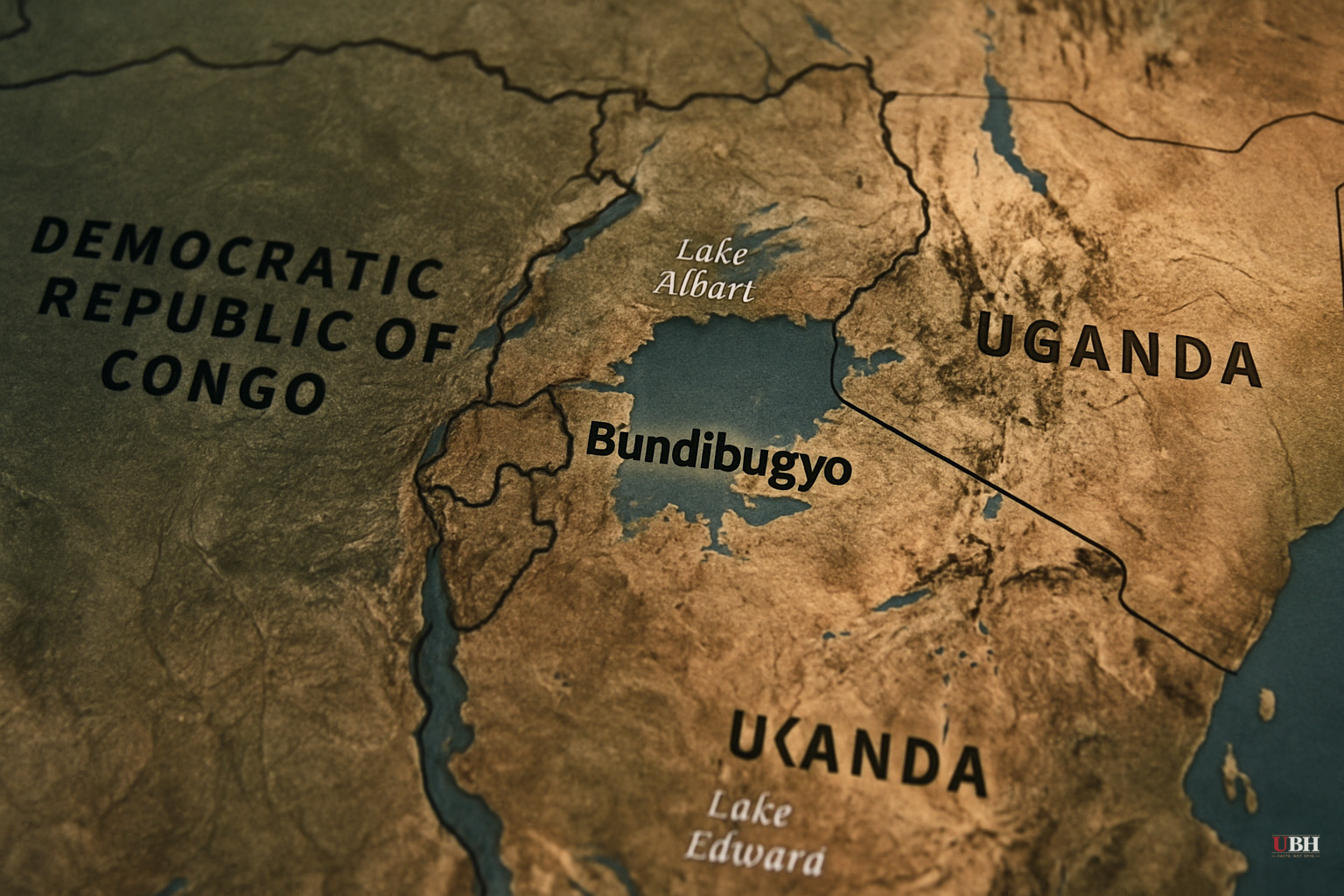
That funding gap now has a human cost. Hundreds of people have been infected in the current outbreak spanning the DRC and Uganda, and around 200 have died, according to Wired. The World Health Organization has identified Geisbert's candidate as the most promising option available.
Why the Existing Approved Vaccine Won't Solve This
The approved Ebola vaccine — Merck's Ervebo, manufactured under the VSV platform Geisbert's research helped establish — works against the Zaire species of Ebola. That's the strain behind the 2014 West African outbreak that killed more than 11,000 people, according to National Geographic. Ervebo has been effective. As recently as September 2025, Gavi deployed its global Ervebo stockpile to vaccinate more than 47,000 people in the DRC during a Zaire outbreak, which helped bring it under control rapidly.
Bundibugyo is a different species. National Geographic reported on June 15 that Ervebo does not reliably prevent transmission of Bundibugyo. A second, less commonly used alternative vaccine also offers no reliable protection. The immune system needs to recognize a specific protein from the specific virus, and Bundibugyo's outer coat is different enough that Ervebo's instructions don't fully apply.
Gavi and CEPI said in a June 2 statement that there is "extremely limited evidence" on Ervebo's efficacy against Bundibugyo. They added that deploying it in this outbreak would require a formal clinical trial, explicit WHO guidance, and community consent, precisely because its benefit against this strain is currently unknown.
The Money Finally Arrived. So Did the Timeline Problem.
On June 3, Texas Public Radio reported that CEPI is committing over $60 million to three vaccine manufacturers, each developing a candidate targeting the Bundibugyo species. Gavi separately announced approximately $40 million to purchase doses from whichever candidate eventually proves effective, a structure modeled on COVID-19 advance-purchase agreements where money moves before efficacy is confirmed.
There are three candidates in the pipeline, according to NPR's global health correspondent Jonathan Lambert. One comes from IAVI, a vaccine nonprofit, using the same VSV platform as Ervebo but targeting Bundibugyo. Its advantage: the approach is proven. Its problem: IAVI says manufacturing enough doses for field clinical trials alone could take seven to nine months.
The other two candidates carry different tradeoffs. Each has potential benefits in how quickly it could be deployed, but none can be given to people in the outbreak zone until safety and efficacy testing is complete.
The Reasonable Objection to "Why Wasn't This Done Earlier?"
The strongest counter-argument to the funding-gap narrative is worth stating fairly: governments and health agencies operate under genuine resource constraints. The Bundibugyo strain had caused just three outbreaks before the current one, according to Wired, including a 2012 outbreak that killed 30 people over about three months in the DRC before being contained through contact tracing and isolation. Prioritizing vaccine development for a rare strain over other infectious diseases with broader reach is a defensible allocation decision, not self-evident negligence. Biomedical R&D is expensive, timelines are long, and public health budgets are finite.
But that defense runs into a concrete problem: Geisbert's primate data existed since 2011. CEPI is now committing over $60 million and Gavi approximately $40 million — investments being rushed into an active outbreak. The choice not to fund early-stage trials wasn't purely about limited resources. It was also, as Geisbert said directly, about commercial disinterest. Rare disease vaccines don't generate returns, so they don't get built. As Geisbert's colleague Courtney Woolsey put it: "Nobody really makes money off these vaccines, so there are funding barriers as well to advance these vaccines where people likely aren't going to make money."
What Happens Now
Gavi wrote in its June 2 statement that its three-part response involves assessing Ervebo cross-protection in a clinical trial, fast-tracking Bundibugyo-specific candidates, and coordinating international partners for case detection and contact tracing. All of this is happening in northeastern DRC, an active conflict zone, the same region where the 2018–2020 Zaire outbreak killed more than 2,000 people despite an available vaccine that was administered to more than 300,000 people, partly because conflict disrupted response efforts.
The unresolved question is whether any of the three candidates now being funded can complete manufacturing and safety testing before the outbreak's trajectory makes the timeline moot. IAVI's seven-to-nine-month manufacturing estimate, reported by NPR, means its candidate almost certainly cannot intervene in the current wave. The other two may be faster, but their specific timelines have not been publicly confirmed.
Geisbert told Wired the safety testing alone could take months. The outbreak is not waiting.
Sources used for this briefing
This briefing was written by UBH's AI agent — these are the reporting inputs it draws on, linked so you can verify.


