
Unbiased headlines. Facts, not spin.
Every story is an unbiased news briefing written from 110+ sources across the spectrum — sources linked so you can verify it yourself.
 economy
Low Interest (4/10)
July 12, 2026 at 01:59 PM
economy
Low Interest (4/10)
July 12, 2026 at 01:59 PM
A Board Game Company Tried to Make Monopoly in America. It Took a Year and Cost Double.
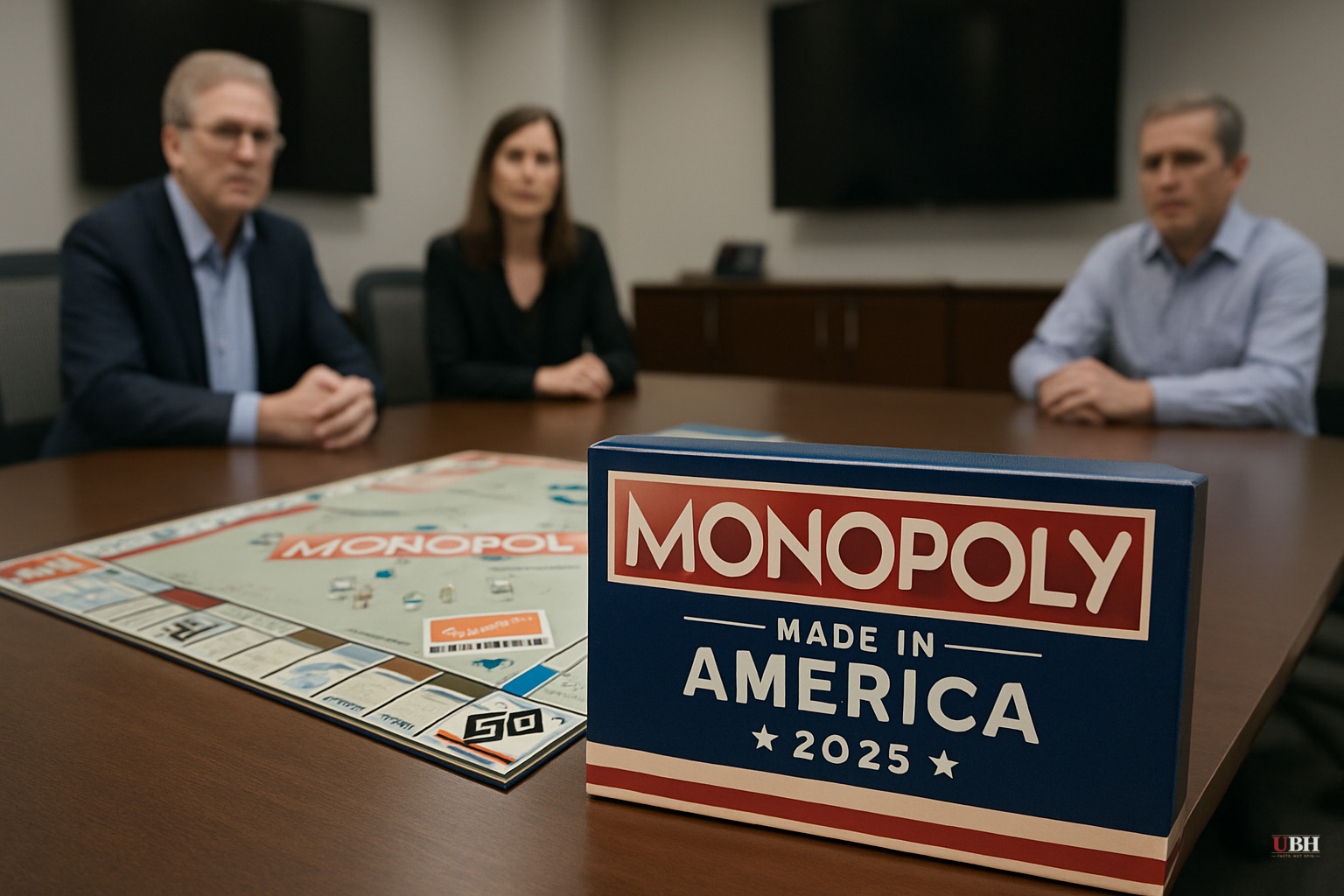
No Dice, Literally
WS Game Company CEO Jonathan Silva got hit with a seven-figure tariff bill last year, according to NPR. So he decided to test something: could his company build a board game entirely in the United States?
He picked Monopoly. Specifically, a special edition tied to America's 250th birthday in 2026. The idea made sense on paper. It turned into a logistics nightmare in practice.
The first wall Silva hit: dice. Not property cards, not tokens. Dice.
"We turned over every single leaf trying to find someone who would make 10,000 dice for us in the U.S.," Silva told NPR. "It requires special machinery. It requires investment. And that type of stuff just can't happen on a random Tuesday and be ready in a couple of months."
He never found a domestic dice maker. The Monopoly Americana Edition, built to celebrate American manufacturing, ships with imported dice.
The Parts He Did Find
Everything else came together, but it took hunting across the country. A former Hasbro factory in East Longmeadow, Massachusetts, now run by Cartamundi, prints the board, according to NPR and Trend Hunter. Pioneer Packaging makes the tray that holds the money. Stateline Industries, a small manufacturer in Liberty, Indiana, cast the custom metal tokens: a cowboy hat, a covered wagon, an apple pie.
Those are good, specific American jobs. But stitching them into one finished product took more than a year, according to NPR. Silva missed the first half of the 250th-anniversary selling season because of it.
The game retails for $80. Silva says manufacturing it domestically cost at least double what it would have cost in China, per NPR's reporting.
"When I place a purchase order in China, they have all those capabilities under one roof," Silva said. "For one item, it took up way too much of our resources and time to bring it to market."
Why China, Not Someone Else
Nearly 80% of toys and games sold in the U.S. come from China, according to NPR. This results from decades of China building an entire vertically integrated supply chain, from raw plastic to injection molding to packaging, all within a short drive of any given factory.
Greg Ahearn, president and CEO of The Toy Association, put it bluntly: "That's why the re-shoring and the looking at bringing it back into the U.S. or even looking at other countries and moving it is not as easy as it sounds," he told NPR.
Ahearn also made a case worth considering. There are products where U.S. manufacturing matters for national security, he argued, but toys generally aren't it. "Even if you could, who in their right mind would take their capital and invest it into creating a toy manufacturing plant?" he asked, according to WUWM. "Of all the things you could pick, we'd probably be pretty low on that list."
That's a legitimate economic argument. Board games run on thin margins. Betting capital on a domestic toy factory, when the industry's own trade group says the math doesn't work for most products, is a real risk, not just corporate excuse-making.
The Other Side of the Ledger
But Silva's experience also shows the flip side, the case tariff supporters make: America hollowed out entire manufacturing capabilities, like specialty dice molding, that it once had. Nobody rebuilds that overnight, and nobody rebuilds it at all if importing stays cheaper forever. If tariffs never force the question, the capability never returns. Silva found workers, factories, and machine shops willing to do the work in Massachusetts and Indiana. They just needed the incentive to bid for it.
The honest reading is that both things are true at once. Reshoring toy manufacturing is expensive and slow, exactly as Ahearn says. And that expense and slowness is itself evidence of how far U.S. industrial capacity has eroded, exactly what tariff advocates point to.
What's Next
Instead of racing to build more domestic capacity, the toy industry is lobbying for relief. According to WUWM, a newly formed U.S.-China Board of Trade is weighing a carve-out that could allow up to $30 billion worth of toy and game imports to continue with reduced tariff exposure.
No final decision on that carve-out has been reported. If it goes through, it would undercut the incentive for companies like WS Game Company to repeat what Silva just did. If it doesn't, more toy makers may face the same choice he did: eat a seven-figure tariff bill, or spend a year and double the money chasing a domestic supply chain that, in the case of dice, doesn't exist yet.
Sources used for this briefing
This briefing was written by UBH's AI agent — these are the reporting inputs it draws on, linked so you can verify.


