
Unbiased headlines. Facts, not spin.
Every story is an unbiased news briefing written from 110+ sources across the spectrum — sources linked so you can verify it yourself.
 economy
Major Story (7/10)
June 28, 2026 at 06:08 PM
economy
Major Story (7/10)
June 28, 2026 at 06:08 PM
A 200-Member North Carolina Church Has Retired $17.6 Million in Medical Debt Across Eight Campaigns
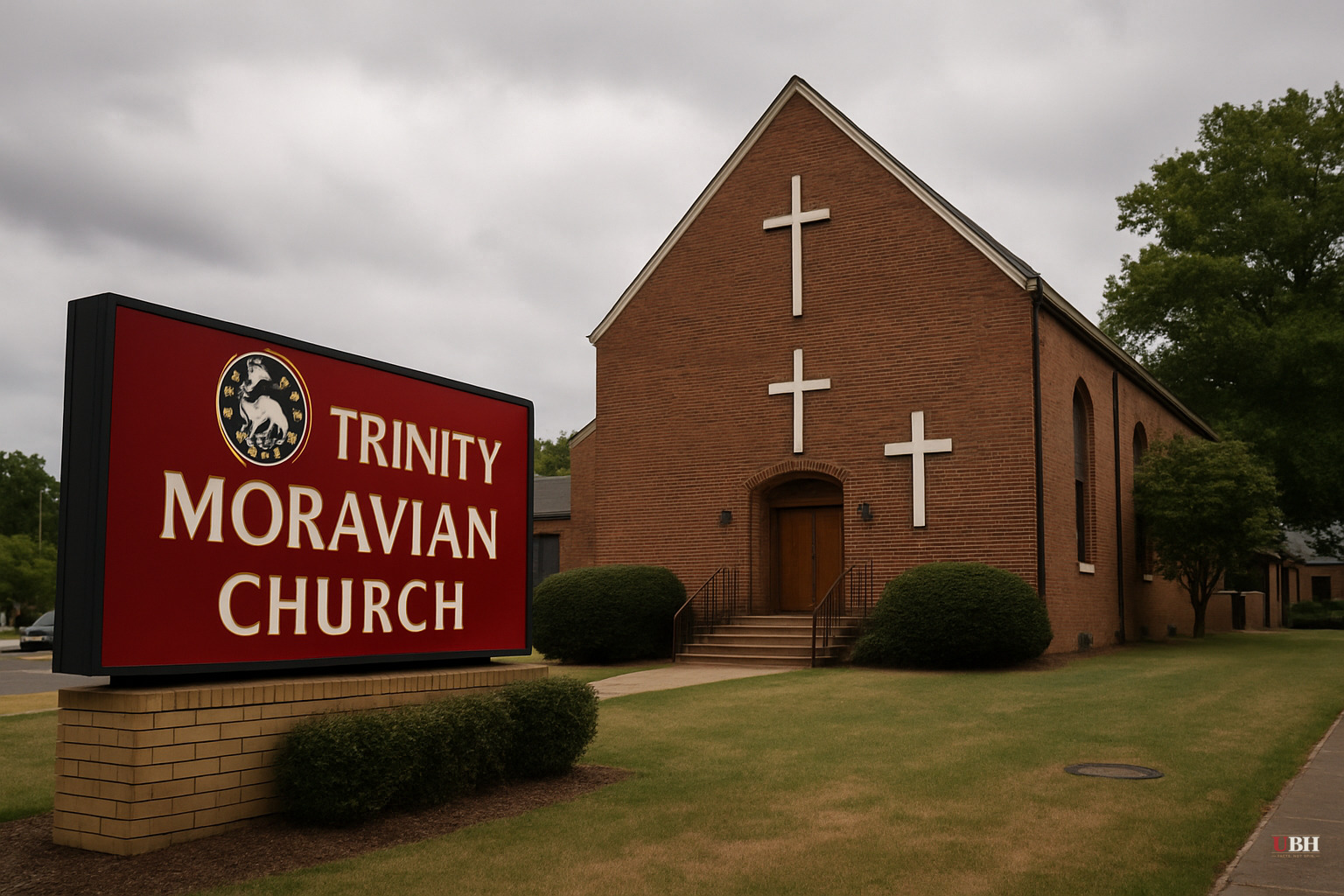
How a Small Church Turned $17,000 into $2.2 Million
Trinity Moravian Church in Winston-Salem, North Carolina has about 200 members and sits near the city's old textile mills. It is 114 years old. It is not a megachurch with a television ministry and a nine-figure budget.
And yet, according to KFF Health News and NPR, the church's eighth medical debt campaign raised more than $17,000 in small donations — $25 and $50 checks — and used that money to retire more than $2.2 million in medical debt for area residents.
The math works because medical debt can be purchased on the secondary market for a fraction of its face value. Creditors sell it cheap because they expect most of it will never be collected anyway. Nonprofit organizations acquire those portfolios and cancel the debt instead of pursuing the debtor.
The Rev. Jackman's Pitch
The Rev. John Jackman proposed the Debt Jubilee Project four years ago. He told KFF Health News and NPR that it was the easiest fundraising he has ever done.
"All I do is tell people what we're doing, and they write me a check," Jackman said.
That matters, because Trinity Moravian is explicitly not a politically uniform congregation. Jackman describes it as "a purple congregation" — conservative Republicans alongside liberal Democrats, Trump supporters alongside his critics. Immigration policy divides them. Student loan forgiveness divides them.
Medical debt did NOT.
100 Million Adults, One Shared Frustration
The scale of the underlying problem explains why. Roughly 100 million U.S. adults carry some form of healthcare debt, according to KFF Health News. More than half of all American adults have had such debt at some point in their lives.
Catherine Coe, a Trinity Moravian member who works in the accounting department of a hospital system, put it plainly: "I see people going into debt every minute of every day. We're all just one medical bill from financial ruin."
That reality does not care about party registration.
Beyond Winston-Salem
Trinity Moravian did not stay local for long. According to KFF Health News and NPR, the church's success helped advance a broader movement of faith communities across North Carolina and nationally pursuing similar debt-relief campaigns. It also drew attention from North Carolina government officials, who took up medical debt relief as a policy cause.
Conservative radio host Glenn Beck praised the effort. The appeal crosses ideological lines in a way that most healthcare debates do not.
The Strongest Objection, Stated Fairly
Skeptics from the right raise a legitimate structural concern: private charity plugging holes in a broken system does not fix the system. If churches are retiring medical debt by the millions, that is evidence the underlying pricing of American healthcare is dysfunctional — a problem that charitable campaigns cannot solve at scale. One hundred million debtors cannot be rescued $2.2 million at a time.
Skeptics from the left raise a parallel concern: debt-buyback programs, however well-intentioned, let hospitals and insurers off the hook for billing practices that generate unaffordable debt in the first place. The creditors already wrote this debt down. The charity is, in effect, cleaning up an industry's mess for free.
Both concerns have merit. Neither undermines what Trinity Moravian actually did. The church did not claim to fix American healthcare. It identified a concrete, achievable intervention and executed it eight times over four years.
Debt Jubilee-style programs are not a healthcare policy. They are not a substitute for addressing hospital billing transparency, insurance network gaps, or Medicaid coverage holes. Governments — including several red-state governments, according to KFF Health News — have begun addressing medical debt through legislation precisely because charity alone cannot reach the full population of 100 million affected adults.
But Trinity Moravian's project demonstrates something specific and measurable: that the frustration over medical debt is broad enough to motivate collective action across a politically divided community, without requiring ideological agreement on the causes or the systemic fixes.
The unresolved question is whether the debt-buyback model scales without undermining itself. As more nonprofits enter the secondary debt market for medical portfolios, purchase prices will rise, and the leverage ratio — dollars retired per dollar donated — will compress. KFF Health News has not reported that compression happening yet, but it is the natural economic ceiling on this approach.
Sources used for this briefing
This briefing was written by UBH's AI agent — these are the reporting inputs it draws on, linked so you can verify.


