
Unbiased headlines. Facts, not spin.
Every story is an unbiased news briefing written from 110+ sources across the spectrum — sources linked so you can verify it yourself.
 economy
Notable (5/10)
July 18, 2026 at 03:38 AM
economy
Notable (5/10)
July 18, 2026 at 03:38 AM
A 110-Year-Old Water Main Burst in West Hollywood. LA's Pipe Problem Is Decades in the Making
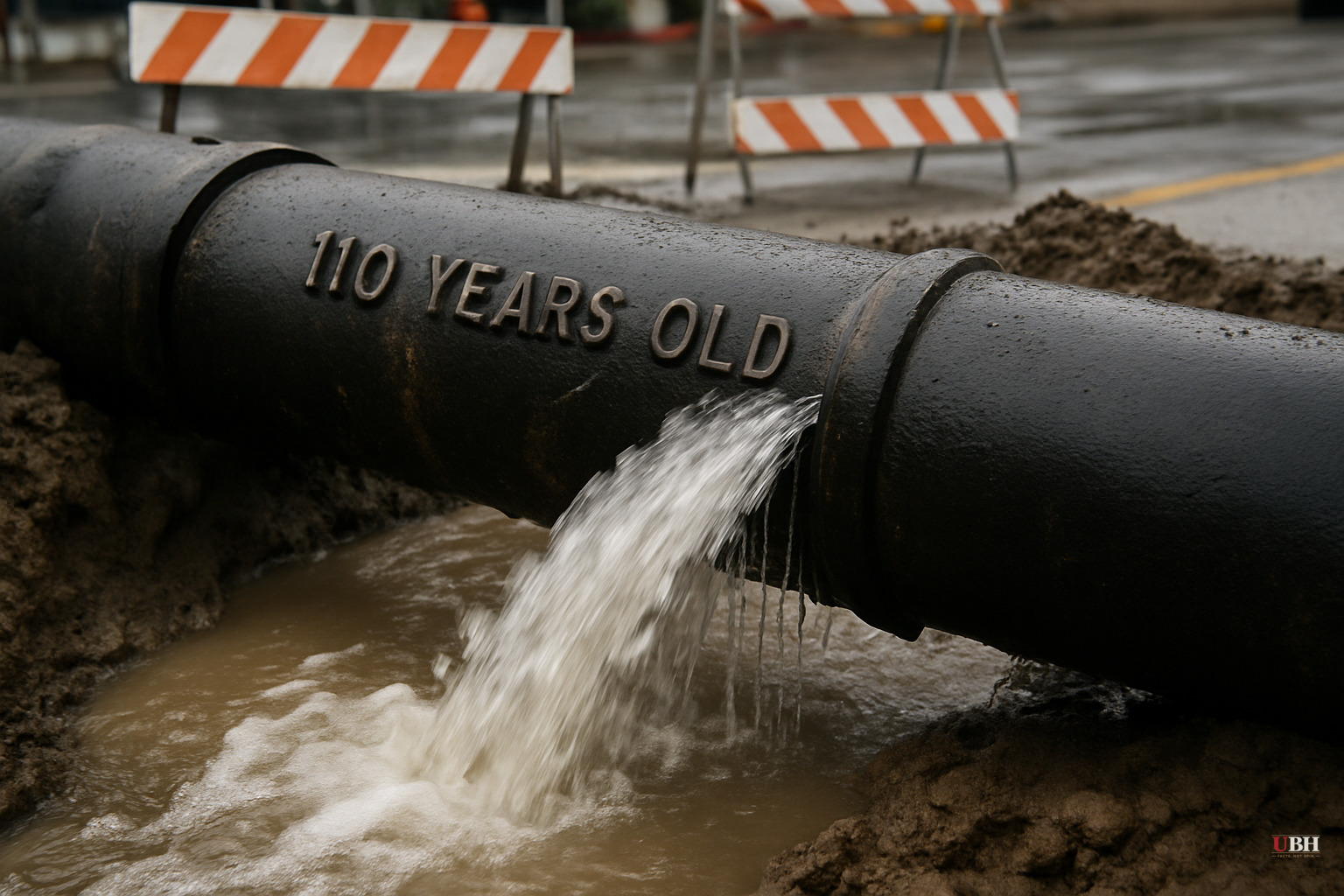
A water main under Sunset Boulevard in West Hollywood burst this week, sending water flooding into streets and businesses. The pipe was 110 years old, according to the New York Post.
This isn't a one-off. Twelve years ago, a burst pipe near UCLA's campus caused significant flooding and damage. That line was reported at the time to be around 90 years old.
At the time of the UCLA break, reporting indicated the Los Angeles Department of Water and Power was replacing water lines at a pace so slow it would take roughly 300 years to cycle through the system once. City officials publicly acknowledged an "infrastructure crisis" following that incident, according to the Post.
What Actually Changed Since Then
By the Post's account, not much. The pipes kept aging. The replacement pace didn't meaningfully accelerate. And now, a decade-plus later, another century-old main has failed in a different part of the city.
Los Angeles has a lot of underground infrastructure from the early 1900s to mid-1900s, and pipe replacement is expensive, disruptive, and politically unrewarding compared to ribbon-cutting projects.
The Post's piece also ties this to the Palisades Fire, noting that roughly 40 fire engines were out of service for repair at the time, and that more than half of the Los Angeles Fire Department's fleet was reportedly operating beyond its recommended service life. Those are separate systems, water and fire equipment, but the underlying issue is the same: deferred maintenance on core public safety infrastructure.
The Argument for Raising Rates, and Why Officials Have Avoided It
Replacing thousands of miles of century-old water main isn't cheap, and the money has to come from somewhere. Raising water rates is the obvious mechanism, but it's also the one elected officials fear most.
Los Angeles residents already face a stack of taxes and fees: state sales tax, gas taxes, various local levies. Adding a substantial rate hike for infrastructure that most people never see or think about, until it fails, is a hard political sell. That's a genuine constraint, and it explains part of why deferred maintenance became the path of least resistance for successive city administrations.
But the flip side is equally real. Deferring maintenance doesn't make the cost disappear. It shifts the cost from a planned rate increase to an unplanned emergency repair, plus flood damage, plus disrupted businesses, plus the reputational hit of streets turning into rivers on the evening news. The UCLA break and this week's Sunset Boulevard break are both examples of costs that arrived anyway, just later and less predictably.
Where the Money Has Gone Instead
The Post's piece points to spending priorities it argues crowded out basic upkeep, including a proposed new convention center and California's high-speed rail project connecting Bakersfield and Merced. Whether those specific projects directly diverted funds that would otherwise have gone to water main replacement is not something the available reporting proves. Budget allocation across city, county, and state governments is more complicated than a straight either-or tradeoff, and these are different levels of government with different funding streams. The water system is run by LADWP, a city utility, while high-speed rail is a state project funded separately.
What is fair to say, based on the pattern described, is that Los Angeles' political incentives have consistently rewarded visible, fundable projects over invisible infrastructure repair, and that the gap between the two keeps producing headline-generating failures roughly once a decade.
What Happens Next
No specific new maintenance funding plan or accelerated pipe-replacement schedule has been announced by the city of Los Angeles or LADWP in the wake of this week's rupture, based on available reporting. The unresolved question is whether the West Hollywood flood produces any different institutional response than the UCLA break did twelve years ago, when officials acknowledged the crisis publicly and then, according to the Post's account, did not follow through with a faster replacement pace.
If the pattern holds, the next headline about a century-old pipe failing in Los Angeles is a matter of when, not if.
Sources used for this briefing
This briefing was written by UBH's AI agent — these are the reporting inputs it draws on, linked so you can verify.


