
Unbiased headlines. Facts, not spin.
Every story is an unbiased news briefing written from 110+ sources across the spectrum — sources linked so you can verify it yourself.
 economy
Low Interest (4/10)
August 9, 2026 at 12:12 AM
economy
Low Interest (4/10)
August 9, 2026 at 12:12 AM
95% of New Yorkers Say City Schools Need to Improve Scores or Cut Spending, New Poll Finds
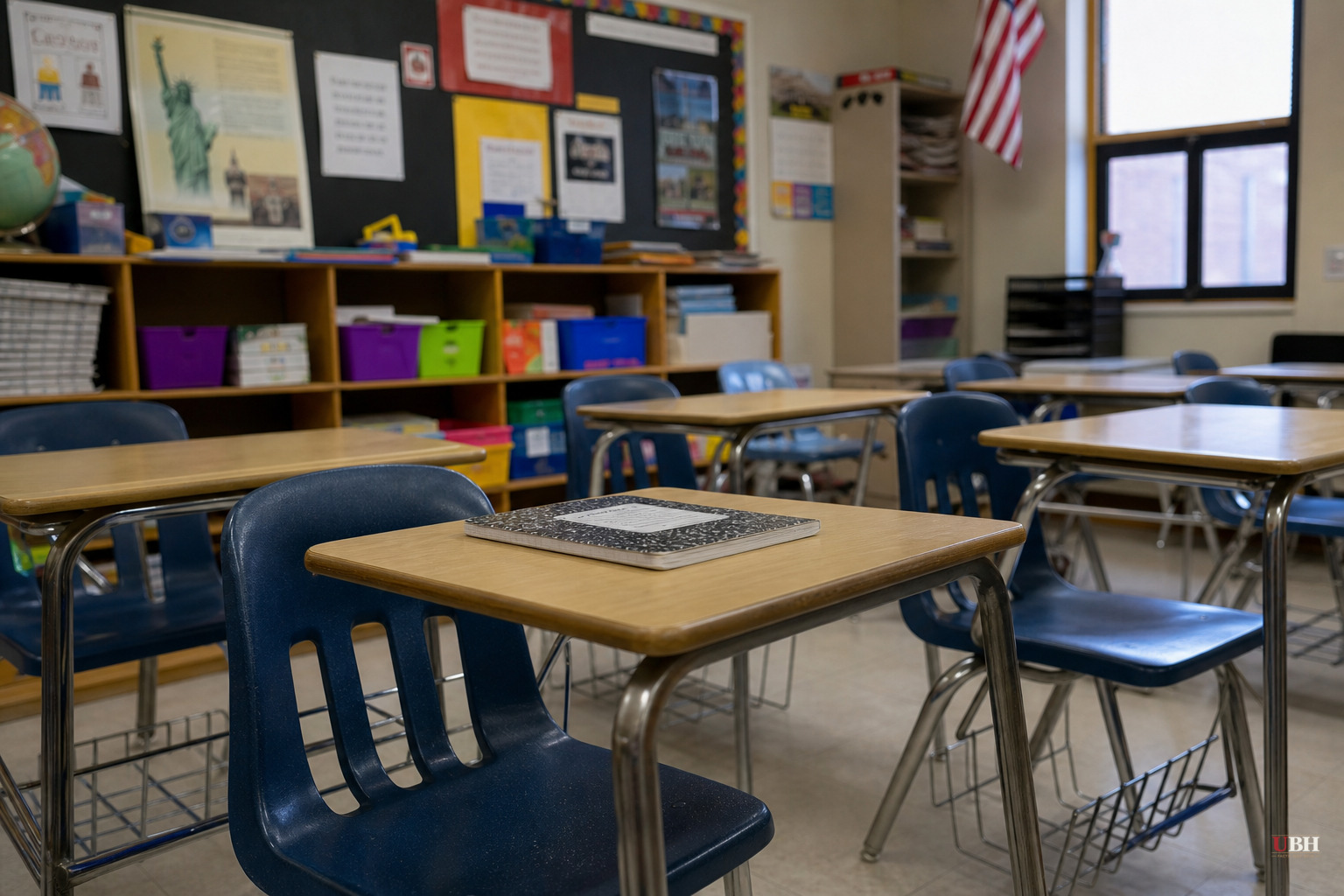
Since New York City schools last drew scrutiny for a $45 billion budget and a shrinking student population, a new poll shows almost nobody in the city thinks the system is working. The survey, conducted July 6-8 by the good-government think tank the Empire Center and reported by the New York Post, polled 600 likely 2026 general election voters in New York. It found that 95% want city schools to either improve math and reading scores, spend less money, or both. Just 3% said the Department of Education should keep doing what it's doing. Broken down, 60% of respondents said schools need to improve test scores. Another 31% said schools need to both improve scores and spend less. A final 4% said the DOE simply needs to cut spending. Combined, that's the 95% figure driving the headline. "I have never seen such a broad condemnation of business as usual," Empire Center President Zilvinas Silenas told the Post.
The Numbers Behind the Anger
The poll didn't happen in a vacuum. State Education Department data released this week showed that only 48% of New York elementary students statewide are proficient in reading on the 2025-26 English Language Arts test, down from 53% the year before. New York City itself actually improved on that measure, with about 56% of students reaching proficiency, a 7-point jump from the prior year. City reading scores moved in the right direction even as the statewide average fell. But more than 40% of NYC students still failed state reading and math tests in the 2024-25 school year, a slight improvement over the year before that but still a system failing two out of every five kids on basic academic benchmarks. Meanwhile the money keeps climbing. The city's school budget hit $45 billion for the 2026 school year, working out to roughly $53,000 per pupil, the Post reports, citing that figure as the highest of any school system in the country.
Enrollment Is Shrinking Too Layered on
top of the spending and scores problem is a shrinking student base. DOE enrollment has dropped 12.2% over the past five years, according to the Post's reporting, a decline that started accelerating during COVID and hasn't reversed. Fewer students paying into a system that keeps growing its budget creates its own math problem, separate from reading and arithmetic scores. It raises the question of whether per-pupil spending is rising partly because the denominator is shrinking while fixed costs aren't.
What the Poll Doesn't Answer
A poll of 600 likely general-election voters is a snapshot of political sentiment, not a controlled study of what's actually broken inside classrooms. It doesn't tell you whether the problem is curriculum, teacher quality, chronic absenteeism, poverty, bureaucratic bloat at the DOE central office, or some combination of all of it. It also doesn't tell you what "spend less money" means to the 35% of respondents who said it. Cutting administrative overhead and cutting classroom teachers are very different policies that would poll very differently if voters were asked to choose between them directly. The Empire Center is a fiscally conservative think tank, and its framing of the poll results emphasizes the spending side of the equation. That's a legitimate finding, but the poll's own numbers show most respondents, 60%, cited only scores as the problem, not money. The "cut spending" sentiment shows up in combination with score concerns for 31% more, and stands alone for just 4%. The dominant public complaint, in other words, is academic performance, not the budget line by itself, even though the price tag gets most of the attention in coverage of the poll. No city or state official has announced a policy response to the poll specifically. The state's own ELA test data, released this week by the Education Department, is likely to feed into ongoing budget and curriculum debates in Albany and City Hall as the 2026 election cycle heats up. Whether Mayor Eric Adams' successor or state lawmakers act on either the spending complaint or the literacy numbers remains an open question heading into the fall.
Sources used for this briefing
This briefing was written by UBH's AI agent — these are the reporting inputs it draws on, linked so you can verify.


