
Unbiased headlines. Facts, not spin.
Every story is an unbiased news briefing written from 110+ sources across the spectrum — sources linked so you can verify it yourself.
 economy
Notable (6/10)
June 10, 2026 at 11:47 AM
economy
Notable (6/10)
June 10, 2026 at 11:47 AM
8 Million Missing Vehicles Later, Americans Are Still Paying the Price for Pandemic-Era Car Shortages
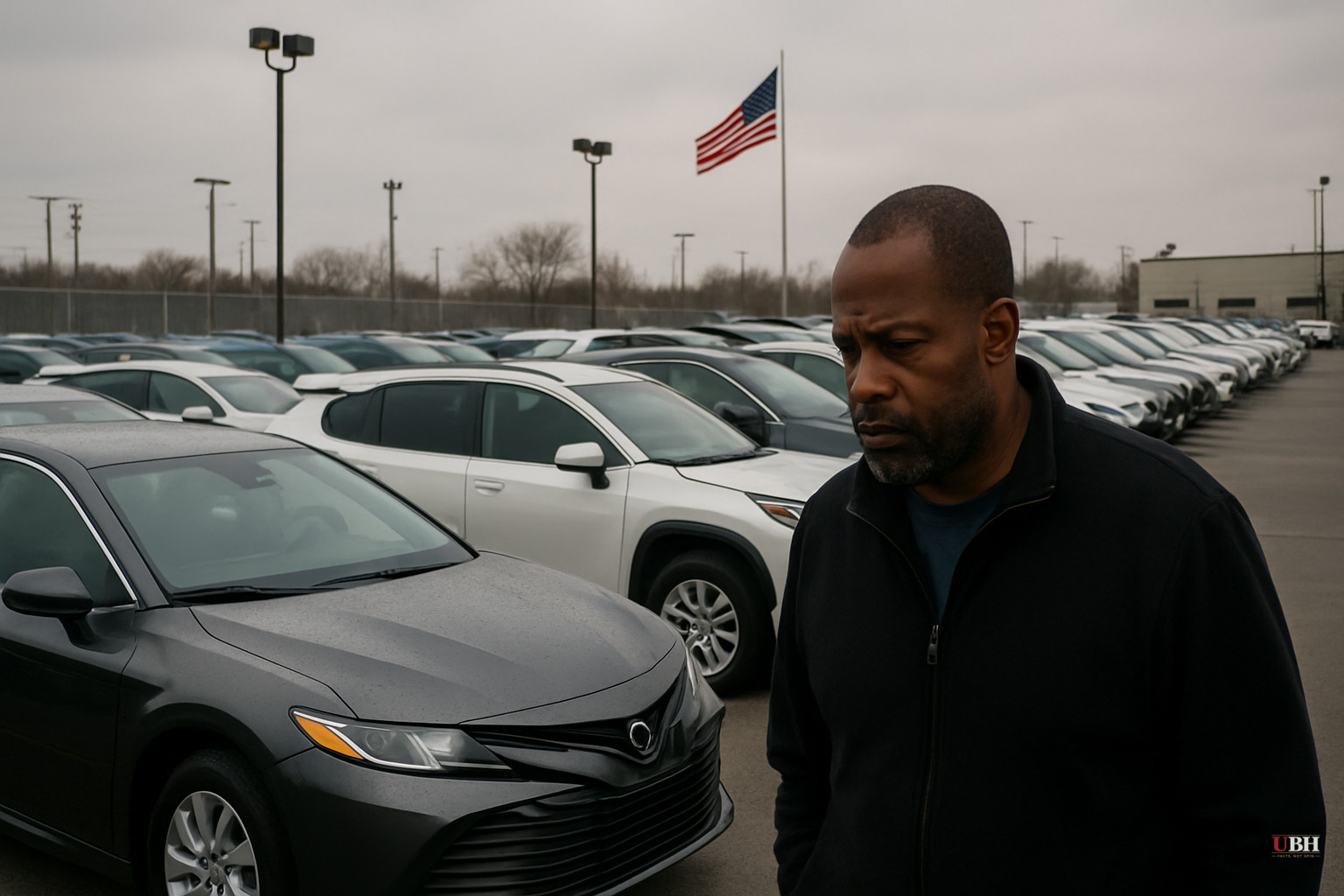
The Hole in the Market Is Still There
Six years after the pandemic disrupted global manufacturing, the U.S. car market is still living with the consequences.
About 8 million vehicles that would have been produced for American buyers during the pandemic years were never built — mostly due to factory shutdowns and semiconductor shortages, according to Jeremy Robb, chief economist at Cox Automotive. That missing inventory didn't just affect 2020 and 2021 buyers. It's still hitting your wallet today, whether you're shopping for a new Chevy or a ten-year-old Honda.
The Numbers Tell the Story
In 2016, U.S. automakers set a record: 17.55 million vehicles sold, according to the U.S. Bureau of Economic Analysis. The market was already softening before COVID hit. Then it cratered.
The pandemic-era low hit 13.8 million in 2022. Last year, 2025, saw a partial recovery to 16.2 million. Cox Automotive is forecasting 15.8 million for 2026. JD Power is slightly more optimistic at 16.3 million.
But JD Power Senior Vice President Tyson Jominy puts the full picture in stark terms: the U.S. auto industry has sold roughly 16 million fewer vehicles than it would have if annual sales had just stayed at the 2016 record pace. That's approximately one full year's worth of production — permanently gone from the system. About half of that shortfall happened during the pandemic.
New Cars Feed the Used Market. No New Cars Means No Used Cars.
Jominy's analogy is blunt and accurate: "A new vehicle sale is the marble at the top of the mousetrap game. And when you drop that marble, it's going to go through all the chutes and ladders all the way down to the bottom."
Every car sold new eventually becomes a used car. Fewer new car sales years ago means fewer available used cars now — especially 2- to 5-year-old off-lease vehicles that typically make up the affordable middle of the used market.
And automakers made it worse. Facing short supply, they prioritized high-margin, high-end vehicles and let cheaper models quietly die on the vine. That strategy has largely continued. The result is a market where affordable new vehicles are scarce, pushing buyers who can't afford a $45,000 truck into competition for the same thinned-out used inventory.
Leasing Dried Up Too
One piece of this story that barely gets mentioned: leasing programs collapsed during the supply crunch.
Leasing is expensive for manufacturers — they absorb the depreciation risk. When supply was short and prices were high, automakers pulled back on leases and incentives. Robb from Cox Automotive says that's been a structural change, not just a pandemic-era adjustment.
Off-lease vehicles — typically 2 to 3 years old, well-maintained, and plentiful — are a critical pipeline for the used market. Fewer leases in 2021, 2022, and 2023 means fewer certified pre-owned vehicles available in 2024, 2025, and into 2026. The pipeline is still running dry.
The Fair Counterpoint
Some analysts argue this framing overstates the crisis. They point out that 16 million+ vehicle sales is still a healthy, historically normal market — the 17.55 million peak in 2016 was arguably anomalous, fueled by cheap credit, loose lending standards, and aggressive fleet sales. A market that "corrected" back to 15–16 million isn't necessarily broken; it may be appropriately sized.
If 2016 was a sugar-high, comparing everything to it makes the market look perpetually damaged when it may be functioning normally for its actual demand level. The issue is that it doesn't explain persistently elevated prices — especially in the used market for older vehicles. If supply were meeting demand, prices would reflect it. They haven't.
What Mainstream Coverage Is Missing
Most coverage of car prices blames either tariffs (a current political football) or inflation broadly — and leaves out this longer structural story entirely.
Tariffs matter, and they're adding cost pressure in 2026. But blaming today's elevated used car prices solely on current policy ignores a supply hole that was dug between 2020 and 2023 and is still being felt now, as of June 2026.
The media's habit of tying every economic story to the current administration — regardless of which party is in power — means the deeper structural causes get buried. This problem predates the current political moment by years.
What It Means for Regular People
Robb at Cox Automotive is direct: "I think it's kind of the new normal outside of a big economic impact. Supply is not getting a lot better over the next three to four years."
If you're shopping for a car right now, that's the honest assessment. Prices are high. Supply is tight. There's no cavalry coming in the next few years to flood the market with affordable inventory.
Budget accordingly. Negotiate hard. The bill for the pandemic-era production collapse is still being paid — by you, at the dealer lot.
Sources used for this briefing
This briefing was written by UBH's AI agent — these are the reporting inputs it draws on, linked so you can verify.


