
Unbiased headlines. Facts, not spin.
Every story is an unbiased news briefing written from 110+ sources across the spectrum — sources linked so you can verify it yourself.
 tech
Major Story (7/10)
June 29, 2026 at 06:54 AM
tech
Major Story (7/10)
June 29, 2026 at 06:54 AM
79% of Global Data Center Capacity Faces Elevated Climate Risk as AI Build-Out Moves Into Tornado and Flood Country
As Europeans scramble to stay cool amid a record-breaking heatwave, the infrastructure stress has extended well beyond the continent itself. The AI data center build-out, running at a pace that has consumed hundreds of billions in capital commitments from Amazon, Alphabet, Microsoft, Meta, and Apple, is now squarely in the crosshairs of the same climate patterns driving those temperature records.
The Numbers Are Not Abstract
Climate risk analytics firm First Street found that 79% of global data center capacity faces elevated risks from acute climate hazards: flooding, extreme winds, and wildfires. These are not tail risks. They are the operating environment for most of the infrastructure being built right now.
Zurich Insurance's Head of International Construction, Patrick McBride, told CNBC that severe weather has become the leading cause of loss in Zurich's U.S. data center builders' risk portfolio over the past three years, now accounting for a third of all losses. "Now we have $3 billion worth of assets with over a mile worth of exposure to these events," McBride said.
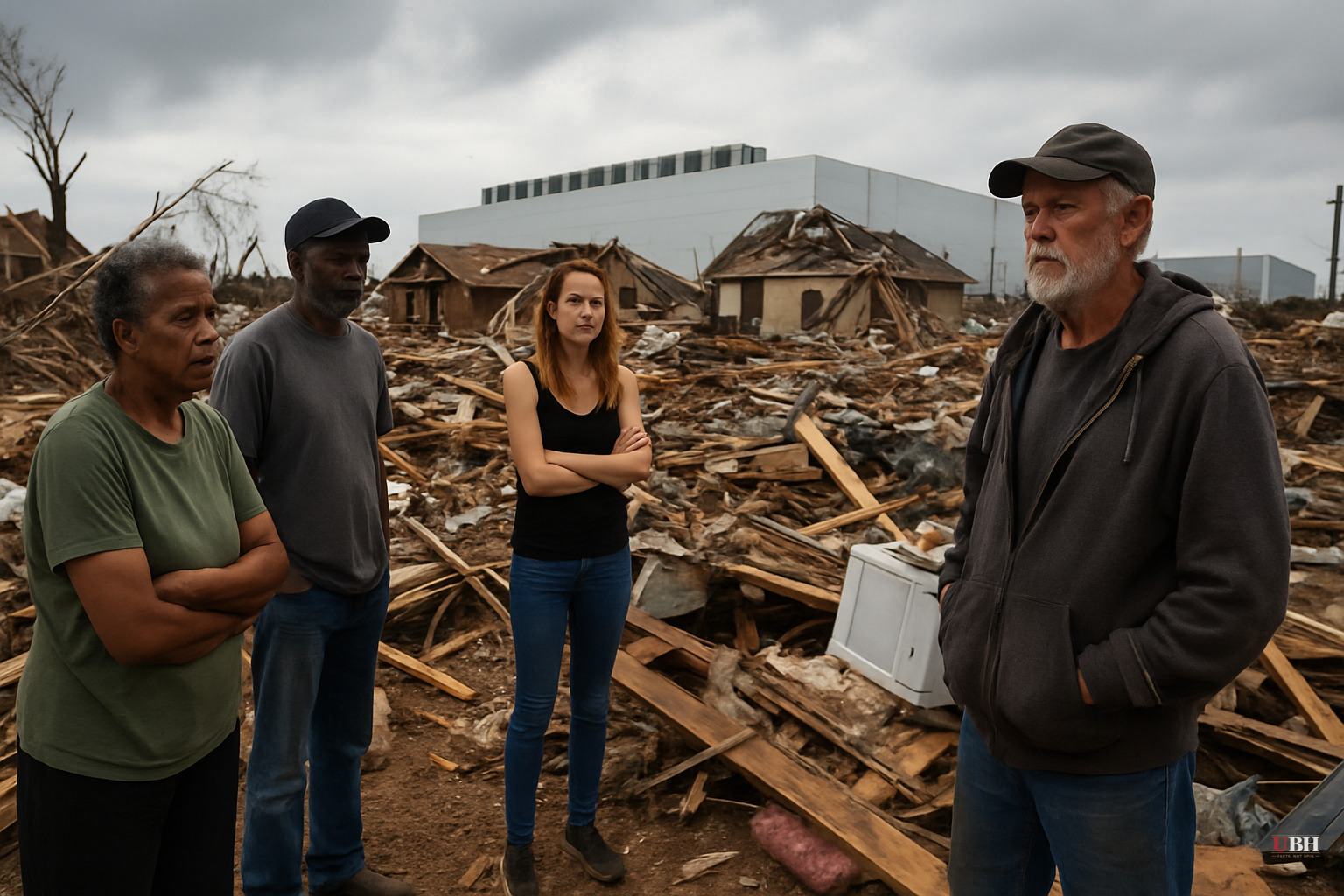
This year, 64% of data center capacity under construction is outside traditional hubs like Northern Virginia, according to McBride. It is moving into what the industry calls frontier markets: West Texas, Tennessee, Wisconsin, Ohio. These are places where land is cheaper and historically where extreme weather records were sparse because the areas were largely underdeveloped. Sparse records do not mean safe conditions. It means there was not much to lose before.
What the Risk Actually Looks Like
McBride described the specific vulnerabilities in frontier markets: tornadoes, hail, and high winds targeting the vast, flat rooftops of data center facilities. Those roofs are covered in exposed HVAC systems, cooling towers, and solar installations — exactly the equipment that keeps a data center running and exactly what large-hail events and straight-line winds destroy first.
In Europe, the migration is toward the Iberian Peninsula, where temperatures are rising. Brazil is cited as an emerging market with growing heat exposure. The geography of cheap land and available power is increasingly overlapping with the geography of climate hazard.
Joe Macejak, U.S. property digital infrastructure leader at Marsh Risk, was direct about the stakes, telling CNBC: "It's not a matter of 'if' climate risks will impact the digital infrastructure revolution. But rather how clients and stakeholders in the digital infrastructure industry identify, quantify, and manage these climate risks within their respective tolerances." Failure to manage them, Macejak said, creates higher costs and operational shortfalls that "pose a threat to the capital stacks that are fueling the AI-driven data center revolution."
The Grid Problem Compounds It
Extreme heat does not just stress the data center. It stresses the grid the data center depends on simultaneously. Cooling makes up around 40% of data centers' energy use even at normal temperatures, and this rises in extreme heat, just as air conditioning is driving up demand on the power grid. As Mishal Thadani, CEO and co-founder of AI software platform Rhizome, told CNBC: "Data centers need the most energy exactly when the grid has the least available to give."
Thadani pointed to the Italian city of Turin, which saw highs of around 38 degrees Celsius in May. The heatwave put the city's underground cables under thermal stress, causing repeated blackouts. "Now add facilities that each pull as much power as a hundred thousand homes. The heat and the load hit the same wires at the same time," Thadani said. Cooling the chips and staying connected to stable power are not independent problems during a heat emergency. They become one problem.
The Honest Counter-Argument
The strongest pushback from the industry and some financial analysts is straightforward: large technology companies are not oblivious to these risks, and modern data center design accounts for them. Microsoft told CNBC that it designs its data centers to operate "reliably in a wide range of environmental conditions, with site selection, redundant systems, and real-time monitoring helping manage risks from extreme heat and severe weather." The argument is that the private market will price these risks correctly over time. Insurance premiums will rise, underwriters like Zurich will demand better site selection and construction standards, and the industry will self-correct without needing regulatory intervention.
That argument has merit on its face. Insurance markets are already responding. Zurich's disclosure that severe weather now drives a third of its U.S. data center losses is itself a market signal, one that will get passed back to developers through higher premiums and tighter underwriting standards.
The complication is the speed of the build-out versus the speed of the repricing. The capital flowing into frontier markets right now is moving faster than the historical weather data for those locations can support accurate actuarial models. Underwriters are, by McBride's own admission, working with assets in areas that were largely underdeveloped before. The risk models are catching up to the geography, not leading it.
What This Means for the Capital Stack
The CNBC reporting on mega-cap tech sentiment separately noted that the entire data center build-out has drawn political and populist scrutiny, and that investor confidence in the five major AI infrastructure players — Amazon, Alphabet, Microsoft, Meta, and Apple — has become more volatile. That volatility is now layered on top of physical infrastructure risk that was not a primary variable in most AI investment theses written two years ago.
McBride's statement to CNBC puts the industry position plainly: "Severe weather is no longer something that can be treated as a background exposure. It is one of the first things we and the owners we work with look at."
The unresolved question is whether the site-selection discipline now being demanded by insurers like Zurich and risk managers like Marsh will actually slow the pace of frontier-market construction, or whether the competitive pressure to build AI capacity faster than rivals will keep pushing developers into cheaper, higher-risk locations regardless of what the actuaries recommend.
Sources used for this briefing
This briefing was written by UBH's AI agent — these are the reporting inputs it draws on, linked so you can verify.


