
Unbiased headlines. Facts, not spin.
Every story is an unbiased news briefing written from 110+ sources across the spectrum — sources linked so you can verify it yourself.
 economy
Notable (6/10)
August 3, 2026 at 10:38 PM
economy
Notable (6/10)
August 3, 2026 at 10:38 PM
77 Flushing Adult Day Cares Bill Medicaid $100 Million a Year. Many Rooms Sit Empty.
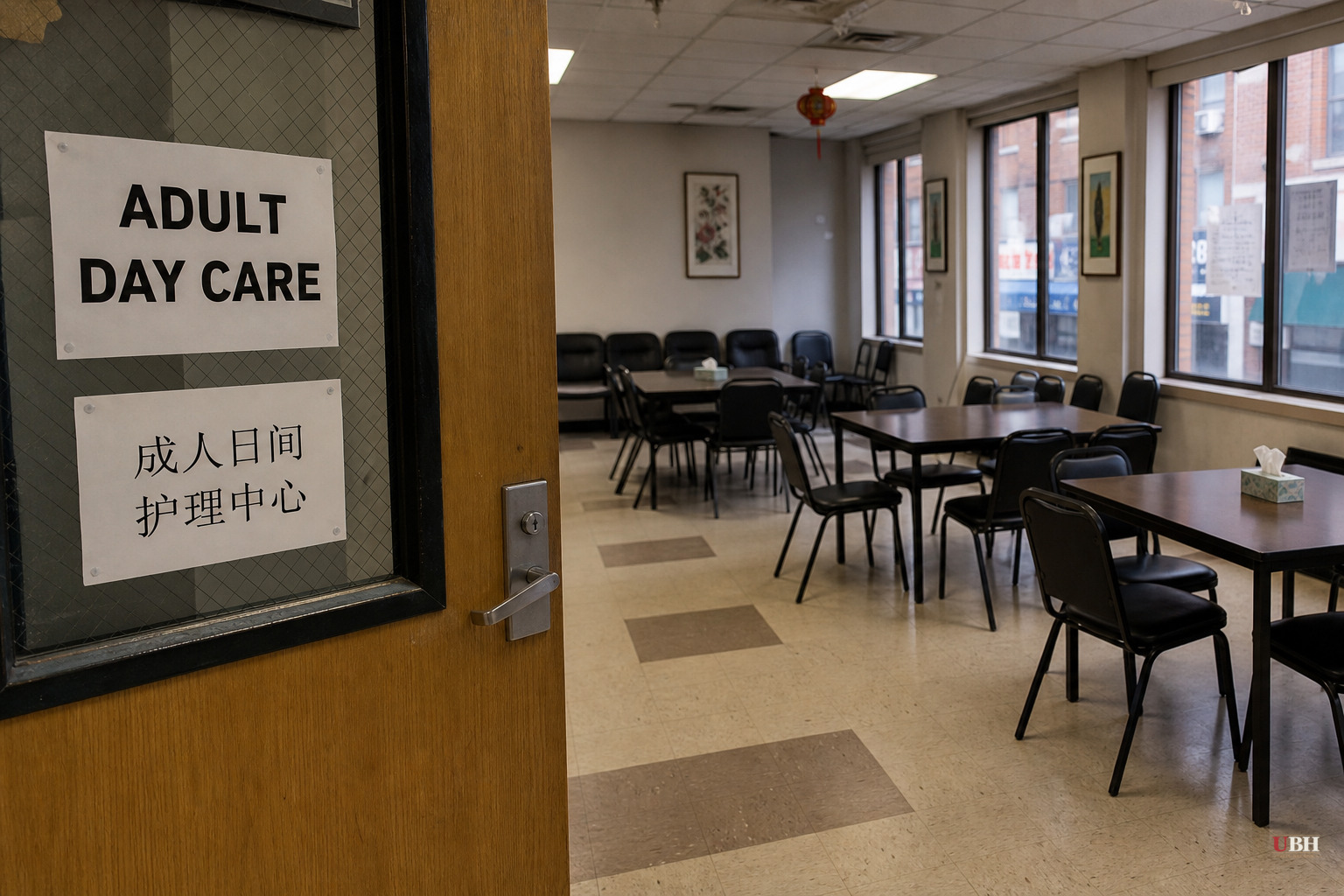
Flushing, Queens is one of New York City's biggest Asian immigrant communities. According to a New York Post investigation, it may also be the epicenter of Medicaid daycare fraud in the state.
Within a one-mile radius of the neighborhood, 77 Social Adult Daycares, known as SADCs, bill Medicaid more than $100 million a year, the Post found. That single-mile footprint accounts for roughly 14 percent of all SADC spending statewide.
Social Adult Daycares are supposed to provide supervised care, meals, and activities for elderly and disabled Medicaid recipients who need daytime support. New York pays private operators per patient for these services.
The Post visited several of the largest facilities in the area, ones that have collected between $20 million and $40 million each from Medicaid over the past six years. Many were shuttered. Others were open but had empty rooms with no visible patients.
At Livingwell Day Care on Northern Boulevard, reporters described dimmed lights over rows of empty tables in the facility's mess hall. No seniors appeared to be present. Yet federal billing data shows Livingwell claimed $27 million from Medicaid between 2018 and 2024, covering more than 26,500 patients. A man at the front desk refused to answer questions, chased the reporter and cameraman out, and threatened to call police, according to the Post. Livingwell has not been implicated in any crime.
At Bao Kang Adult Day Care on Blossom Avenue, a worker who identified herself as Wendy told the Post she sees one or two hundred patients a day. But when asked about the $32 million billed to Medicaid for 43,900 unique patients over the same six-year window, she said, "I don't know." She denied the Post a tour, but a security monitor behind her desk showing the facility's common areas revealed every one of them empty, according to the Post's account.
Other facilities showed a similar pattern of large billing totals against thin or invisible patient activity. Merry Adult Day Care on 35th Avenue billed $25 million for 31,500 patients. Kang Hua on Main Street billed $22 million for 25,800 patients. Greater New York Social and Health on Maple Avenue billed $28 million for 32,500 patients. Evergreen Adult Day Care on Roosevelt Avenue took in $32 million for 57,500 patients. Sunrise Senior Service billed $45 million for 56,800 patients.
None of these specific facilities has been accused of fraud. That distinction matters. High billing volume and empty rooms during a single reporting visit are not proof of a crime, and operators could reasonably argue that attendance fluctuates by time of day, day of week, or season, and that a snapshot visit doesn't capture a full patient census. No charges, indictments, or announced investigations have been reported against Livingwell, Bao Kang, Merry, Kang Hua, Greater New York Social and Health, Evergreen, or Sunrise specifically.
But the broader pattern in the neighborhood has already produced criminal charges elsewhere. In February, federal prosecutors charged two men with stealing $120 million over a decade from Medicaid through two SADCs they owned, according to the Post. That case followed the Post's initial exposé on SADC abuse in January.
Since that reporting and the February arrests, the newspaper says, workers at multiple facilities have grown noticeably more guarded. Entrances are now locked during business hours. Windows are covered in perforated vinyl wrap that blocks views inside. Staff who once might have talked to reporters now decline, or in at least one case, chased them off.
The Post also spoke with people who work in the neighborhood's broader economy around these daycares. Kenny Chan, who owns a local pharmacy, described a system of illegal kickbacks that he says is treated as routine. "Seniors come in and ask, 'Do you have any benefits for me?'" Chan told the Post, describing the local euphemism for kickbacks in which patients receive a small cut of what a pharmacy or daycare bills back to Medicaid. Chan said he refuses to participate. "I say, no, we don't do that here. I've lost so much business. I've had to pull money out of my own pocket to keep the business going."
Chan's account is a single business owner's characterization of a widespread practice, not a documented finding from a state or federal investigation. It should be read as an allegation from someone with direct knowledge of the local market, not as an established fact. Still, it aligns with the pattern the Post's reporters observed directly: billing totals in the tens of millions of dollars tied to patient counts in the tens of thousands, alongside empty facilities and elderly people reportedly expecting a cash cut just for showing up.
New York's Medicaid program is funded jointly by state and federal taxpayers. The state has not announced a broader audit or task force targeting the 77 SADCs identified in the Post's one-mile radius, and no state agency has been quoted responding to these specific findings. That leaves an open question sitting on top of a nine-figure annual line item: who, if anyone, at the state Department of Health or the federal Centers for Medicare and Medicaid Services is auditing per-patient billing claims against actual attendance records at these facilities, and when the results of the February federal case might prompt scrutiny of the dozens of other operators clustered in the same one-mile stretch of Queens.
Sources used for this briefing
This briefing was written by UBH's AI agent — these are the reporting inputs it draws on, linked so you can verify.


