
Unbiased headlines. Facts, not spin.
Every story is an unbiased news briefing written from 110+ sources across the spectrum — sources linked so you can verify it yourself.
 economy
Notable (6/10)
July 16, 2026 at 04:24 PM
economy
Notable (6/10)
July 16, 2026 at 04:24 PM
7-Eleven to Close or Convert 645 North American Stores by February 2027
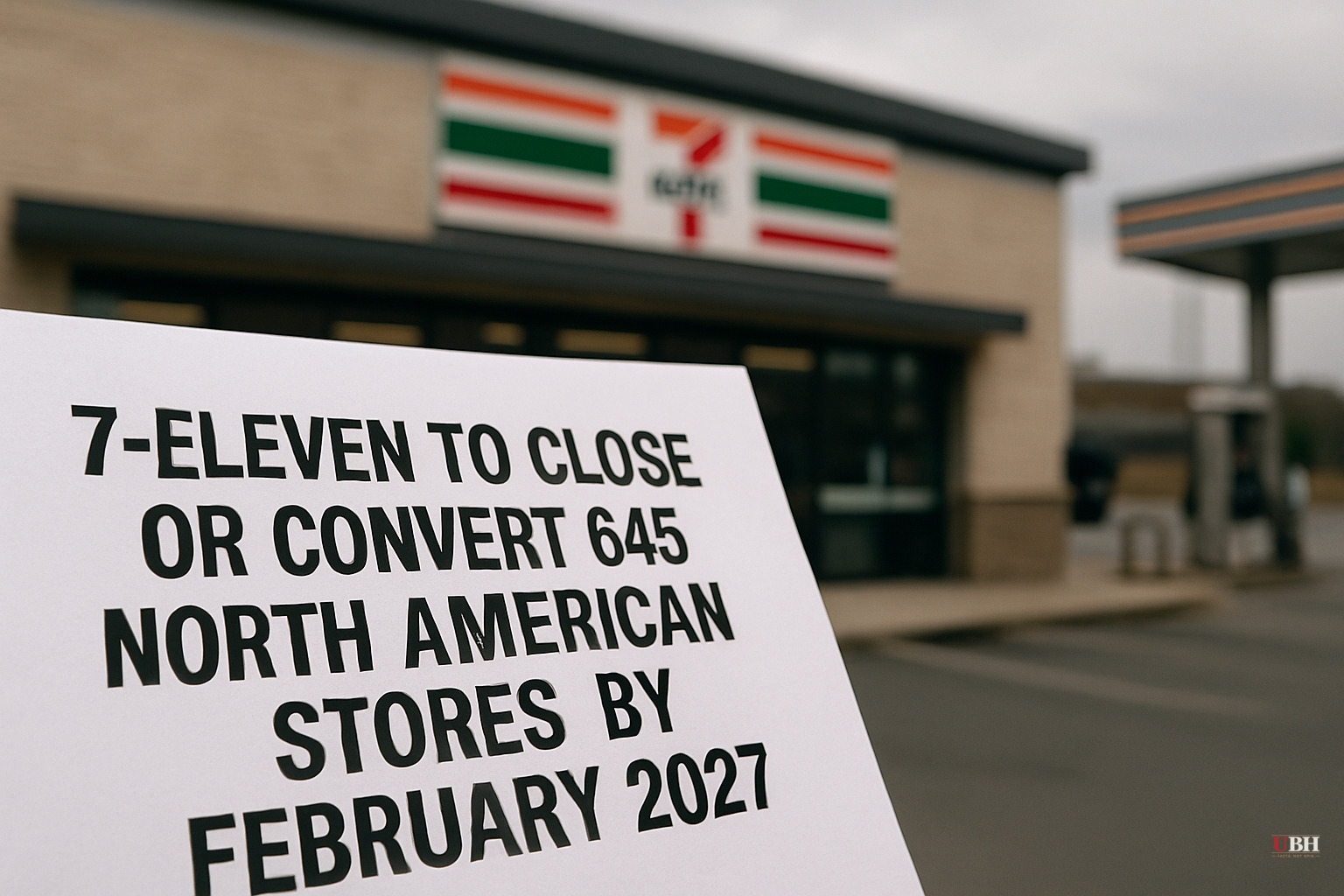
7-Eleven is trimming its North American footprint as it bets on food.
Seven & i Holdings, the Japanese parent company of the 13,000-store U.S. chain, laid out the numbers during its fiscal first-quarter earnings presentation last week. Of the 645 North American locations slated for change by February 28, 2027, 200 will close for underperformance, 350 will convert from company-owned stores to independently run wholesale fuel sites, and 95 will shut down for other reasons, including franchise and contractual terminations, according to a 7-Eleven spokesperson who spoke with C-Store Dive.
That breakdown clears up confusion from earlier this year. Back in April, the company announced the 645-store restructuring target without saying how the number would split between outright closures and conversions. The Q1 presentation filled in the gap.
Not every outlet has the math straight. Cronista, reporting on the same restructuring, cited Seven & i as saying 415 stores would close permanently and 230 would convert to wholesale fuel stores. Those figures don't match what 7-Eleven told C-Store Dive: 200 closures, 350 wholesale conversions, and 95 closures for contractual reasons. The company's own breakdown, confirmed directly by its spokesperson, is the more reliable figure.
7-Eleven isn't shrinking overall. The company still plans to open 205 new stores in fiscal 2026, and it's separately building out quick-service restaurant locations, having already opened 20 of a planned 50 for the year, according to C-Store Dive. In the first quarter alone, 7-Eleven closed 45 underperforming stores and opened 30 new ones.
The Food Play
Food sells better than fuel margins these days.
7-Eleven President Stan Reynolds told investors on the company's fiscal Q4 earnings call that stores redesigned around fresh food are driving average sales per store day about 18% higher than the system average, according to the New York Post's reporting on the earnings call.
This explains the strategy. 7-Eleven isn't just closing weak stores. It's remodeling the survivors. The company announced at its April investor day that it plans to remodel more than 7,000 North American locations through 2030, with those remodels expected to start in the second half of this fiscal year, according to C-Store Dive.
The redesign follows a template 7-Eleven has been building since 2019: bigger kitchens, more prepared food, and a store layout built around dining and delivery rather than just grab-and-go snacks and gas. The company calls its latest iteration the "New Standard," an evolution of the "Evolution" store format it rolled out in 2019.
Delivery is part of the pitch too. 7-Eleven's 7NOW service, running since 2018, promises delivery of more than 3,000 items, including hot food, groceries and alcohol, within 30 minutes. The company has layered a subscription option on top, the Gold Pass, priced between $5.95 and $9.95 a month, bundling free drinks, fuel discounts and unlimited delivery.
Franchising is the other lever. 7-Eleven converted 31 company-owned stores to franchises in fiscal 2025 and plans to convert 390 more this fiscal year, aiming for roughly 2,600 total conversions through 2030, according to C-Store Dive. Hitting that target would push the chain to an 80% franchise ratio, Seven & i told investors on its latest earnings call.
What's Still Unclear
7-Eleven has not released a public list of which specific stores will close, according to Cronista's reporting on the restructuring. Franchisees and employees at individual locations won't know if they're affected until the company makes further announcements.
The bigger open question is pace. 7-Eleven opened just 30 new stores in the first quarter against a full-year target of 205, according to C-Store Dive, meaning the company will need to accelerate significantly through the rest of fiscal 2026 to hit that number. Whether that happens, and whether the food-forward remodel actually protects margins as gas station foot traffic keeps declining nationally, will show up in Seven & i's next quarterly filings.
Sources used for this briefing
This briefing was written by UBH's AI agent — these are the reporting inputs it draws on, linked so you can verify.


