
Unbiased headlines. Facts, not spin.
Every story is an unbiased news briefing written from 110+ sources across the spectrum — sources linked so you can verify it yourself.
 economy
Major Story (7/10)
July 7, 2026 at 03:27 AM
economy
Major Story (7/10)
July 7, 2026 at 03:27 AM
6.9 Million Student Borrowers Must Leave SAVE Plan. Servicers Start the 90-Day Clock in July 2026.
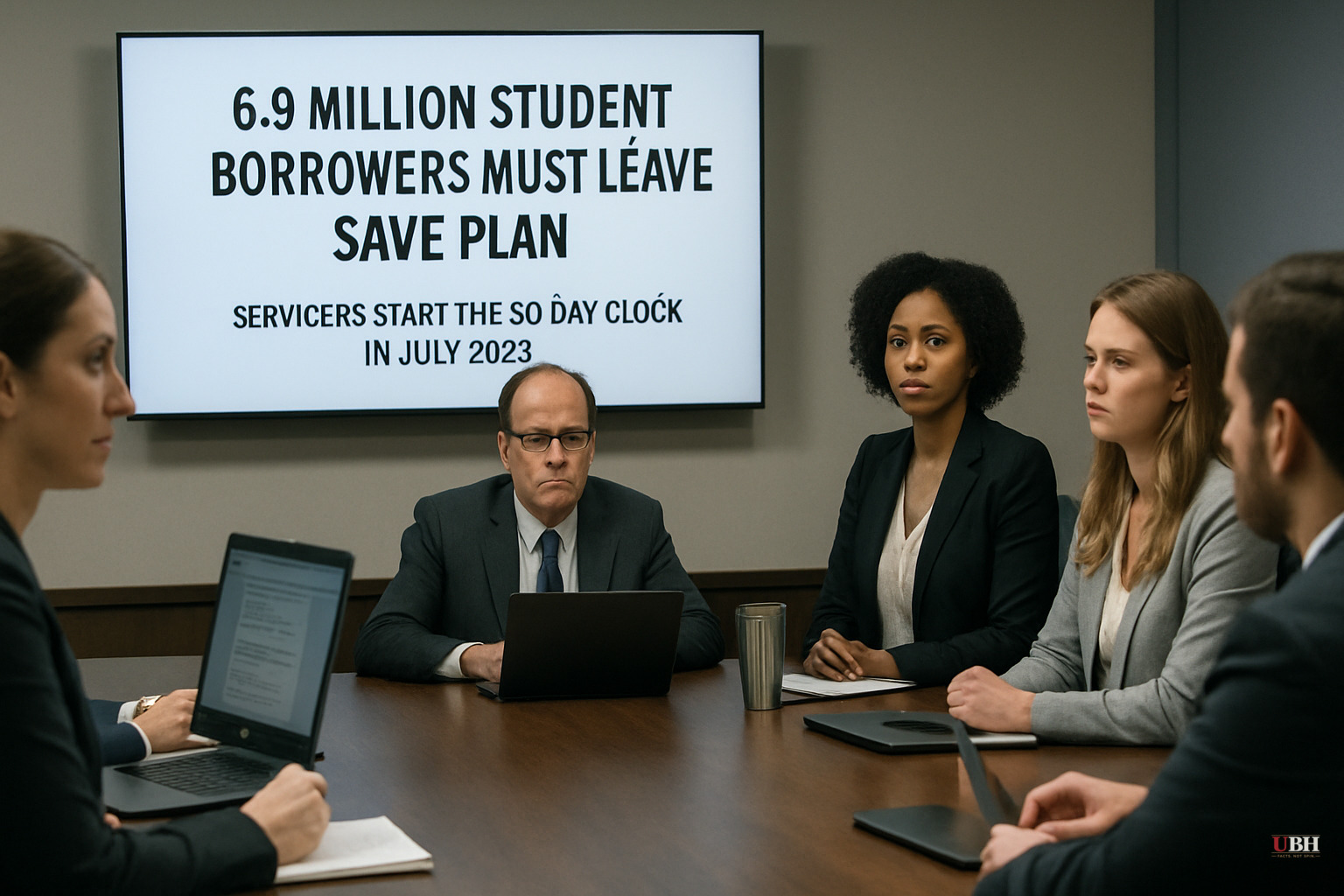
Since a federal appeals court ordered the end of the Biden administration's SAVE plan earlier this year, roughly 6.9 million borrowers have remained enrolled, many simply waiting. Loan servicers began sending formal notices in July 2026, each triggering a 90-day window for borrowers to choose a different repayment plan. The earliest any borrower faces a hard deadline is September 29, 2026, according to a June 25 court filing by the U.S. Department of Education.
But the rollout is staggered. Nelnet, one of the largest servicers, told borrowers on its FAQ page that it is "notifying nearly three million Nelnet borrowers" in waves, with notices going out between July 2026 and March 2027. That means some borrowers won't hear until next year.
As of March 2026, the average SAVE enrollee carried close to $55,000 in federal student loan debt, according to an analysis by higher education expert Mark Kantrowitz. A year earlier, 7.7 million borrowers were in the program. The slow drain to 6.9 million shows that most people still haven't made a move.
What Happens If You Do Nothing
Borrowers who miss their individual 90-day deadline will be automatically placed in either the Standard Repayment Plan or the new Tiered Standard Plan, which took effect July 1 under President Trump's "one big beautiful bill" legislation. That law overhauled the entire menu of income-driven repayment options available to borrowers.
Will Sealy, CEO and founder of Summer, a student loan guidance company, warned CNBC that the Standard Plan "tends to be the most expensive repayment option" and urged borrowers to act before their specific deadline rather than wait for the worst-case outcome.
Missing the deadline is not permanent. Nancy Nierman, assistant director of the Education Debt Consumer Assistance Program in New York, a nonprofit that helps borrowers navigate repayment, noted that borrowers placed on a Standard Plan they can't afford can still apply to enroll in another plan afterward. It creates a hassle, not a trap.
There Is No One Deadline, Which Is the Problem
Critics have raised a legitimate concern: years of chaotic policy changes, court fights, and administrative pivots have left borrowers confused and distrustful of the system. "There isn't one universal exit deadline, which muddies the waters for borrowers after years of policy changes," Sealy told CNBC. Many borrowers have been told to do nothing, then to act, then to wait—multiple times over the past four years. Skepticism about yet another deadline is understandable.
The SAVE plan is legally dead. The appeals court ruling is not pending—it is in effect. This is not another administrative pause. Servicers are now legally required to move borrowers out.
What Borrowers Should Do Now
Nierman's advice cuts through the confusion: "You do not have to wait for the notices to switch plans." Borrowers can log into their Federal Student Aid account at StudentAid.gov today and begin the process of selecting a new repayment plan without waiting for their servicer's letter.
Nicholas Kent, a senior official at the U.S. Department of Education, confirmed to CNBC in June that notices would roll out on different dates through the summer and into early 2027. Given that, proactive borrowers are better positioned than those waiting for the mail.
The key open question is whether the new repayment options created under Trump's legislation will offer meaningful payment relief for the 6.9 million borrowers who chose SAVE specifically because its income-driven structure kept their payments low. The Tiered Standard Plan is new enough that independent assessments of its real-world cost impact on low- and middle-income borrowers are still limited. That comparison will matter enormously once borrowers start running the numbers on StudentAid.gov.
Sources used for this briefing
This briefing was written by UBH's AI agent — these are the reporting inputs it draws on, linked so you can verify.


