
Unbiased headlines. Facts, not spin.
Every story is an unbiased news briefing written from 110+ sources across the spectrum — sources linked so you can verify it yourself.
 economy
Major Story (7/10)
August 4, 2026 at 02:42 AM
economy
Major Story (7/10)
August 4, 2026 at 02:42 AM
60,000 Migrants Crossed Into Spain's Ceuta in 24 Hours. Sanchez Is Now Fighting Off the EU, Not Just Morocco.
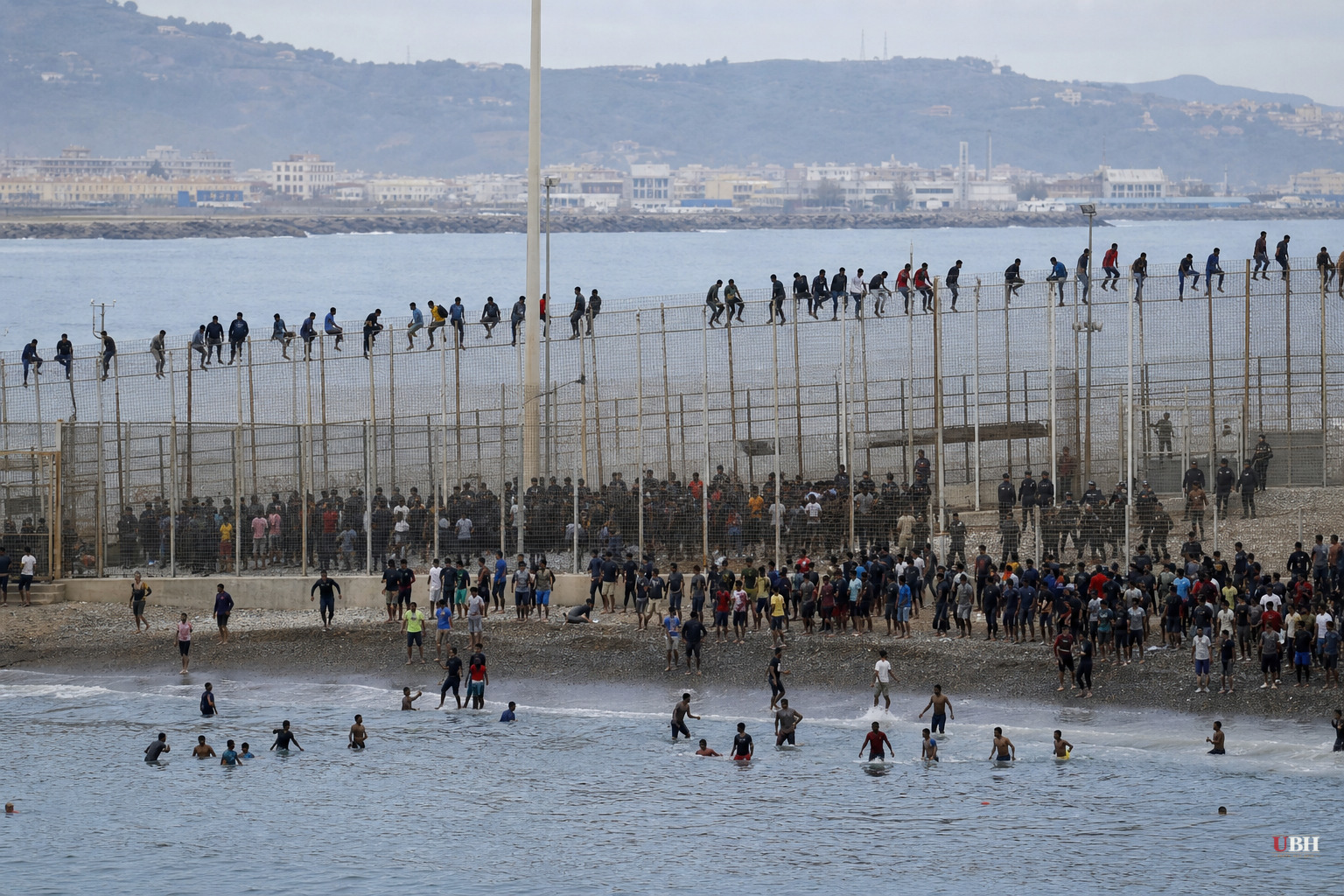
Roughly 60,000 migrants crossed from Morocco into the Spanish exclave of Ceuta in a single 24-hour window between July 30 and 31, according to the European Council on Foreign Relations. Spanish officials now say about 69,500 people have returned to Morocco over the following four days, exceeding the initial estimate of 50,000 arrivals, according to The Guardian. Ceuta authorities reported 88 deaths among migrants trying to reach the territory, with at least 11 more deaths recorded in Morocco.
Ceuta and its sister exclave Melilla are the EU's only land borders with Africa. Neither city allows onward free movement into the Schengen zone, but that hasn't stopped periodic surges, and this one dwarfed anything recent.
Nobody has produced a confirmed explanation for why so many people crossed at once. Spanish officials point to a Supreme Court ruling that ended automatic returns of migrants intercepted swimming toward Ceuta and Melilla, according to the European Council on Foreign Relations. But the think tank also flags something harder to ignore: the surge came just ten days after Sanchez visited Algeria, Morocco's regional rival, and announced a new phase in Spain-Algeria relations. Morocco's government has not issued an official explanation for the crossings.
That timing matters. Morocco has used migration as leverage before. In 2021 Rabat allowed roughly 6,000 migrants into Ceuta in an apparent act of retaliation, according to the European Council on Foreign Relations. If Morocco eased border enforcement this time as a pressure tactic tied to Sanchez's Algeria outreach, that's a serious allegation, but it remains unproven and Rabat has not confirmed it. Treat it as a live theory, not an established fact.
Instead of solidarity, Sanchez got attacked
When a member state's external border gets overrun, you'd expect the EU to circle the wagons. Instead, Italian PM Giorgia Meloni called for Spain to be suspended from Schengen, and Danish PM Mette Frederiksen echoed her, telling broadcaster DR that "uncontrolled immigration is a threat to Europe and Denmark," according to The Straits Times. Twenty-two member states, including Germany's Friedrich Merz, signed a joint letter demanding the EU "consider all options, including a suspension of Schengen cooperation."
Poland's Donald Tusk went further, directly blaming Spain's migration laws: "Spain must follow our example if Schengen is to survive," he said, pointing to Poland's tightened asylum rules and border barriers with Belarus.
Manfred Weber, president of the centre-right European People's Party, called on the European Commission to hold Sanchez accountable for failing to protect the EU's external border, according to the European Council on Foreign Relations. France reinforced controls at its own border with Spain. Finland's interior minister Mari Rantanen backed Italy's Schengen-suspension push.
Sanchez didn't take it quietly. In a letter to EU leadership on August 1, he called the reaction "selfish, polarising and unlawful," and said the attitude of his critics was "driven by prejudice, fake news, ignorance or political interest," according to The Straits Times. Madrid also summoned the Italian ambassador over what Spanish officials called Rome's "partisan demagoguery," according to the European Council on Foreign Relations.
Von der Leyen splits the difference
European Commission President Ursula von der Leyen took a notably different tone than Meloni or Tusk. In a letter to Sanchez, she praised Spain's handling of the crisis, writing that "order has been restored and the returns system in place worked," according to The Guardian. She also called for the EU to strengthen border monitoring and physical barriers "at critical points."
Von der Leyen laid out five priorities: deeper cooperation with non-EU countries to prevent migration, stronger external borders, early warning systems, dismantling smuggling networks, and faster returns of people with no legal right to stay. She noted Spain can tap EU funds and Frontex support, though Madrid has not yet requested Frontex's help.
Critics like Tusk and Meloni have a real argument that the EU's external border is only as strong as its weakest entry point, and that residency pathways in one country can create incentives that ripple across the bloc. That's a legitimate policy debate, not just an attack on Sanchez.
But the European Council on Foreign Relations makes a sharper point that's gotten less attention: almost nobody in this fight has criticized Morocco. If Rabat did deliberately loosen border controls as leverage over Sanchez's Algeria diplomacy, and EU leaders spend all their energy blaming Spain instead, that tells Morocco, and every other neighboring country, that weaponizing migrants against a member state carries no cost. Morocco sends roughly two-thirds of its exports to the EU and relies on it as its largest source of foreign investment, leverage Brussels has so far not used.
EU interior ministers are scheduled to hold emergency talks on Tuesday, August 4, to draw lessons from the crossings, according to The Guardian. Whether that meeting produces a coordinated response, or another round of finger-pointing at Madrid, will say a lot about whether Schengen's border-sharing model can survive the next crisis, wherever it happens next.
Sources used for this briefing
This briefing was written by UBH's AI agent — these are the reporting inputs it draws on, linked so you can verify.


