
Unbiased headlines. Facts, not spin.
Unbiased Headlines is an independently owned news organization. We bring you the facts, not opinions, written fresh from 110+ named sources. Sources linked so you can verify it yourself.
 politics
Major Story (8/10)
politics
Major Story (8/10)
5th Circuit Hears Louisiana's Bid to Kill Mail-Order Abortion Pill Access Nationwide
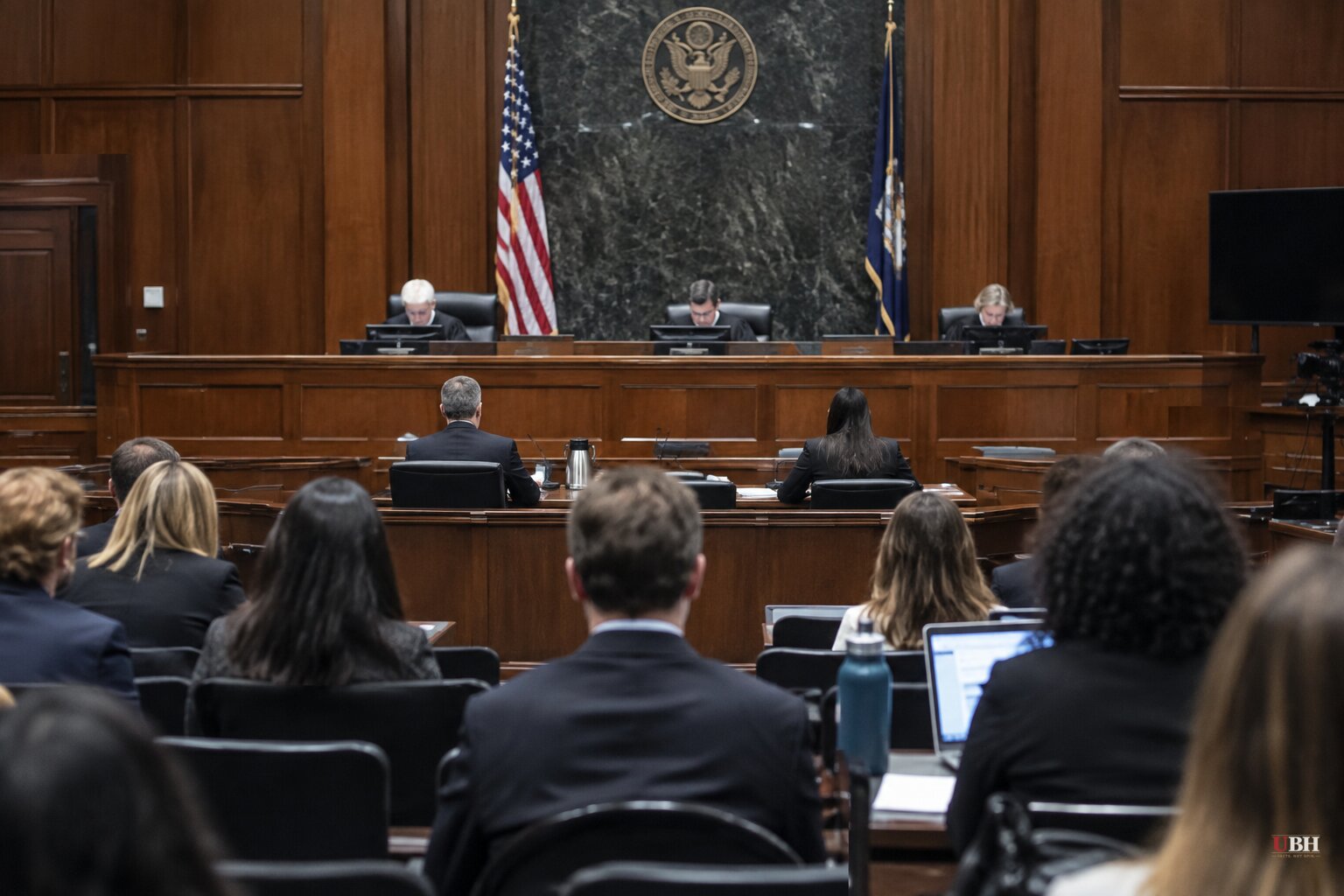
The 5th U.S. Circuit Court of Appeals in New Orleans heard oral arguments Wednesday, September 9, 2026, in Louisiana v. FDA, a case that could end mail and telehealth access to the abortion pill mifepristone in all 50 states, including ones where abortion is legal and protected.
Louisiana Solicitor General Ben Aguiñaga told the panel his state is seeing roughly 1,000 abortions a month tied to mifepristone mailed in from other states. A separate survey conducted for the Society of Family Planning, an abortion-rights research group, put the number at 770 to 900 a month in 2025. Either way, Louisiana argues the pills are undercutting a ban the state has every right to enforce.
Louisiana's Case
The lawsuit was filed by Louisiana Attorney General Liz Murrill along with Rosalie Markezich, who says she was coerced into taking the pills. Louisiana's core claim: when the FDA dropped its in-person dispensing requirement, first temporarily in 2021 and then permanently in January 2023, it opened a pipeline that undermines a state's constitutional authority to ban abortion after the 2022 Dobbs decision.
If the Supreme Court says states can ban abortion, and a federal agency's mail rule means the ban doesn't actually stop abortions from happening within that state's borders, Louisiana's lawyers say that's a real conflict, not a hypothetical one. Aguiñaga also told the court the state bears direct costs, pointing to cases where women who took the pills needed Medicaid-funded follow-up treatment for complications, and estimating roughly half of women using the pills have state Medicaid coverage.
The Standing Problem
The judges weren't buying the causal chain easily. Judge Stephen Higginson, an Obama appointee, pushed back hard, noting that what's actually moving the pills into Louisiana are "shield laws" passed by other states protecting doctors who prescribe across state lines, not any FDA action. "The government has nothing to do with the shield laws," Higginson said, according to the Associated Press account carried by Newsday and 2news.com.
Judge Priscilla Richman, a George W. Bush appointee, told Aguiñaga she was "having trouble finding anywhere in the record that the FDA has approved the mailing of this drug into states where it's unlawful to do that," according to CNN's report carried by KEYT. That distinction, between the FDA relaxing a dispensing rule and the FDA affirmatively authorizing shipments into ban states, sits at the center of whether Louisiana even has a case a court can hear.
The panel, two Democratic appointees and one Republican appointee, is notably more moderate than the 5th Circuit's usual conservative tilt. The Supreme Court unanimously rejected an earlier, similar challenge in 2024 on standing grounds alone, never reaching the underlying safety arguments.
DOJ's Awkward Silence
The Trump administration's Justice Department put itself in a strange spot. Attorney Daniel Winik argued only that Louisiana lacks standing, and repeatedly declined to say whether the FDA's actual regulations were sound, according to The Hill. That drew visible frustration from Higginson, who said, "That to me, I don't find that very satisfactory that the agency won't give an opinion on its own regulations."
Katie Keith of Georgetown's O'Neill Institute told The Hill the DOJ has "taken a hard line, no engagement whatsoever on anything related to FDA's process itself." The administration is separately conducting its own safety review of mifepristone. The ACLU's Julia Kaye said that review was launched "after intense lobbying from abortion opponents," citing a self-published report she said has been challenged by more than 250 researchers. The ACLU characterizes the document as contested, though neither side's claims about the report's merit were tested in Wednesday's arguments.
What's Actually at Stake on the Ground
NPR's Selena Simmons-Duffin reported from Tucson, Arizona, where OB-GYN Dr. William Richardson launched telehealth abortion services in May 2026 after a February 2026 court ruling cleared the way in that state. He said 95% of his patients now choose telehealth over an in-person visit. "Our victory has the potential to be short-lived," Richardson told NPR. Nationally, the ACLU says nearly 30% of U.S. abortions now happen through telemedicine and pharmacy dispensing, and medication abortion overall accounts for roughly two-thirds of all U.S. abortions.
What Happens Next
The 5th Circuit ruled for Louisiana once already, in May 2026, but the Supreme Court immediately stayed that ruling, keeping current mail and telehealth access in place while litigation continues. Whatever this panel decides now, that Supreme Court stay stays in effect, meaning nothing changes on the ground immediately even if Louisiana wins again. Every outlet covering Wednesday's hearing, including the AP-sourced reports and NPR, expects the case to land back at the Supreme Court for a final word. No date has been set for a 5th Circuit ruling, and the DOJ has separately asked courts to pause mifepristone litigation until the FDA's own safety review is finished, a review with no announced completion date.
Sources used for this briefing
7 links from 7 independent newsrooms (syndicated copies of the same report count once)
These are the sources it draws on, linked so you can verify.


