
Original briefings. Zero spin.
Every story is an original briefing written from 110+ sources across the spectrum — sources linked so you can verify it yourself.
 politics
Notable (6/10)
September 9, 2026 at 02:33 PM
politics
Notable (6/10)
September 9, 2026 at 02:33 PM
CBS News and PBS NewsHour Gain Rare Access to Secret Schools Teaching Afghan Girls the Taliban Banned
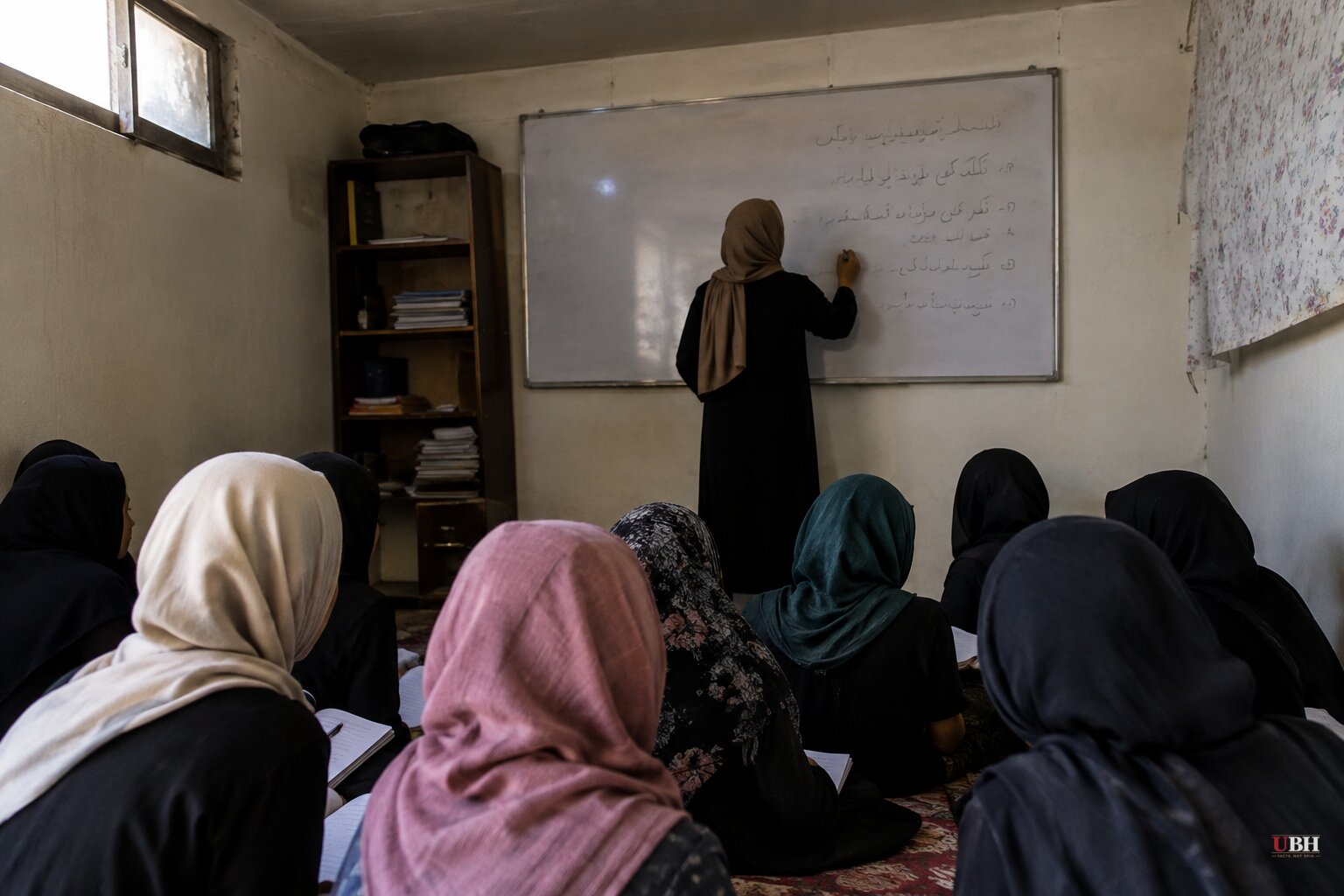
Nearly five years since the Taliban barred Afghan girls over the age of 12 from attending school, two American news outlets have gotten inside the underground network built to defy that ban.
CBS News correspondent Imtiaz Tyab was granted access to a secret girls' school in Kabul, according to CBS News, in a report that aired on the network's streaming service and was previewed on Face the Nation's September 6 broadcast. Separately, PBS NewsHour special correspondent Leila Molana-Allen and videographer Eric O'Connor visited a hidden underground school in the same city, according to PBS, in what the network described as an exclusive report and the first sit-down between an international news crew and the women running it.
Both reports describe the same basic reality. Girls climb down into basements and back rooms behind unmarked doors on ordinary side streets, hiding from a government that has made their education illegal.
What the Reports Found
PBS's Molana-Allen described dozens of teenage girls passing through an unmarked door each morning, descending into a stiflingly hot basement hidden behind thick curtains to study. The identities of every woman interviewed were changed for their protection, PBS reported, underscoring the real danger these classes carry under Taliban rule.
One teacher, identified only by the pseudonym Farimah, told PBS through an interpreter that she started the class after the ban left her feeling like both her career and her purpose were gone. "From the very beginning, we unexpectedly had hundreds of students," she said. "Everyone was so happy because it was the first door of hope for them after a long time."
Farimah said she never expected the response she got when she opened her home to teach. She described feeling "very lost" after the ban before deciding to build a classroom herself, teaching the girls whatever she knew.
CBS's account, aired through Tyab's reporting, similarly frames the story around teenagers who "risk their lives to study in secret," according to CBS News. The network's description makes clear this isn't an isolated case. It's part of a pattern of Afghan women and teachers building parallel, hidden institutions because the formal system has shut girls out entirely.
The Ban Itself
The Taliban's restriction on girls' education past sixth grade has been in place since shortly after the group retook control of Afghanistan in 2021. PBS anchor Geoff Bennett noted on air that the ban hasn't been a one-time event. "Every day seems to bring a new law limiting women," he said, describing an expanding set of restrictions that has grown well beyond schooling.
Neither report cites an official Taliban response to the specific schools documented, and there's no indication either network sought comment from the group's education ministry for these segments. The Taliban has previously defended the ban publicly, citing its own interpretation of religious and cultural requirements, though that justification does not appear addressed in either the CBS or PBS coverage reviewed here.
What's Actually New
What separates this from years of general reporting on the ban is the access itself. PBS described its visit as the first time an international crew sat down directly with the women organizing this resistance, on camera, inside the space where it happens. CBS's Tyab reporting similarly emphasizes rare, direct entry into a functioning secret classroom rather than secondhand accounts relayed through advocacy groups or exile interviews.
Reporting from inside Taliban-controlled Afghanistan is dangerous and tightly restricted, and most Western coverage of girls' education there since 2021 has relied on refugee testimony, NGO statements, or remote interviews. Direct, on-the-ground footage of an operating underground school is uncommon precisely because exposure could endanger every student and teacher inside it.
A reasonable skeptic might ask whether granting camera access to a secret, illegal school creates its own risk, exposing the very people the ban already threatens. Both networks addressed that concern by changing identities and, per PBS, taking steps to protect the women involved. Whether those precautions hold up over time is a question that won't be answerable from a news broadcast. The outcome depends on what happens to Farimah, her students, and the other unnamed women documented in a country where the Taliban's enforcement of its own rules has already proven unpredictable and, at times, brutal.
No international body has announced a formal response to either report, and the Taliban's education ministry has not issued a public statement addressing the specific schools shown.
Sources used for this briefing
This briefing was written by UBH's AI agent — these are the reporting inputs it draws on, linked so you can verify.


